What Is an RFP for Grants and Why It Matters
A Request for Proposals (RFP) for grants is a formal document issued by grantors, such as foundations or government agencies, inviting nonprofit organizations to submit proposals for funding. These documents serve as the bridge between available capital and the organizations capable of deploying it effectively. Whether the focus is on education, healthcare, or environmental conservation, the RFP outlines the specific goals, constraints, and expectations of the funding opportunity.

For nonprofits, securing a grant is often a matter of survival. Industry experts note that when managed correctly, grants provide a stable and predictable revenue stream that can sustain an organization for the duration of a contract. However, the process of applying is resource-intensive. Writing a single grant application can take over 30 hours. Considering that professional grant writers charge between $25 and $100 per hour, the cost of pursuing funding is significant. This is why the quality of the RFP itself is critical. A well-structured RFP helps applicants assess whether they are the right fit for the project before they invest their time and resources.
The clarity of the RFP directly impacts the quality of the applications received. When grantors provide detailed information about the procurement process, timeline, budget, and selection criteria, they attract qualified candidates. Conversely, vague or incomplete documents discourage strong applicants and lead to a pool of proposals that may not align with the project’s needs. The goal is to create a document that is transparent, logical, and easy to navigate.
Common Challenges in Writing Grant RFPs
Writing an effective RFP for grants involves navigating several common pitfalls. One of the most frequent issues is the lack of sufficient information about the procurement process. If a grantor fails to share key details such as the timeline, budget, or selection criteria, the result is often a mismatch. Qualified organizations may withdraw from the process due to uncertainty, while those who do apply may not meet the actual needs of the project. A detailed and logical procurement process increases the likelihood of receiving high-quality proposals.
Another significant challenge is communicating the vision clearly. Many organizations struggle to articulate the specific issues they are trying to address and how the grant will drive impact. Without a cohesive strategic framework, the RFP can become scattered. Effective RFPs have a sharply defined focus that outlines the goals, target population, and theory of change for the proposed activities. This clarity allows founders and evaluators to assess the proposal’s purpose and potential accurately.
Legal implications also pose a hurdle. Grants often come with terms and conditions that must be followed to maintain compliance. Failing to understand these requirements can result in penalties or the revocation of the grant. It is crucial to specify ownership rights, particularly for any intellectual property developed with grant funding. Consulting a legal team during the RFP writing process helps manage risks and ensures that expectations are clearly outlined for both parties.
Finally, ensuring clarity and specificity in the language used is vital. The challenge lies in articulating the project’s goals, objectives, and expected outcomes clearly without overwhelming potential applicants with unnecessary details. Using precise language eliminates confusion and ensures that proposals accurately correspond to the needs of the RFP issuer. This balance between detail and brevity is essential for a successful funding cycle.
Anatomy of a Successful Grant RFP
RFPs for grants can vary in length and format. Some are concise, using bullet points to provide a high-level overview, while others are longer documents that cover each section in detail. There is no single ideal length, but the structure should be consistent and comprehensive. A typical RFP includes several key elements that provide context and guidance to applicants.
The document begins with the project name and proposal due date. This is followed by a section on the organization, which includes a short overview of the mission. This section should provide context on what the organization does and its target market, rather than a lengthy history. The project overview follows, offering a brief introduction to the project itself. This allows nonprofits to quickly determine if the opportunity is worth pursuing.
Project goals are identified next, specifying what the grantor hopes to accomplish through the funding. This section defines what a “win” looks like, ensuring that all parties are aligned. The scope of work describes the project in detail, either through a comprehensive narrative or bullet points, depending on the length of the RFP. It is also important to mention any current roadblocks or barriers to success. This helps applicants understand potential constraints that could increase operational complexity or disqualify certain candidates.
Evaluation metrics and criteria outline how grantees will be chosen. Some organizations use simple yes/no evaluations to check if a proposal meets the objectives, while others use weighted percentages to score more important criteria higher. Submission requirements provide exact guidelines that bidders must adhere to, including format and length. The project due date is clearly stated to filter out applicants who cannot meet the timeline. Finally, the budget section specifies the target budget and whether it will be distributed among multiple organizations or assigned to a single grantee. General conditions of contract, such as legal status, subcontracting policies, and indemnification, are also included to ensure legal compliance.
Step-by-Step Guide to Writing an RFP for Grants
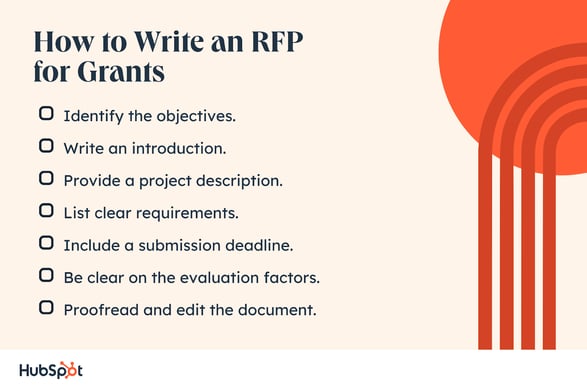
Writing an RFP for grants is a structured process that begins with identifying the objectives. This preliminary stage involves gathering key information such as goals, timeline, budget, and applicant profile. During this step, you may identify informational gaps or considerations that require expert knowledge, such as legal considerations and grantor/grantee obligations. The goal is to create a complete list of information needed to evaluate bidders effectively.
For example, consider a fictional organization called Earthly Partners, which seeks to fund sustainability projects in the Southwestern United States. Their objective is to fight climate change through drought relief and community advocacy. They are able to provide grants of up to $50,000 to each nonprofit. By defining these parameters early, the organization can tailor the RFP to attract the right candidates.
The next step is to write an introduction. This section provides information about the organization and the area of focus. It may include the organization’s values, current challenges, and the problems they aim to address. For Earthly Partners, the introduction highlights their mission of environmental conservation and advocacy. It mentions that they were established in 2010 and have been dedicated to promoting eco-friendly practices, water conservation, and community empowerment. This context helps applicants understand the organization’s history and priorities.
Following the introduction, provide a project description. This section serves as a high-level overview, allowing potential applicants to quickly assess whether they can propose a relevant project within the required timeline and available budget. For Earthly Partners, the project description outlines the grant purpose, which is to solicit proposals for projects that address environmental conservation, climate change mitigation, or sustainable development. It also includes grant details such as the total funding available, grant duration, grant amount range, eligibility criteria, and application deadline.
Defining Requirements and Submission Guidelines
Listing clear requirements is a critical part of the RFP. This section specifies what exactly the grantor needs to know about the proposal. For Earthly Partners, the requirements include a detailed project description, including objectives, activities, target population, and anticipated outcomes. Applicants are also asked to articulate the potential impact of the project on the environment or local community. They must describe how the project will contribute to positive change and address identified needs.
Innovation and creativity are also emphasized. Applicants are encouraged to highlight any innovative approaches or strategies proposed to address the identified challenges. Sustainability beyond the grant period is another key requirement. Applicants must demonstrate plans for ongoing funding, partnerships, and stakeholder engagement to ensure long-term success. Roadblocks to success should also be identified, with strategies to overcome them. Finally, a detailed budget and timeline with key milestones and deliverables are required.
Including a submission deadline is essential. This section calls out the deadline for submissions and explains the preferred way of submitting proposals. For Earthly Partners, the deadline is July 31, 2024. Proposals should be submitted electronically in PDF format, with the organization’s name, contact information, and project title in the subject line. Clear submission instructions help ensure that all applications are received and processed correctly.
Evaluation Criteria and Best Practices
Being clear on the evaluation factors is important for both the grantor and the applicants. This section explains all the elements the organization will pay attention to while evaluating applications. For Earthly Partners, proposals will be evaluated based on alignment with the mission and grant objectives, clarity and feasibility of the project proposal, potential impact and sustainability, innovation and creativity, and budget justification. Applicants who do not meet these criteria may withdraw, which helps pre-qualify organizations and shorten the selection process.
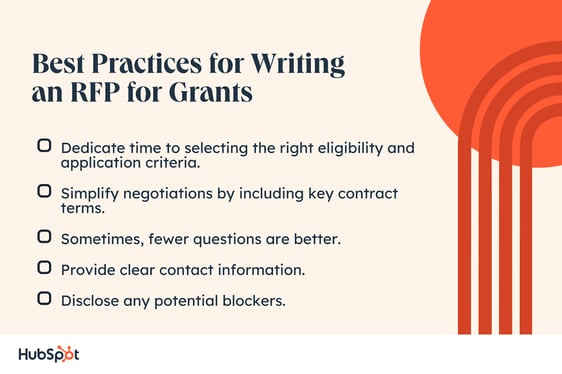
Dedicating time to selecting the right eligibility and application criteria is arguably the most important section of the RFP. Nonprofits need to quickly assess their eligibility. Including clear information such as the number of criteria that must be met, the required format, and page limits helps avoid application mistakes. For example, stating that proposals must be shorter than a certain number of pages and will be automatically rejected if they exceed this limit sets clear expectations.
Simplifying negotiations by including key contract terms is another best practice. Many RFPs fail to include legal and commercial terms, leading to prolonged negotiations or failed grants. Featuring the main contract terms in the RFP shows respect for both parties. It also helps applicants understand the legal implications of the grant and factor any liabilities into their plan.
Sometimes, fewer questions are better. Grantors should avoid asking useless questions that won’t provide helpful answers. However, this does not mean discrediting applicants who can’t answer all of them. Offering organizations that have pitched a fitting project and budget the opportunity to ask follow-up questions can prevent vague or unrelated responses. Providing clear contact information is also crucial. Applicants are more likely to respond to an RFP if they see that the grantor is committed to providing detailed discovery and answering questions about the requirements.
Resources for RFP Writers
There are several resources available to help with drafting an RFP for grants. Candid’s Foundation Directory is a valuable tool that shares essential information to help make smart and strategic funding requests. It includes a list of foundations, their profiles, funding priorities, application procedures, and contact information. RFP writers can review published proposals for inspiration.
Free RFP templates are also available from various providers. These templates offer a starter kit for drafting requests, with both short and long versions. They are fully customizable, allowing for the addition of company names and logos. Templates typically include all crucial elements of an RFP, such as company background, project goals, timeline, submission requirements, evaluation criteria, and potential roadblocks. Each section often comes with a quick explainer to help get the contents right.
Online communities like Reddit’s RFP subreddit are also useful for learning from experts and understanding the applicant’s perspective. While many discussions cover commercial projects, the advice is universal. Engaging with these communities can provide insights into common challenges and best practices. Asking for advice when facing specific challenges can help improve the quality of the RFP.
Final Thoughts on Grant RFPs
Writing the RFP is the first and most important step in the entire grant process. It is up to the grantor to select the right questions and criteria and explain the purpose of the project. The more information provided to potential applicants, the easier it is for them to assess if they fit the grant objectives. This leads to a higher quality of proposals and a more efficient selection process.
While there isn’t a one-size-fits-all template for each project, there are certain must-have sections to include. Referencing established structures and best practices can provide a head start when creating an RFP for grants. By focusing on clarity, transparency, and alignment with mission goals, grantors can attract the right partners and drive meaningful impact.
The process requires careful planning and attention to detail, but the result is a robust pipeline of qualified applicants. As you develop your next RFP, consider how each section contributes to the overall clarity and appeal of the opportunity. What aspects of your current process could be streamlined to better serve both your organization and the nonprofits you aim to support?





