Intent Mapping: A Content-Led Guide for AI Chatbots
Building a functional AI chatbot often feels like engineering a sophisticated puzzle. Developers spend weeks refining RAG (Retrieval-Augmented Generation) architectures, fine-tuning vector databases, and obsessing over latency. Yet, the moment that bot goes live, the complexity of the machine collides head-on with the unpredictable, messy, and deeply emotional reality of human language. You might have a robust technical infrastructure, but if your system fails to grasp the nuance behind a customer’s question, your engagement metrics will plummet.
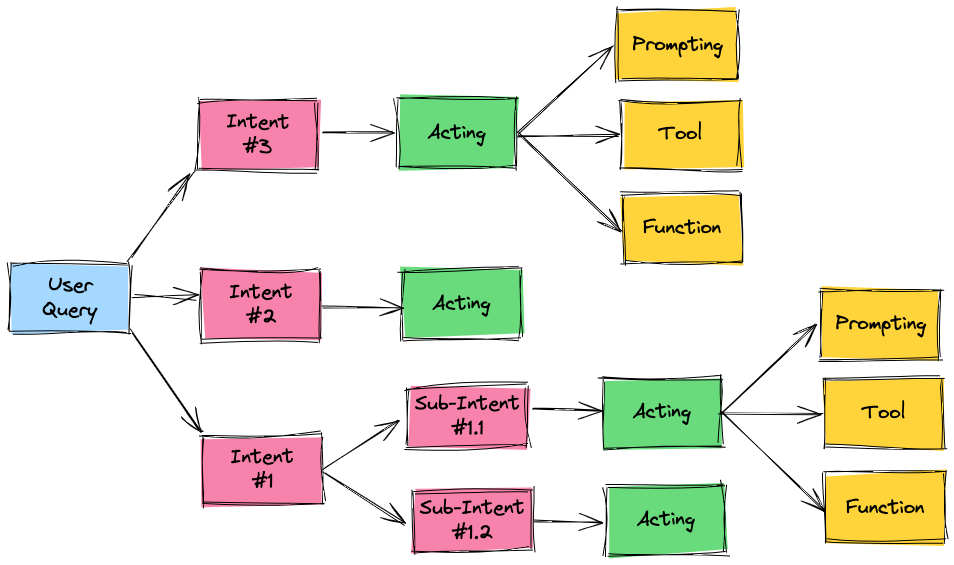
This is where the true challenge of an effective AI Content Strategy for the AI Era resides. The secret isn’t just in the code; it is in the bridge between technical capability and human intent. While engineers provide the engine, it is your content and marketing teams who hold the map. They possess the unique expertise to decode why a customer asks a specific question and how they expect that question to be answered.
When you approach intent mapping as a collaborative design process rather than a purely technical implementation, you transform your chatbot from a rigid script-follower into a genuine conversational partner. This shift requires moving away from silos where the technical team works in isolation. Instead, it invites those who manage the brand voice and customer communication to take the lead. By aligning your chatbot’s logic with the way your customers actually think, you stop fighting against user friction and start delivering helpful, human-centric experiences.
Why Content Teams Should Lead Intent Strategy
Many businesses treat intent mapping as a purely technical exercise, leaving engineers to categorize user queries based on backend database structures. This approach creates a dangerous disconnect. When technical teams build intent categories, they often prioritize how the computer stores data rather than how a human actually asks for help. The result is a cold, robotic interface that fails to grasp the nuances of customer vocabulary, leading to irrelevant answers and a poor user experience. By shifting toward a content-first mindset, you ensure the AI speaks your customers’ language instead of forcing them to learn yours.
Prioritizing Language Over Logic
An effective AI Content Strategy for the AI Era requires moving away from developer-centric taxonomies. When your content team leads the design of intent libraries, they bring an intimate understanding of the customer journey. They know the exact phrases users employ when they are frustrated, curious, or ready to purchase. By mapping these real-world linguistic patterns directly to your AI’s response triggers, you create a more intuitive flow. This is about building a bridge between the chaotic, messy nature of human speech and the structured precision of RAG chatbot optimization.
Bridging the Gap Through Collaboration
Non-technical stakeholders—including copywriters, support leads, and social media managers—hold the keys to making your bot sound human. These individuals should be involved early in the design phase to help define the intent labels that the AI will recognize. When content teams own the taxonomy, the chatbot becomes an extension of your brand voice. You stop seeing every user input as a database query and start seeing it as an opportunity for meaningful conversation.
Comparing Intent Mapping Approaches
Consider how different departments name their intents within a chatbot’s backend. Developer-focused names often mirror database tables, while content-focused names are designed for clarity and human-level categorization.
| Developer-Focused Convention | Content-Focused Convention | Reasoning |
|---|---|---|
| USER_DB_UPDATE_01 | Change_Account_Email | Action-oriented, human-readable |
| BILLING_ERR_CODE_5 | Report_Billing_Discrepancy | Focuses on the user’s specific problem |
| PROD_CAT_VIEW_ALL | Browse_Product_Catalog | Describes the goal, not the system path |
| CONTACT_SUPP_API | Reach_Customer_Support | Clearly defines the expected outcome |
By adopting a content-led naming convention, you simplify the maintenance of your conversational AI design. When your labels are descriptive, your content team can quickly identify which areas of the chatbot need improvement during their weekly audits.
Building a Human-in-the-Loop Feedback Loop
To keep your conversational AI design sharp, you need more than just initial setup; you need a heartbeat of human oversight. An effective human-in-the-loop AI strategy relies on a consistent operational workflow where content teams act as the final editors of chatbot logic.
The Weekly Review Workflow
Consistency is the secret sauce of RAG chatbot optimization. Every week, your content team should commit to a two-hour audit of the previous seven days of interactions. Start by exporting your chatbot’s conversation logs, filtering for queries that triggered a fallback response or low-confidence scores. By categorizing these missed opportunities, you can identify patterns. Flag these recurring phrases and feed them back into the intent library to refine your training data.
Identifying Failure in the Calibration Phase
Calibration is the process of adjusting the sensitivity and parameters of your AI to match reality. Often, the AI might map a user query to the wrong intent. During your weekly review, look for these misalignments. When you notice the machine consistently missing the mark, perform a manual adjustment of the parameters. This might involve tightening the semantic thresholds or adding negative training examples—phrases that the AI should ignore or treat differently.
The Traffic Light System for Manual Intervention
To keep your team from becoming overwhelmed, use a simple ‘Traffic Light’ classification system to prioritize which logs require immediate attention:
| Classification | Meaning | Action Required |
|---|---|---|
| Green | Perfect Match | No action; the intent is working as designed. |
| Yellow | Near Miss | The AI provided a response, but it was slightly off-target. |
| Red | System Failure | The AI returned an error; immediate training required. |
By applying this logic, you focus your energy where it yields the highest impact.
Designing the ‘Intent Library’ for Long-Term Success
An effective intent mapping strategy relies on a living document that transcends silos. By centralizing this information, you create a shared source of truth that aligns product teams, marketing experts, and engineering squads.
Avoiding the Trap of Intent Bloat
Intent bloat occurs when teams create redundant categories for nearly identical requests, causing the AI to struggle with overlapping logic. Before adding a new intent, perform a semantic audit to see if the query fits into an existing category. Documenting nuances is the secret to a cleaner, more efficient conversational AI design.
Organizing Your Intent Library
Building an intuitive library requires grouping intents by high-level functional areas.
| Intent Category | Primary Goal | Common Linguistic Variations |
|---|---|---|
| Support | Resolve technical issues | I need help with, Why is my account, Error code |
| Sales | Purchase or upgrade | How much is, Pricing details, I want to buy |
| Policy | Understand terms/returns | What is your refund policy, Can I return this |
| Navigation | Locate specific features | Where is the login, How do I find my dashboard |
Fostering Cross-Team Collaboration
To ensure your library remains a high-functioning asset for your AI Content Strategy for the AI Era, schedule recurring touchpoints between departments. Marketing should ensure the tone of the responses matches the brand, while product managers confirm that the intent paths align with current features.
Scaling Your AI Strategy Through Collaborative Design
Transitioning your AI Content Strategy for the AI Era from reactive bug-fixing to proactive design requires a fundamental shift in how you view intent mapping.
The Proactive Design Shift
Proactive design involves modeling potential user journeys based on your brand’s existing content ecosystem. Start by mapping out your highest-value conversion paths and designing the intent flow around these specific goals. When you treat the chatbot as an extension of your brand’s voice, you create a cohesive experience that feels like a conversation rather than a database lookup.
Conducting a Conversation Audit
To ensure your AI logic reflects your actual brand persona, perform a quarterly conversation audit. Select a random sample of 50 interaction logs from the past month. Evaluate each response for tone consistency against your brand style guide, identify dead-ends, and map linguistic gaps where customers use terminology that your AI currently ignores.
Intent Review Checklist for Managers
Use the following checklist to keep the focus on user intent during development meetings:
| Item | Focus Area | Goal |
|---|---|---|
| Vocabulary Review | Terminology | Align keywords with customer habits |
| Edge Case Analysis | Error Handling | Ensure fallback responses are helpful |
| Persona Check | Brand Voice | Audit the tone of automated replies |
| Journey Validation | Conversational AI Design | Verify flows meet conversion goals |
| Data Sync | Content Freshness | Confirm AI pulls from recent documentation |
By systematically reviewing these points, you transform the development meeting into a strategic collaboration. This approach ensures that your AI remains a scalable, human-centered asset. Your success in the age of conversational intelligence hinges on recognizing that AI is an ongoing dialogue. By treating your intent mapping as a continuous design process, you transform your chatbot into a dynamic asset that truly understands your customers.
AEO/GEO
Want to learn more?
Contact us for direct consultation and support.