The Human Resonance Audit: Fixing AI Content Friction
You have likely encountered it before: an article that hits every keyword target and follows perfect structural logic, yet leaves you feeling entirely cold. It reads with a precise, sterile rhythm that feels less like a conversation and more like a spreadsheet translated into sentences. This is the hallmark of aggressive over-optimization, where the pursuit of algorithmic favor has stripped the soul and utility out of the writing.
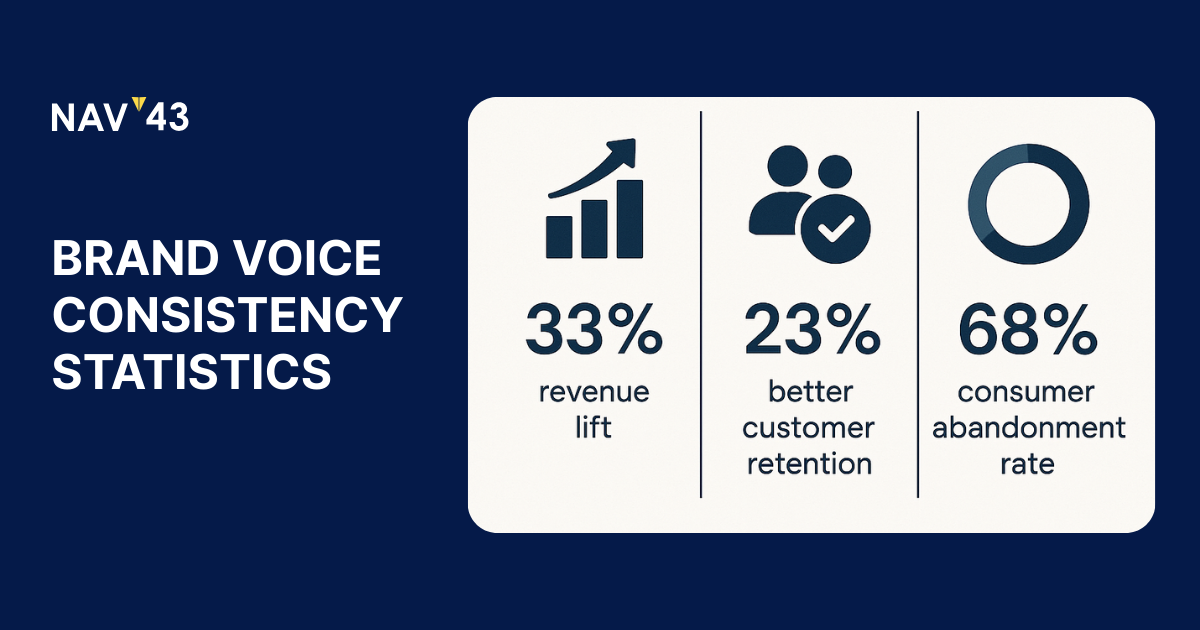
When content prioritizes machine logic over human intuition, it creates a subtle but devastating form of friction. Readers sense the lack of conviction immediately, leading to higher bounce rates and missed connections. Your audience is looking for guidance, perspective, and a partner they can trust; they are not looking for a regurgitation of the most common web results. Ignoring this disconnect threatens your long-term authority, turning your brand into a ghost that search engines index but humans simply ignore. Building an effective AI Content Strategy for the AI Era requires a deliberate recalibration. You do not have to choose between search visibility and brand personality. Through the implementation of a Human Resonance Audit, you can reclaim your brand identity while ensuring your content remains optimized for the future of search.
Recognizing the Signs of AI-Optimization Friction
When you prioritize search algorithms over human readers, you inadvertently create content friction. This phenomenon occurs when an AI Content Strategy for the AI Era leans too heavily on automated suggestions, resulting in prose that feels technically perfect yet emotionally hollow. Instead of sparking interest, this approach often leaves readers feeling like they are interacting with a sophisticated spreadsheet rather than a brand. The text might hit every keyword requirement, but it loses the heartbeat that turns casual visitors into loyal customers.
Identifying the Silent Killers of Engagement
Recognizing content friction requires you to look beyond your search rankings and observe how your text flows. The most common indicator is the “uncanny valley” of writing: content that sounds professional but lacks a soul. If you find your blog posts filled with predictable, repetitive sentence structures, you are likely suffering from over-optimization. This leads to a rhythmic monotony that makes it difficult for readers to stay focused.
Another significant sign is the overuse of standard industry jargon. While specific terms are necessary for authority, relying on them as a crutch prevents you from explaining concepts in fresh, accessible ways. If your content avoids unique opinions in favor of middle-of-the-road consensus, it becomes invisible in a crowded digital space. True brand identity in search relies on taking a stand and offering perspectives that a generic language model would not produce on its own.
Evaluating Your Content Impact
To see where your current efforts stand, compare your recent output against the standard markers of human-resonant communication. Use the following table to audit your existing articles for signs of detachment.
| Feature | AI-Optimized Content | Human-Resonant Content |
|---|---|---|
| Emotional Tone | Neutral, clinical, safe | Empathetic, opinionated, bold |
| Sentence Variety | Monotonous, fixed length | Dynamic, varied, rhythmic |
| Perspective | Generic, consensus-based | Proprietary, experience-backed |
| Brand Touchpoints | Stiff, corporatized | Conversational, authentic |
When your content consistently falls into the left-hand column, you have reached a plateau where AI content optimization has actually begun to hinder your growth. By identifying these patterns now, you can pivot back toward a strategy that prioritizes the reader. Your goal is to provide value that remains memorable long after the reader has left your site.
The Brand Resonance Audit: A Tactical Framework
The Brand Resonance Audit is a systematic evaluation process designed to measure the gap between your existing library of content and your target brand persona. By conducting this audit, you identify the exact points where your output has drifted into generic territory due to over-reliance on automated tools. This process is essential for maintaining brand voice consistency and ensuring that your AI content optimization efforts actually serve your audience.
Step-by-Step Sampling Protocol
To begin your audit, you must establish a representative sample of your digital footprint. Random selection is more effective than cherry-picking your best work.
- Define the Scope: Collect 10 to 15 blog posts, 20 social media updates, and 5 email newsletters published within the last quarter.
- Categorize by Tooling: Tag each piece of content based on its production method: fully human-written, human-edited AI, or raw AI-generated output.
- Isolate Touchpoints: Identify high-stakes areas, such as product descriptions or landing page copy, where brand identity is most critical to your conversion rates.
Utilizing Human Resonance Metrics
Once you have your sample, apply the Human Resonance Metrics system. This scoring framework allows you to quantify the soul of your content by assigning a value of 1 to 5 for three specific criteria: Storytelling, Originality, and Voice.
- Storytelling Elements: Does the piece include a narrative arc, a specific character, or a relatable struggle? Generic content often skips the why in favor of a dry, instructional how.
- Original Insights: Does the content offer an opinion or data point that cannot be found on page one of a standard search result?
- Authentic Voice Markers: Does the language reflect your specific team’s lexicon, humor, or professional skepticism? High-scoring content avoids sterile, over-used industry jargon.
The Generic Content Checklist
When evaluating your pieces, use the following checklist to identify where AI tools have inadvertently introduced filler. If you answer yes to more than three of these, the content requires a human-led rewrite:
| Observation Marker | Impact on Reader |
|---|---|
| Excessive use of transition words | Creates a stiff, textbook-like flow |
| Lack of specific brand references | Fails to build trust through proof |
| Perfectly balanced, predictable sentence lengths | Induces mental skimming |
| Over-reliance on bullet points for nuance | Diminishes authority of position |
| Use of generic filler adjectives | Lowers perceived brand credibility |
Moving Beyond SEO KPIs to Human Resonance Metrics
For years, digital growth relied on the cold math of search engine rankings. We obsessively tracked keyword density, search volume, and backlink authority to climb the ladder. While these traditional metrics are not obsolete, they are becoming increasingly superficial. Relying solely on them creates a narrow view of your audience’s true needs.
Defining the New Standard: Human Resonance Metrics
To succeed in an environment saturated with automated outputs, you need to measure what actually matters to a person: connection. Human Resonance Metrics shift the focus from how many people clicked to how many people felt understood. By adopting these new KPIs, you can move toward a more sustainable AI Content Strategy for the AI Era:
- Reader Sentiment Score: Use qualitative surveys to track if readers feel enlightened, comforted, or empowered by your content.
- Narrative Engagement Depth: Measure the duration of active interaction. Are users reading the entire piece and engaging with your specific calls-to-action?
- Unique Perspective Ratio: Quantify how much of your content offers insights, anecdotes, or proprietary data that cannot be found elsewhere.
Why Human Connection Wins in AI Search
Generative AI search engines prioritize high-quality, authoritative, and helpful information. When you optimize exclusively for keywords, you inadvertently introduce content friction—that mechanical, robotic tone that signals your content lacks soul. Modern AI models are increasingly tuned to favor content that displays experience and perspective. Building a brand that users love creates a critical moat against AI-generated competitors. While a machine can replicate facts, it cannot replicate your company’s unique history, your team’s hard-earned mistakes, or your specific philosophy on solving industry problems.
Implementing a Friction-Free Content Workflow
To master an effective AI Content Strategy for the AI Era, you must transition from treating AI as a ghostwriter to treating it as a research assistant. The most common mistake businesses make is skipping the final human pass, which inevitably leaves behind a trail of generic, algorithmic friction. By formalizing a workflow that places the human editor at the very end of your production pipeline, you ensure that every published piece carries your distinct signature.
The Final Human Polish
Your workflow should mandate that no content moves from draft to live without an editor who is actively looking to improve brand voice consistency. This editor is not a proofreader checking for typos; they are a curator ensuring the content resonates with your audience. Before you hit publish, run every draft through a Human Resonance checklist:
- Does the opening hook challenge a common industry assumption?
- Are there at least two specific, proprietary examples or case studies included?
- Does the language shift from passive to active voice consistently?
- Does the piece sound like it was written by someone who actually performs the job?
Rules for Synergy: Humans vs. AI
Maintaining a high-quality output requires clear boundaries for what you delegate to the machine and what you reserve for yourself.
| Feature | AI-Generated Content Role | Human Editor Role |
|---|---|---|
| Research | Broad industry context | Proprietary data and case studies |
| Structure | Creating a logical outline | Adding narrative flow and tone |
| Formatting | Standard headers and bullets | Breaking patterns for interest |
| Opinions | Neutral synthesis | Challenging the status quo |
| Tone | Predictable and polite | Relatable, punchy, and authentic |
By following these rules, you turn your content production into a scalable engine that does not sacrifice the soul of your brand identity. AI handles the heavy lifting of gathering context, while the human editor ensures that the final output is memorable.
Artificial intelligence is a powerful collaborator, but it was never designed to be the soul of your business. When you rely solely on algorithms to draft your messaging, you risk creating content that is technically proficient yet emotionally hollow. Successfully navigating an AI Content Strategy for the AI Era means finding the balance between machine-led efficiency and human-led storytelling. Start your own Human Resonance Audit today. By reviewing your content for genuine connection and unique perspective, you can transform your digital presence from generic filler into a powerful, resonant beacon for your customers. Stand out by being authentic, and let your brand voice be the reason your audience stays.
AEO/GEO
Want to learn more?
Contact us for direct consultation and support.