The Reality of Marketing During Economic Downturns
Economic uncertainty creates a challenging landscape for marketing teams everywhere. When recession concerns emerge, the first reaction is often defensive. Budgets tighten, and leadership questions every spend. Yet history shows that recessions are not anomalies; they are cyclical features of the global economy. According to the International Monetary Fund, 122 completed recessions occurred across 21 advanced economies between 1960 and 2007. This pattern suggests that downturns are inevitable, and preparedness is the only reliable defense.

For marketers, the challenge is not just survival but maintaining momentum. HubSpot’s 2025 survey of 150 marketing and advertising professionals reveals a clear picture of the current climate. Nearly half of respondents expressed negative sentiments about how economic conditions are impacting their activities. This is not surprising. When financial pressure mounts, marketing often faces the first round of cuts. However, cutting back entirely can be a strategic mistake. Brands that maintain visibility during a recession often capture market share when competitors go silent. The key lies in adapting your strategy rather than abandoning it.
Understanding Consumer Behavior Shifts
Consumer behavior changes significantly during economic uncertainty. People become more cautious with their spending. They research longer before committing to a purchase. This hesitation extends across the entire buyer’s journey. Forty-two percent of marketers in the HubSpot survey noted negative sentiments regarding consumers’ shopping habits. The data aligns with broader consumer confidence surveys, which show a marked decrease in spending on non-essential items.
This caution is a rational response to inflation, geopolitical instability, and lingering economic anxieties. Marketers must recognize that these shifts are not temporary glitches but structural changes in how value is perceived. When disposable income shrinks, every dollar must earn its keep. Brands that communicate clear value and trustworthiness stand out. Those that rely on vague promises or aggressive sales tactics often face increased resistance.
The Duration of the Downturn
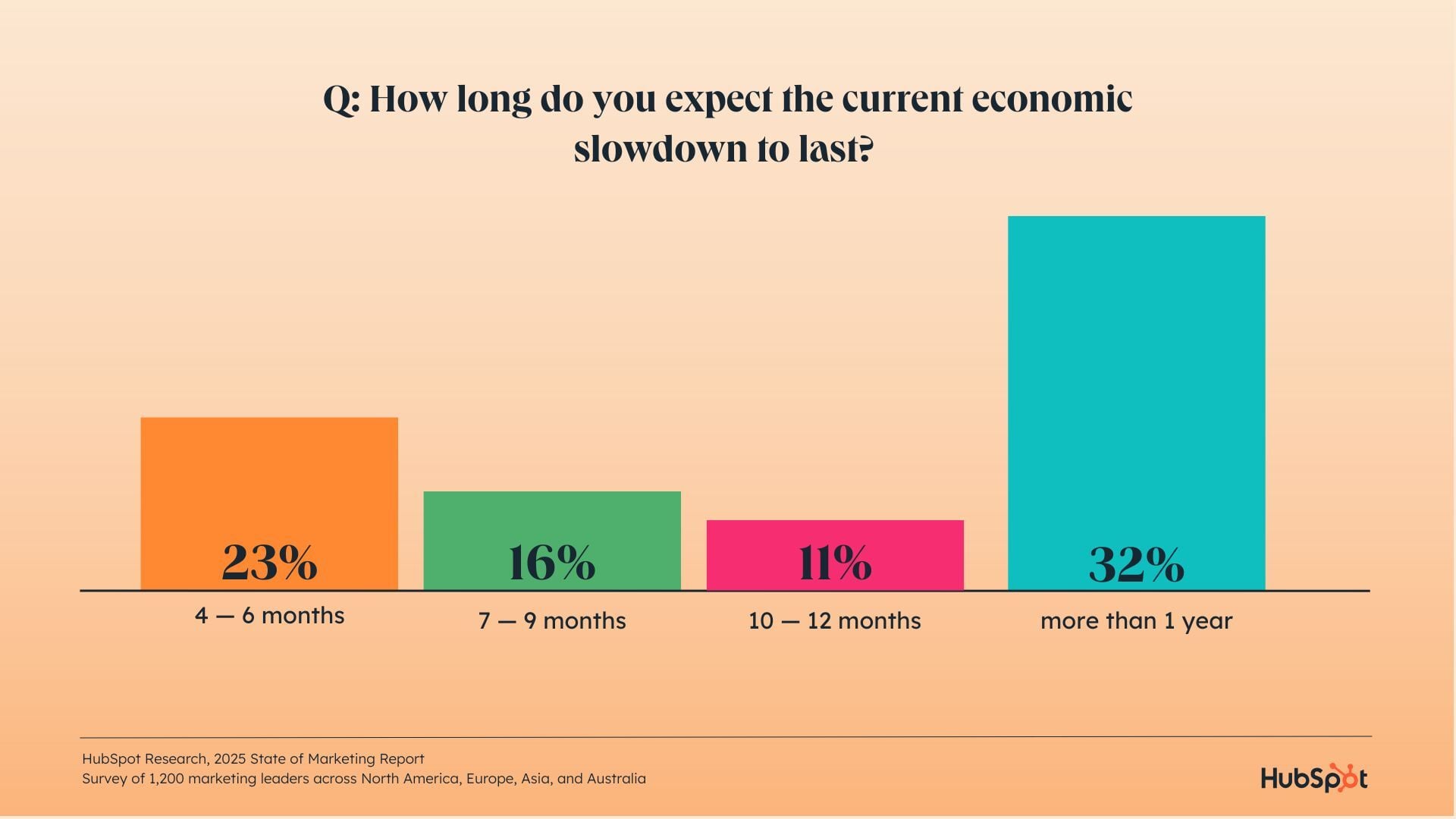
The timeline of a recession also shapes strategy. A majority of marketers surveyed expect the current economic challenges to last more than a year. Only 23% anticipate a recovery within four to six months. This longer horizon means that short-term fixes are insufficient. You need a sustainable approach that balances immediate efficiency with long-term brand building.
Expecting a quick rebound can lead to erratic decision-making. Instead, treat the recession as a period of recalibration. Use this time to refine your messaging, optimize your channels, and strengthen your core audience relationships. The brands that thrive in the next cycle are often those that made disciplined investments during the downturn.
Strategic Adjustments for Budget-Constrained Teams
When budgets shrink, marketing teams must work smarter, not harder. The goal is to maximize impact with limited resources. This requires a shift from broad, expensive campaigns to targeted, high-ROI activities. Nearly 41% of marketers report that economic conditions have negatively impacted their marketing activities. The response is often to cut branded messaging and reduce content production staff. While these cuts save money in the short term, they can erode brand equity over time.
The reason for budget reductions is rarely a lack of faith in marketing. Instead, companies are reallocating funds to high-priority initiatives. They focus on channels with measurable returns, such as video and social media. They also redirect resources to immediate business pressures like supply chain costs or staffing. Understanding this logic helps marketers advocate for their budgets. You can show how marketing contributes to revenue stability and customer retention, even when spend is tight.
Prioritizing High-ROI Channels
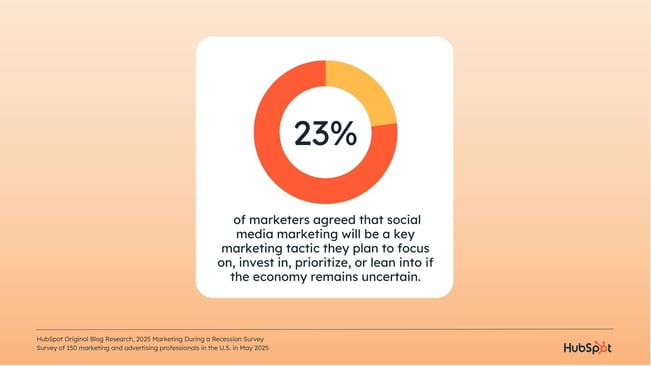
Not all marketing channels perform equally during a recession. Some offer better leverage for limited budgets. Social media marketing, for example, is a top priority for 23% of marketers in uncertain economic times. This makes sense. Social platforms allow for organic reach and community building without heavy ad spend. Algorithms reward consistent, valuable content. You can engage your audience directly and build trust through authentic interaction.
Video content is another high-ROI channel. Short-form video, in particular, is projected to deliver strong returns in 2025. It captures attention quickly and is easily shareable. Brands that invest in video creation now are positioning themselves for growth when the economy recovers. The skill set for video production is also valuable for individual marketers, as freelance demand for editors and creators rises.
The Case for Low-Cost Marketing Efforts
Low-cost marketing efforts are not just a stopgap; they are a strategic advantage. Free and low-cost tactics allow you to test ideas without significant risk. Content marketing, email newsletters, and community engagement are all effective ways to maintain visibility. They also provide data on what resonates with your audience. This information is invaluable when you eventually scale up your spend.
Consider the power of organic search and generative search optimization. As AI-driven search becomes more prevalent, brands that create clear, authoritative content will appear in AI-generated answers. This visibility is free and sustainable. It does not depend on ad budgets. It depends on the quality and relevance of your information. Investing in this type of content is a smart move for any budget.
Building Resilience Through Skill Development
A recession is not just a business challenge; it is a career opportunity. The uncertainty pushes marketers to expand their skill sets and explore new revenue streams. This proactive approach builds resilience. It ensures that you remain valuable to your employer and attractive to potential clients. The data shows that 92% of marketers plan to maintain or increase investments in brand awareness in 2025. This confidence suggests that the market still values strategic marketing, even in tough times.
Leveraging Educational Resources
Continuous learning is a key strategy for career growth. Platforms like Extern offer flexible, sliding-scale subscriptions for early-career marketers. These programs provide real-world experience and networking opportunities. For more experienced professionals, courses on platforms like ilovecreatives offer deep dives into specific niches like copywriting or motion design. While these courses require an investment, the lifetime access to valuable information can pay off quickly.
Teachable is another resource for learning from peers. It features courses created by marketers with similar backgrounds and experiences. This relatable teaching style can be more effective than traditional academic training. Additionally, Teachable allows you to monetize your own expertise. If you have a specialized skill, you can create a course or masterclass and generate extra income.
Exploring Freelance Opportunities
Freelancing is a practical way to diversify your income and expand your portfolio. It allows you to take on projects that may not be available in your full-time role. Short-form video content creation is in high demand. Brands and influencers need help producing engaging clips for Instagram and TikTok. If you have an eye for editing and storytelling, this is a lucrative niche. You can start by posting your own content to build a portfolio and attract clients.
Video editing is another valuable freelance skill. As video content becomes more popular, the need for skilled editors grows. You do not need to be on camera to succeed in this space. Off-camera roles are often less stressful and equally rewarding. Writing is also a viable freelance path. Platforms like Substack and Beehiiv allow you to build a monetizable newsletter. You can share your expertise on niche topics and build a loyal audience.
Strengthening Your Personal Brand
Your personal brand is your professional reputation. It follows you across jobs and projects. Building a strong personal brand increases your visibility and credibility. A multi-channel approach is essential. Do not rely on a single platform. Instead, distribute your content across LinkedIn, Instagram, TikTok, and emerging platforms like Threads and Bluesky. This diversification reduces risk and expands your reach.
Posting on social media can feel vulnerable. You are putting your work in front of a public audience. However, the rewards outweigh the discomfort. A strong personal brand opens doors to new opportunities. It also helps you connect with other professionals in your field. Start small. Share one insight per week. Engage with others’ content. Over time, you will build a network that supports your career growth.
Navigating the Emotional Landscape of a Recession
Recessions are emotionally taxing. The uncertainty about job security and financial stability can be overwhelming. It is normal to feel anxious or frustrated. However, letting these emotions dictate your actions can be counterproductive. Fear-mongering headlines and office gossip only amplify stress. Instead, focus on what you can control. Your skills, your network, and your mindset are all within your reach.
Staying Grounded in Data
Data provides a buffer against emotional decision-making. When you rely on facts rather than fears, you make clearer choices. HubSpot’s survey data shows that marketers are not alone in their concerns. Many are facing similar challenges. This shared experience can be comforting. It also provides a benchmark for your own performance. You can compare your strategies against industry trends and adjust accordingly.
Avoid relying on a single source of information. Consult multiple credible sources to get a complete picture of the economic landscape. This balanced view helps you avoid panic. It also enables you to spot opportunities that others might miss. For example, while some brands cut their marketing spend, others are increasing their investment. This divergence creates space for agile competitors to gain share.
Practicing Self-Compassion
Be kind to yourself during this transitional period. You are navigating a complex global economy. The fluctuations in prices and job markets are beyond your control. Recognizing this can reduce unnecessary guilt or self-blame. Celebrate small wins. Refreshing your resume is a win. Learning a new skill is a win. Connecting with a peer is a win. These incremental steps build momentum.
Recessions come and go, but marketers keep creating. Your ability to adapt and innovate is your greatest asset. The skills you develop now will serve you for years to come. Whether you stay in your current role or pursue new opportunities, your growth is the ultimate victory. The economy will eventually recover. When it does, you will be ready.
Final Thoughts on Marketing Resilience
The path through a recession is not linear. There will be setbacks and surprises. But there will also be moments of clarity and growth. By focusing on high-ROI activities, developing new skills, and building a strong personal brand, you position yourself for success. You are not just surviving the downturn; you are preparing for the next upturn. The brands and marketers that thrive are those that remain calm, strategic, and authentic. Your journey is unique, but the principles of resilience are universal. Trust your process, and keep moving forward.





