Optimize for AI Search Engines: Perplexity, Claude & Advanced Strategies
Remember the good old days when you’d “Google it” to find answers? It felt like asking a friendly librarian for a specific book on a shelf, and they’d point you to the right aisle. Now, imagine instead of a list of books, you have a brilliant research assistant who doesn’t just point you to sources, but reads them all, synthesizes the key information, and hands you a concise summary tailored to your exact question. That’s the fundamental shift we’re witnessing with the rise of AI search engines.
This isn’t just an evolution; it’s a revolution in how people discover information, demanding a completely new approach to content strategy. Traditional SEO gave us rules for ranking on page one, but AI-powered generative search plays by a different set of rules. Your content needs to be not just discoverable, but also extractable and citable by these intelligent assistants. Understanding how to optimize for AI search engines is no longer optional; it’s critical for maintaining visibility and relevance in today’s digital environment. This guide offers insights and actionable strategies to ensure your brand’s voice is heard, understood, and trusted by the next generation of search experiences.
Optimizing for AI Search Engines: Perplexity, Claude & Platform Behaviors
AI-powered search platforms like Perplexity and Claude are redefining how information is retrieved and presented. For content creators focused on how to optimize for AI search engines, understanding the fundamental differences in these platforms’ retrieval behaviors is paramount. It’s not enough to simply produce high-quality content; you must tailor it to the specific algorithmic preferences and user expectations of each AI. We’ll explore how these distinct approaches impact your AI search optimization strategies.

Perplexity: The Real-Time, Citation-Heavy Research Assistant
Perplexity AI, especially its “Pro” search, acts as a sophisticated research assistant. It excels at providing real-time information from the latest sources, offering answers with direct, verifiable citations. For effective Perplexity AI SEO, your content must provide clear, linkable evidence for every claim.
Perplexity prioritizes freshness and verifiability, seeking authoritative, up-to-date content with well-structured data. For example, a recent industry report with statistics and direct quotes is highly valued. It prefers raw, citable facts over synthesized opinion. To succeed on Perplexity, your content needs specific, clearly sourced data points, study results, and expert statements. This enables Perplexity to confidently use your content as a primary citation, boosting visibility. Structure content with distinct sections for data, methodology, and conclusions to aid identification.
Claude: The Nuance-Driven Conversational Synthesizer
Conversely, Anthropic’s Claude uses a conversational, synthesis-focused approach. While drawing on vast data, Claude prioritizes nuance and logical consistency in its responses. It synthesizes complex topics from multiple sources into coherent, deep-dive narratives. For optimizing for Claude AI, content must go beyond facts, building arguments or thoroughly explaining concepts.
Claude excels at grasping context and idea relationships. It favors longer-form content with comprehensive explanations, diverse perspectives, and strong logical flow, akin to a well-researched academic paper. Content for Claude provides a holistic understanding, anticipating follow-up questions, elaborating on principles, and offering reasoned conclusions. Its retrieval values deep expertise and consistent, rational thought.
Comparative Retrieval Mechanisms: Google, Perplexity, and Claude
Understanding these differences is crucial for any generative search optimization strategy. Here’s a detailed comparison:
| Feature | Google (Traditional Search) | Perplexity (Generative Research) | Claude (Generative Synthesis) |
|---|---|---|---|
| Retrieval Mechanism | Keyword matching, backlinks, domain authority, user intent signals to rank pages. | Real-time indexing, direct quote extraction, immediate source validation for answers. | Semantic understanding, contextual synthesis across diverse sources, logical coherence. |
| Citation Style | Links to entire pages or domains in SERP. | Explicit in-line citations to specific paragraphs or data points within sources. | Implicit synthesis; sources are integrated into coherent narratives, often summarized. |
| Primary Prioritization | Relevance, authority, user experience (UX), page rank. | Freshness, verifiability, factual accuracy, direct evidence. | Nuance, logical consistency, comprehensive explanation, conversational flow. |
| User Expectation | Links to find information; user performs synthesis. | Direct, sourced answers; quick access to underlying research. | Human-like conversational answers; deep explanation of complex topics. |
| Content Preference | SEO-optimized pages, clear headings, user-friendly design. | Data-rich articles, research papers, real-time news, specific statistics, AI content citation best practices. | Long-form analysis, opinion pieces (expert), comprehensive guides, structured arguments, multi-faceted explanations. |
To master AI search optimization strategies, you must recognize that each platform represents a distinct opportunity. Your content should be strategically developed to serve both the factual, real-time demands of platforms like Perplexity and the nuanced, explanatory requirements of models like Claude, ensuring your brand maintains visibility across the entire generative AI search ecosystem. For a complete overview of optimizing for this new search paradigm, check out our How to Optimize for AI Search Engines article.
Engineering Content for AI: Advanced Schema and Entity Strategies
The era of merely stuffing keywords and slapping on a basic FAQ schema is over. To truly optimize for AI search engines, we must move beyond surface-level tactics and engineer content with a deep understanding of how AI models process meaning. This involves using advanced schema markup and intelligent entity linking, which together build a rich, interconnected knowledge graph around your content. AI doesn’t just read words; it understands concepts and relationships, and your schema strategy must reflect that.

Decoding Meaning: Entity Linking and Schema Graph Connections
Entity Linking identifies named entities (people, organizations, products, concepts) within your text, linking them to a definitive entry in structured knowledge bases like Wikidata. This connects every relevant noun in your content to a unique, verifiable ID in a global database of facts.
For example, if your article discusses “Apple,” AI needs to differentiate between the fruit, Apple Inc., or a person. Entity linking via schema (e.g., Organization for Apple Inc., Fruit for produce) provides this context. Using schema markup to define not just the page type (Article) but its subject (via about properties linking to Organization, Product, Person schema) creates Schema Graph Connections. This network allows AI to infer relationships, understand nuances, and connect disparate information, transforming your content into a node within a vast digital knowledge graph. For more on generative search optimization, explore our How to Optimize for AI Search Engines.
Signaling Authority: Dataset and ScholarlyArticle Schema
For content with original research, statistical analyses, or in-depth insights, standard Article schema is insufficient. AI models, particularly research-focused engines like Perplexity AI, prioritize verifiable information. Specialized schema types like Dataset and ScholarlyArticle are crucial tools for AI search optimization strategies.
-
DatasetSchema: Ideal for content introducing or analyzing structured data. Including properties likename,description,creator, andvariableMeasuredtells AI your content is backed by quantifiable information. For instance, marking up a market survey withDatasetschema, including methodology and sample size, signals authoritative, citable evidence. AI models can then confidently extract and attribute your data for complex research queries. -
ScholarlyArticleSchema: Reserved for academic papers, whitepapers, or articles offering significant original thought or research. Properties likecitation,author, andpublisherestablish academic rigor. An article detailing ethical implications of large language models, drawing on multiple scientific papers, is a prime candidate. This elevates content to a scholarly resource, increasing its citation likelihood for nuanced inquiries.
Technical Checklist for Entity-to-Knowledge Graph Mapping
To enhance discoverability across AI models, technical teams need a structured approach to mapping content entities to broader knowledge graphs. This is critical for advanced generative search optimization.
Here’s an actionable checklist:
-
Content Audit & Entity Identification:
- Review all high-value content assets (blog posts, whitepapers, product pages).
- Identify every significant entity: company names, products, services, key concepts, individuals, locations, and any quantifiable data points (statistics, dates, metrics).
-
Knowledge Graph & Ontology Mapping:
- For each identified entity, determine its most appropriate
schema.orgtype (e.g.,Organization,Product,MedicalCondition,CreativeWork). - Crucially, find the entity’s unique identifier (URI) in authoritative public knowledge graphs like Wikidata, DBpedia, or industry-specific ontologies where applicable.
- For each identified entity, determine its most appropriate
-
Advanced Schema Markup Implementation:
- Beyond basic
WebPageorArticle, apply granular schema types directly relevant to your entities (e.g.,Service,Event,Review,HowTo,Dataset,ScholarlyArticle). - Utilize the
sameAsproperty to link your entities to their corresponding authoritative external sources (Wikipedia pages, official company websites, LinkedIn profiles of authors/speakers). This strengthens the AI’s confidence in your entity definitions. - Implement the
mentionsproperty within your mainArticleschema to explicitly list all the entities your content discusses, even if they aren’t themainEntityOfPage.
- Beyond basic
-
Establish Semantic Relationships:
- Use schema properties like
author,publisher,about,mainEntityOfPage,hasPart,partOf, andcitationto create explicit links between different schema entities within and across your entire website. This builds a robust internal knowledge graph. - For example, an
Articleabout aProductshould link the product schema usingabout, and that product schema should link to itsmanufacturer(anOrganizationschema) usingbrandandmanufacturerproperties.
- Use schema properties like
-
Validation & Monitoring:
- Regularly use Google’s Rich Results Test and schema.org validator to ensure your structured data is error-free and correctly implemented.
- Monitor AI search results and citation patterns for your content. Observe if AI models are correctly extracting and referencing your defined entities and datasets, which confirms the effectiveness of your advanced schema strategy. This continuous feedback loop is essential for refining your approach to optimizing for Claude AI and other generative models.
Source-Citing Behaviors: Writing for Real-Time vs. Deep-Dive Engines
Understanding how generative AI models attribute and cite sources is paramount for AI search optimization strategies. It’s no longer just about ranking high in traditional search results; it’s about becoming a trusted, verifiable data point for AI. This involves mastering the concept of the ‘Citation Trigger,’ which dictates how readily AI models use your content as an authoritative source.
The ‘Citation Trigger’: Making Your Content AI-Citable
The ‘Citation Trigger’ signals to AI models that your content holds reliable, extractable, and citable information. AI, especially fact-focused models like Perplexity, favors content segments with hard data, specific statistics, and authoritative definitions. For instance, stating “The average conversion rate for e-commerce stores in Q3 2023 was 2.5%, according to a report by [Reputable Research Firm],” makes extraction and citation far more likely than a vague discussion. It’s about precision and verifiability.
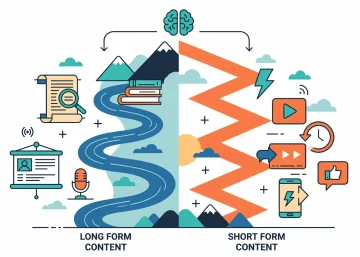
AI systems synthesize information confidently, but their confidence stems from source quality and clarity. Explicit data points—like “45% of consumers prefer online shopping”—serve as strong ‘citation triggers.’ Defining terms, such as “Artificial intelligence (AI) is the simulation of human intelligence processes by machines,” creates easily citable snippets for AI answers. This isn’t just about keywords; it’s about structuring content for factual extraction.
Real-Time News vs. Deep-Dive Research Optimization
When optimizing for AI search engines, distinguish content for real-time, evolving topics from evergreen, in-depth analysis. Each requires a distinct approach for AI citation.
Real-Time News Optimization
Real-Time News Optimization focuses on immediacy and event-based structuring:
- Current Dates: Include publication/update dates. AI prioritizes recent information for trending topics.
- Trending Terminology: Use keywords dominating current conversations around events or news.
- Event-Based Structuring: Follow the narrative arc: what happened, who involved, immediate impact, future implications. Use short, impactful paragraphs and direct reporting.
- Rapid Updates: Refresh content with new developments for ongoing visibility.
For example, a blog post on a new government regulation would clearly state the enactment date, cite the legislative body, and quickly outline immediate effects using trending policy terms.
Deep-Dive Research Optimization
Deep-Dive Research Optimization focuses on comprehensive analysis and logical progression:
- Logical Progression: Guide the AI through complex topics with clear subheadings, sequential steps, and reasoned arguments. Each point should build logically.
- Comprehensive Analysis: Explore multiple facets, offering historical context, diverse perspectives, and detailed explanations of underlying principles.
- Authoritative Sources: Link to original research, academic papers, and established institutions. Cite white papers from research institutes.
- Evergreen Value: Design content for lasting relevance, providing foundational knowledge over fleeting updates.
An article on renewable energy’s history and future, for instance, would meticulously explain energy sources, present historical adoption rates, analyze economic impacts, and project future growth based on expert forecasts. For a complete overview of this subject, explore our guide on How to Optimize for AI Search Engines.
| Feature | Real-Time News Optimization | Deep-Dive Research Optimization |
|---|---|---|
| Primary Goal | Timely updates, immediate relevance | Comprehensive understanding, foundational knowledge |
| Content Structure | Event-driven, chronological, concise reporting | Logical progression, thematic breakdown, in-depth analysis |
| Key Indicators | Publication date, trending terms, quick summaries | Academic citations, detailed examples, complex explanations |
| AI Preference | Rapid indexing for current queries, factual snippets | Synthesized summaries, expert insights, authoritative data |
| Content Length | Often shorter, focused bursts | Long-form, extensive articles |
Formatting Data Points for AI Citation
For ‘extraction-ready’ data points and AI content citation best practices, meticulous formatting is key. Treat your content as an AI database where clarity and structure directly correlate with citability.
-
Direct Statements: Present statistics and facts as direct, standalone sentences.
- Good: “In 2022, global e-commerce sales reached $5.7 trillion.”
- Less effective: “Global e-commerce sales were really high in 2022, hitting a massive number like $5.7 trillion.”
-
Specific Figures and Units: Always use precise numbers, percentages, and units of measurement.
- Good: “Customer churn decreased by 18.5% in Q1 following the implementation of the new retention strategy.”
- Less effective: “Customer churn went down a lot in the first quarter.”
-
Source Attribution (Even within content): While AI models are smart, explicitly attributing data within the text makes it even easier for them to verify and cite.
- Good: “According to the National Bureau of Economic Research, the average American household spent $68,767 in 2021 on goods and services.”
- Less effective: “The average American household spends a lot annually.”
-
Use of Bold and Lists: Employ bolding for key data points and use bullet or numbered lists for sequential or comparative data.
- Example:
"Key performance indicators for Q4 2023 showed significant growth:
- Website traffic: Increased by 22%
- Conversion rate: Rose to 3.1%
- Average order value: Grew by $15"
- Example:
-
Contextual Clarity: Ensure the surrounding text clearly explains what the data signifies. Don’t just drop numbers; provide meaning. For example, instead of just stating “2.5%,” explain that “a 2.5% average conversion rate indicates strong funnel efficiency in the B2B SaaS sector.”
By consistently applying these formatting techniques, you significantly increase the chances that your content will be directly extracted and cited by generative AI, enhancing your brand’s visibility in the new AI search ecosystem.
Putting It Together: A Workflow for AEO/GEO Success
Navigating AI search is challenging, as traditional SEO is insufficient when AI models generate answers dynamically. To excel in generative search optimization, a systematic approach is needed, reshaping how your content communicates with intelligent systems.
A robust workflow for optimizing content ensures your brand is not just discoverable, but actively citable by AI. This five-stage process transforms your content into valuable information assets for generative AI.
Step 1: Conduct a Comprehensive AI Readiness Audit
Step 1: Conduct a Comprehensive AI Readiness Audit. Beyond traditional SEO audits, scrutinize existing content for entity clarity (how well topics, people, concepts are defined and interconnected). Identify easily extractable data points and concise definitions. Perform a “citation signal” analysis for statistics, research references, and expert quotes that AI prioritizes. This audit reveals your content’s AI search optimization strategies standing and provides a baseline.
Step 2: Define and Map Your Entity Graph
Step 2: Define and Map Your Entity Graph. Build an internal knowledge base linking your content’s key entities to broader public knowledge graphs (e.g., connect “blockchain technology” to “decentralized finance”). Identify core entities, define relationships, and express them through advanced schema. Tools like AEO/GEO visually map connections and automate JSON-LD schema, translating human understanding into machine-readable format for enhanced AI entity recognition.
Step 3: Structure Content for Maximum Citation Potential
Step 3: Structure Content for Maximum Citation Potential. This is where AI content citation best practices apply. AI models, particularly research-focused platforms like Perplexity AI, thrive on structured, verifiable information. Format content so specific data points, statistics, expert opinions, and unique insights are easily digestible and quotable:
- Clear Definitions: Use “[Term] is [clear definition]” patterns.
- Explicit Data Points: Present numbers, dates, names in extractable formats (bullet points, lists, tables).
- Attribution: Directly attribute information to sources (even internal studies) for AI traceability.
- Logical Progression: Build arguments with clear cause-and-effect relationships and logical transitions, favored by Claude AI for synthesis.
Think of it as preparing your content as a perfectly structured dataset, ready for AI to reassemble into answers.
Step 4: Intelligent Publishing and Distribution
Step 4: Intelligent Publishing and Distribution. Publishing for AI search requires flawless technical scaffolding. Verify custom schema implementation, ensuring technical SEO fundamentals (fast loading, mobile-friendly) and accessibility for all crawlers/AI agents. For time-sensitive content, rapid updates ensure AI models access the freshest information. AEO/GEO automates schema deployment and provides an AI-optimized hosting environment, reducing errors and increasing content discoverability.
Step 5: Continuous Monitoring and Refinement with AEO/GEO
Step 5: Continuous Monitoring and Refinement with AEO/GEO. This iterative workflow demands continuous monitoring. Track how often your content is cited by various AI models, its prominence in AI-generated answers, and correct entity recognition. An AEO/GEO platform provides critical analytics:
- Citation frequency: Most referenced content pieces.
- Answer box presence: How often content contributes to direct AI answers.
- Entity recognition rates: If AI correctly identifies core entities.
- Competitive analysis: Insights into competitor citations.
These insights guide refinement, whether adding data, clarifying entity relationships, or adjusting strategy to align with AI’s evolving preferences. This feedback loop ensures your content remains an authoritative source in generative AI.
Championed by AEO/GEO, this workflow emphasizes that while human expertise creates compelling insights, automation translates that brilliance into a format AI can consume and cite. It bridges deep human understanding with structured data AI needs, ensuring maximum brand visibility in this transformative era.
Search has shifted from simple keyword matching to intelligent comprehension. Winning in this new AI search era requires an ongoing, strategic partnership: meticulously engineered technical structure that speaks directly to AI models, and consistent production of high-quality, verifiable information these models can trust and cite.
Understanding the specific nuances of each platform – Perplexity’s real-time data and direct citations versus Claude’s sophisticated synthesis of deep-dive content – is crucial. This granular insight into varying AI retrieval behaviors creates a powerful competitive moat, ensuring your brand is not just present, but preferred as a source long-term. This mastery positions you as an authoritative voice, shaping AI-generated answers.
What’s next? Audit your critical content. Enrich entity definitions and implement ‘Citation Triggers’ – specific, verifiable data points AI models can extract. By engineering content for both machine readability and human understanding, you’ll immediately secure your position in the evolving world of generative search.
AEO/GEO
Want to learn more?
Contact us for direct consultation and support.