Optimizing for AI Search: How to Fix Entity Fragmentation
You’ve spent weeks crafting high-quality blog posts and refining your landing pages, yet when you ask an AI model about your brand’s expertise, it barely recognizes your authority. It’s frustrating to see your best insights ignored by the very tools reshaping modern search, especially when you know your content is better than what’s currently being served. The culprit is likely entity fragmentation, a quiet technical debt that prevents LLMs from connecting your content to your brand’s true expertise.
When your terminology is inconsistent across your site, you create a fragmented map of your brand, leaving AI models guessing about your actual identity and service offerings. This gap between your intent and the AI’s interpretation is why learning how to optimize for AI search engines matters more today than ever before. By resolving these semantic disconnects, you move past basic keyword stuffing and start building a clear, verifiable knowledge graph that AI crawlers can trust. You’re about to transform your digital presence into a source of truth that these models don’t just read, but truly understand.
The Secret Obstacle: What Is ‘Entity Fragmentation’?
Entity fragmentation is the process where inconsistent terminology or conflicting context across your website confuses AI crawlers, preventing them from forming a coherent understanding of your brand, products, or services. Even if your content is high-quality, LLMs struggle when a singular concept is described using five different names throughout your site architecture. This is a form of technical content debt that plagues even the most established digital platforms, quietly sabotaging your efforts to optimize for AI search engines.
The Filing Cabinet Analogy
Imagine your website is a massive, physical filing cabinet. Ideally, every document regarding your primary product should be in one clearly labeled folder. When a search engine librarian comes to visit, it knows exactly where to look to understand your expertise. However, entity fragmentation turns this system into a chaotic mess. You have folders labeled “Product X,” “Our Premium Tool,” “Integrated Solution for Teams,” and “The #1 Software,” all scattered across different drawers.
When an LLM attempts to index this, it doesn’t see one authoritative entity. Instead, it sees four distinct, loosely related concepts. Because it cannot reliably link these terms, your site loses the topical authority audit score necessary to appear in high-quality AI-generated responses. You are essentially hiding your own expertise in plain sight by failing to standardize your vocabulary.
Why LLMs Require Semantic Precision
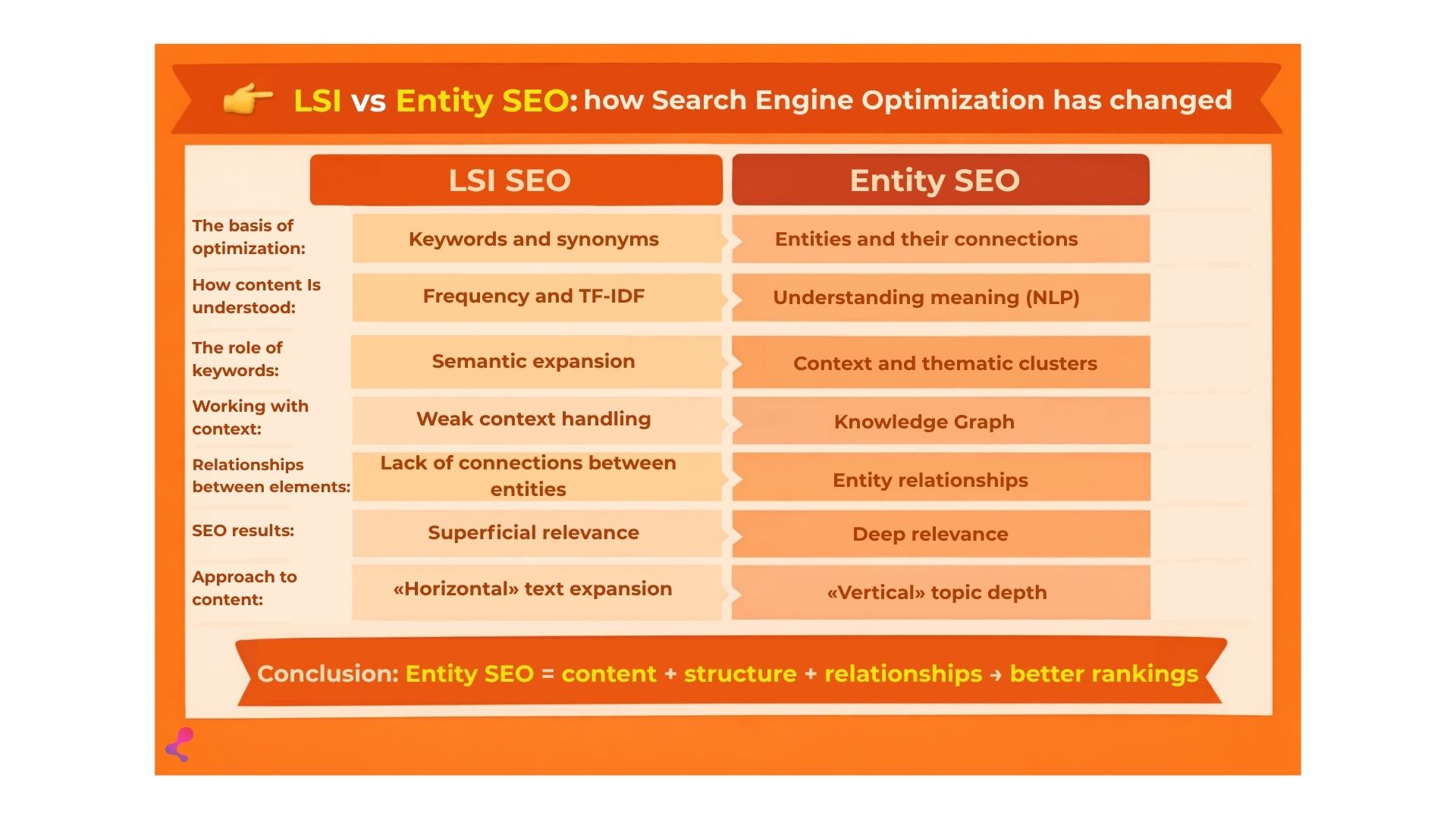
Traditional SEO rewarded keyword stuffing; modern AI search optimization rewards semantic clarity. LLMs are designed to map relationships between concepts. If you call your service a “Cloud Management Platform” in your header, “Software-as-a-Service solution” in your meta description, and “Digital Infrastructure tool” in your footer, you are actively confusing the machine’s internal knowledge graph.
This lack of semantic entity resolution forces the AI to guess what your content is actually about. Rather than risk providing an inaccurate answer, the AI will frequently favor competitors who maintain rigid, predictable naming conventions. By consolidating your language, you become LLM-readable content, allowing the search engine to confidently associate your brand with the specific queries your customers are asking. Recognizing this fragmentation is the first step toward reclaiming your site’s authority and ensuring your information is prioritized in the new era of search.
A Step-by-Step Audit Workflow to Find Your Entity Gaps
Clearing up the confusion that stops AI from trusting your brand requires more than just good writing; it demands a systematic approach to language. By conducting a topical authority audit, you force your site to speak one clear, consistent language that Large Language Models can easily index. This workflow helps you identify where your content is unintentionally causing entity fragmentation.
Phase 1: Building Your Master Entity List
Before changing a single line of text, you must define your “source of truth.” Create a Master Entity List in a simple spreadsheet. This document acts as your organization’s dictionary. For every core product, service, or brand pillar, define the canonical name (the official term) and list all the messy variations currently floating around your site.
- Extract: Crawl your site to pull all page titles, H1-H3 headers, and meta descriptions.
- Categorize: Group these by the actual underlying concept.
- Define: Select one, and only one, primary term for each concept. This is the term you will prioritize in future AI search optimization efforts.
- Map: Document common synonyms you’ll phase out to prevent future confusion.
Phase 2: Detecting Conflicting Terminology
Once you have your list, it is time to audit your site’s technical structure. You aren’t just looking for typos; you are looking for places where you have accidentally created multiple competing versions of the same entity.
- Header Audit: Scan your H1 and H2 tags across top-performing pages. Are you using “Cloud Storage,” “Online File Vault,” and “Remote Data Hosting” interchangeably for the same feature? The AI sees these as potentially different things, diluting your authority.
- Internal Link Audit: Check the anchor text of your internal links. If you link to your “Professional Services” page using five different phrases, you make semantic entity resolution harder for the machine.
- Meta Description Review: Ensure your meta descriptions reinforce your canonical terms. These snippets are often ingested by LLMs to summarize your page’s purpose.
The Impact of Harmonization
The goal of this audit is to move from a fragmented, confusing state to a harmonized, authoritative one. The following table illustrates how this transition directly impacts how an LLM perceives your brand’s offerings.
| Feature Area | Fragmented Example (Confusing) | Harmonized Example (LLM-Readable) |
|---|---|---|
| Product Naming | “SaaS dashboard,” “Analytics hub” | “Marketing Analytics Platform” |
| Service Tiers | “Basic plan,” “Start-up tier” | “Professional Growth Plan” |
| Call to Action | “Click here for more,” “Check this out” | “View Marketing Analytics Platform” |
By choosing a single, authoritative name for each entity and consistently applying it across your headers, internal anchor text, and metadata, you provide the clarity AI search engines crave. Consistent naming is the cornerstone of building lasting topical authority in an AI-first world.
Harmonizing Your Language: Making Your Content ‘LLM-Readable’
Creating a consistent naming convention is the cornerstone of AI search optimization. When your website uses the same terminology to describe your products, services, and core concepts, you reduce ambiguity for machine learning models. Think of an LLM as a brilliant student who gets confused if the textbook uses three different names for the same math operation. By standardizing your language, you become the definitive source of truth in your niche, signaling to algorithms that your site has high topical authority.
Standardizing Your Internal Linking
Internal links serve as the connective tissue of your site’s information architecture. If your pillar page calls a service “Advanced Data Analytics” while your blog post links to it using the anchor text “Predictive Data Tools,” you are creating entity fragmentation. Search engines use these anchors to understand the relationship between pages.
To fix this, update your internal linking strategy to use the primary, standardized name for every entity. This semantic entity resolution helps the LLM recognize that all these paths lead to one clear, authoritative concept. Audit your site’s most linked pages and ensure that the anchor text matches your “Master Entity List” established during your audit.
Modernizing Legacy Content Safely
Updating legacy content is essential, but you must avoid destroying the existing SEO value that brings you traffic. You don’t need to rewrite entire articles to achieve clarity. Instead, focus on these tactical updates:
- Update Headers: Adjust H2 and H3 tags to reflect the standardized entity name.
- Modify Intro Text: Weave the primary name into the first 100 words of the page.
- Refresh URL Slugs: Only change these if you can set up a permanent 301 redirect.
- Alt Text and Meta Tags: Use your standardized names in image descriptions and meta data to provide additional context.
By keeping these changes surgically precise, you align your historical content with current search standards without triggering unnecessary re-indexing issues.
Leveraging Structured Data for Machines
While humans read words, AI agents read code. Structured data, or Schema markup, is the most powerful tool you have to clarify entity relationships for machines. Even if your copy contains slight variations for the sake of readability, your Schema provides the precise definition the LLM needs to connect the dots.
| Schema Type | Purpose for Entities | Impact on AI Search |
|---|---|---|
| SameAs | Connects your entity to authoritative external sources. | Builds external verification. |
| MainEntity | Clearly identifies the primary subject of a webpage. | Reduces ambiguity for crawlers. |
| HasPart | Defines the hierarchy of your services or products. | Shows logical relationships. |
Use sameAs tags to link your brand and key service entities to authoritative URLs. This practice reinforces your topical authority audit results, proving that your site is a reliable participant in the semantic web. Consistent Schema usage ensures that when an AI summarizes your content, it pulls the correct, verified information every single time. By combining natural language clarity with technical precision, you create truly LLM-readable content.
Maintaining Authority: Preventing Future Fragmentation
Once you have successfully cleaned your current site, the real challenge begins: keeping it that way. Preventing entity fragmentation requires moving from reactive fixes to a proactive, “Entity-First” content strategy. If you don’t build systems now, you’ll inevitably drift back into the messy habits that confuse LLMs and degrade your topical authority audit results.
The Entity-First Content Brief
Stop letting writers guess how to name your products or services. Every new content brief must include a “Designated Entity Block.” This acts as a source of truth for the specific piece of content, ensuring that every article aligns with your master list.
Before a writer starts drafting, they should know exactly which terms are “Primary Entities” (the main topic) and which are “Secondary Entities” (supporting concepts). This prevents the introduction of synonymous jargon that LLMs might interpret as entirely different, unrelated concepts, effectively ruining your AI search optimization efforts.
Creating Your Style Guide for AI
Your existing brand style guide likely focuses on grammar and tone; it’s time to add an “AI-Readable” section. This internal document should clearly map your brand’s core terminology to its canonical form.
For example, if your company offers a “Cloud-Based Project Management Tool,” your guide should mandate that phrasing rather than allowing individual writers to flip between “online task manager” and “web-based productivity app.” Consistency is the bedrock of semantic entity resolution, and it makes your site significantly more LLM-readable content friendly.
The Pre-Publish Entity Checklist
To guarantee consistency before hitting publish, implement this mandatory checklist for your content team.
| Verification Item | Action Required |
|---|---|
| Terminology Check | Are core products named exactly as in the Master List? |
| Contextual Anchoring | Does the content explain the entity’s relationship to the brand? |
| Internal Linking | Do all links use the primary entity name as the anchor text? |
| Schema Alignment | Is the entity correctly defined within your JSON-LD? |
By treating your content as a structured database rather than a collection of documents, you ensure that you remain the undisputed expert on your topics in the eyes of AI search engines.
According to AEO/GEO, achieving dominance in AI-driven search isn’t a one-time project. Think of your topical authority audit as a persistent gardening habit. Start small: choose your three most valuable brand entities and harmonize how they are described across your most visible pages. By prioritizing consistency, you provide the semantic entity resolution that AI systems crave. Reducing entity fragmentation allows the machine to confidently associate your brand with the specific solutions you offer. Stay consistent with your terminology; in the world of AI search optimization, clarity is the most important currency you have. Your audience—both human and algorithmic—is listening. What are you saying to them today?
AEO/GEO
Want to learn more?
Contact us for direct consultation and support.