How to Optimize for AI Search Engines: An Entity-First Guide
You type a burning question into your search bar, expecting the familiar list of ten blue links. Instead, the screen populates with a concise, authoritative summary that answers your query directly. You don’t have to click a single website to get the information you need. While this is convenient for you as a searcher, it represents a massive shift in how businesses must approach their digital presence. If you’ve been wondering how to optimize for AI search engines, you are asking the right question at the perfect time.
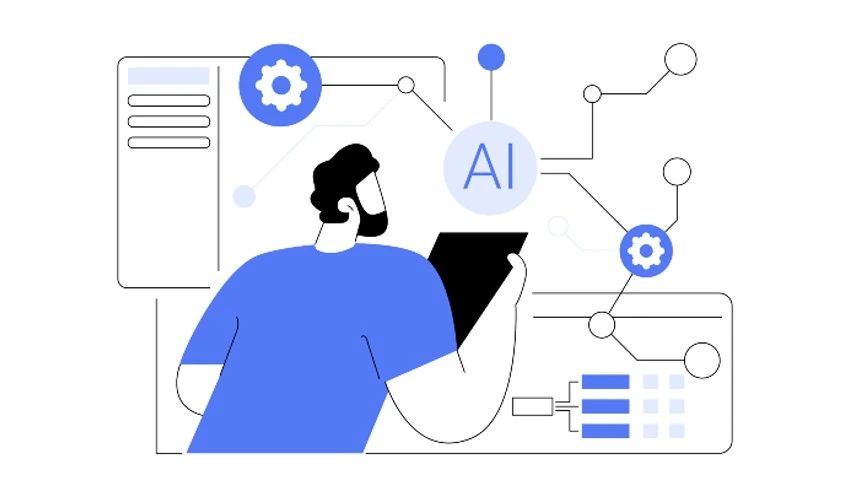
The era of chasing high rankings through keyword repetition is fading. Today’s generative AI engines, like those powering Google’s Search Generative Experience or Perplexity, look for understanding. They act like highly intelligent librarians who have already read every book and can instantly synthesize a complete answer. To be the trusted source these machines cite, you must move beyond flat content. You need to map the entities within your domain—the specific people, places, concepts, and relationships that define your expertise—into a structured network the AI can easily parse.
Thinking Like an LLM: Why Entity Mapping Matters
To master AI search, stop thinking like a librarian with a card catalog and start thinking like a neural network. Imagine a library that arranges books not by author, but by the meaning of every concept inside. In this library, books exist in a high-dimensional space where proximity is determined by conceptual similarity.
If you mention “coffee,” the machine plots that term in a vast map where “caffeine,” “barista,” “bean roast,” and “morning routine” exist as neighbors. This is how large language models (LLMs) function. They don’t just process text; they map connections between concepts. This is why entity relationship mapping has become the bedrock of modern semantic search.
The Death of Keyword Stuffing
In the past, traditional SEO was akin to pinning a “look at me” sign on every page, hoping to trick a crawler by repeating the word “best coffee” fifty times. This is keyword stuffing, and it is fundamentally flawed in the era of AI. Because LLMs are trained to detect patterns and intent, they view keyword repetition as a noisy, low-quality signal.
Instead of hunting for specific phrases, modern search engines analyze your content for “entities”—people, places, things, and concepts—and the logical relationships between them. If you write about high-end espresso, a machine looks for the semantic glue that connects “pressure extraction” to “flavor profiles” and “grind consistency.”
Why Context Is the New Currency
Machines value clear semantic links because they are constantly trying to disambiguate the world. Consider the word “lead.” Without context, is it the metal, the act of guiding a team, or a potential sales prospect? By explicitly linking specialized domain jargon—like “lead nurturing workflows” or “MQL conversion rates”—to broader pillar topics, you provide the clear breadcrumbs a machine needs to categorize your authority.
When you weave these entities together logically, you stop fighting for rankings and start building topical authority. By anchoring your niche terminology to high-level concepts, you aren’t just writing for people; you are training the model to recognize your brand as a primary source of truth within your ecosystem. This is the heart of Generative Engine Optimization and the most effective way to ensure your content is cited when users ask for answers.
The Mechanics of Machine-Readable Relationships
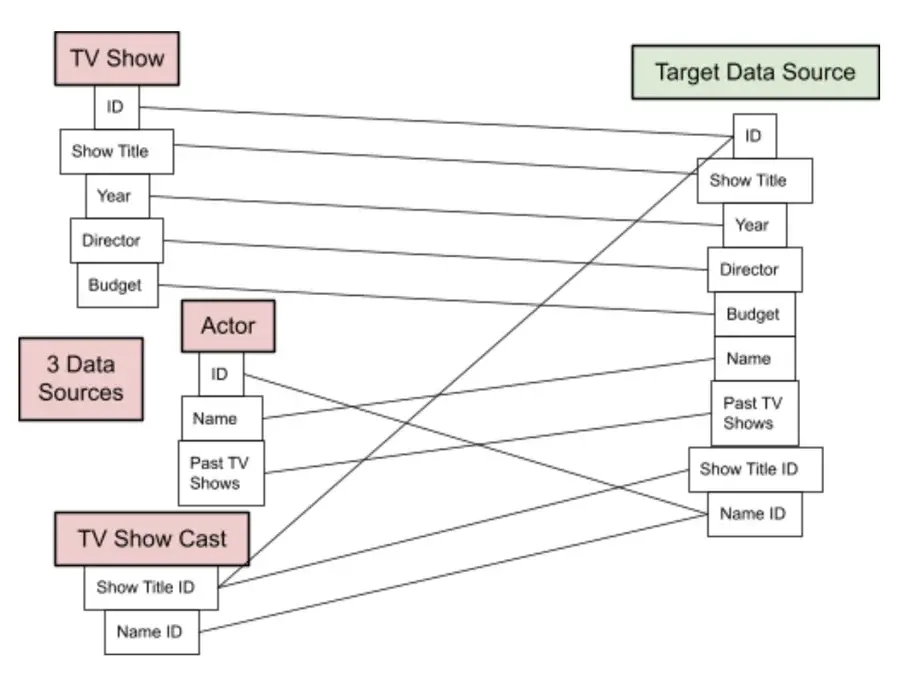
At the heart of how AI interprets your content is co-occurrence. This describes the frequency with which specific terms or entities appear near one another. AI engines don’t just look for isolated keywords; they map the statistical neighborhood of a concept. When you consistently discuss your specialized domain jargon alongside core industry concepts, you train the machine to associate your brand with those specific entities.
Mapping Your Domain Vocabulary
To master entity relationship mapping, use a structured approach to document your expertise. Don’t just publish content; curate a lexicon that serves as the foundation for your topical authority.
| Step | Action |
|---|---|
| Inventory | List 20–30 highly specialized terms used in your industry. |
| Cluster | Group these terms under your core content pillars. |
| Define | Write a single, clear, one-sentence definition for every term. |
| Connect | Place the term within a paragraph that mentions the core pillar it supports. |
Hierarchical Clarity and Disambiguation
AI models often struggle with polysemy—when a word has multiple meanings. A clear, hierarchical structure acts as a guide to disambiguate your specialized terminology. By using H2s and H3s that reflect logical relationships, you create a map that the machine can easily navigate. If you place a niche technical term inside an H3 header nested under a high-level H2 category, you provide the context needed for the AI to understand exactly what you are talking about.
| Feature | Keyword-Centric SEO | Entity-Centric AEO |
|---|---|---|
| Primary Focus | Repeating target phrases | Building semantic context |
| Goal | Ranking for a specific string | Providing the definitive answer |
| Structure | Flat, keyword-stuffed pages | Hierarchical, logical clusters |
| Measurement | Keyword position tracking | Authority graph growth |
Structuring Content for RAG Retrieval Success
To win in the era of generative AI, you must understand the RAG optimization pipeline. Retrieval-Augmented Generation, or RAG, is the process where an AI model searches a trusted database for relevant information before generating a response. If your content is unstructured or confusing, the model skips over your site, choosing instead to summarize a competitor who made their information easier to ingest.
Making Your Content Summarizable
Think of your content like a well-organized textbook rather than a chaotic stream of consciousness. AI models perform best when they can clearly define entities, relationships, and answers within a localized chunk of text.
To improve your chances of being pulled into a generative summary:
- Use precise headers: Each H2 or H3 should act as a clear, descriptive question or topic that your paragraph directly answers.
- Implement concise definitions: Use the “[Term] is [Definition]” structure at the start of your sections.
- Keep paragraphs focused: Ensure each paragraph covers exactly one concept.
Using Schema Markup for Clarity
While your headers and text structure help humans and AI understand the context, schema markup provides a direct map for search crawlers. By implementing structured data, you label your content with metadata that explicitly tells the machine what the information is.
For example, when you define a complex service, using Organization or Product schema helps the search engine categorize your content without relying solely on natural language processing. If you are teaching a concept, use HowTo or FAQPage schema to signal exactly where the instructional steps or answers are located within your page architecture.
Practical Steps to Build Your Topical Authority Footprint
Building a digital presence that AI engines interpret as credible requires moving beyond keyword volume. You must cultivate topical authority by acting as an expert hub. Your content needs to be dense with relevant entities and structured to map logically to the questions your audience asks.
Conducting an Entity-Density Content Audit
Start by taking inventory of your existing assets, not for keyword performance, but for entity coverage.
- Map your entities: List the top 20 entities crucial to your industry.
- Gap analysis: Evaluate your current articles to see if these entities are present, clearly defined, and linked together.
- Refine and expand: If an article mentions a specialized term but doesn’t explain it or link it to a parent concept, you have found a prime opportunity to deepen your semantic search footprint.
Internal Linking: Building the Semantic Network
Your internal linking strategy should mimic the neural connections of a knowledge graph. Use descriptive, entity-focused anchor text that guides both users and AI crawlers through your logical hierarchy. If you have a primary pillar page on “Digital Marketing Strategy,” your internal links from satellite articles should clearly establish relationships, clarifying to the AI that sub-topics are components of your broader expertise.
Checklist: Is Your Content Ready for AI Retrieval?
| Criteria | Actionable Check |
|---|---|
| Defined Entities | Have you used the “[Term] is [Definition]” structure? |
| Clear Hierarchy | Do H2/H3 tags show the relationship between sub-topics and the main pillar? |
| Concise Summaries | Does each section contain a “key takeaway” sentence? |
| Semantic Context | Have you included 3–5 related entities naturally within the text? |
| Logical Linking | Do your internal links trace the path back to your pillar content? |
The shift from traditional keyword-based tactics to an entity-centric approach represents a fundamental change in how your brand shows up online. By moving away from chasing isolated search terms and instead focusing on entity relationship mapping, you’re teaching AI models the context of your business. This is the core of Generative Engine Optimization (GEO).
As you continue to build out your content, remember that the goal is to become an authoritative node in the AI’s “brain.” Each piece of content should act as a verifiable signal of your expertise, linking clearly back to your core brand identity. When you prioritize semantic search and RAG optimization, you move beyond fleeting rankings and toward long-term digital sustainability.
Building these machine-readable assets takes time, but it’s the most reliable way to secure your brand’s future visibility. Think of your website as a growing knowledge graph; with every clear definition and structured relationship you add, you’re making it easier for AI search engines to trust and cite your content. Start small, stay consistent, and keep building your topical authority one well-defined entity at a time. Your future visibility depends on the clarity you provide today.
AEO/GEO
Want to learn more?
Contact us for direct consultation and support.