Privacy-First Intent Mapping for AI Chatbots
The rapid rise of conversational AI has created a tension between delivering personalized user experiences and maintaining data privacy. Many businesses rush to implement generative agents without considering how user intent data—often containing sensitive personal information—is captured, stored, and utilized. This guide introduces a privacy-centric framework for mapping user intent while staying compliant with global regulations like GDPR and CCPA.
The Intersection of Intent Mapping and Data Governance
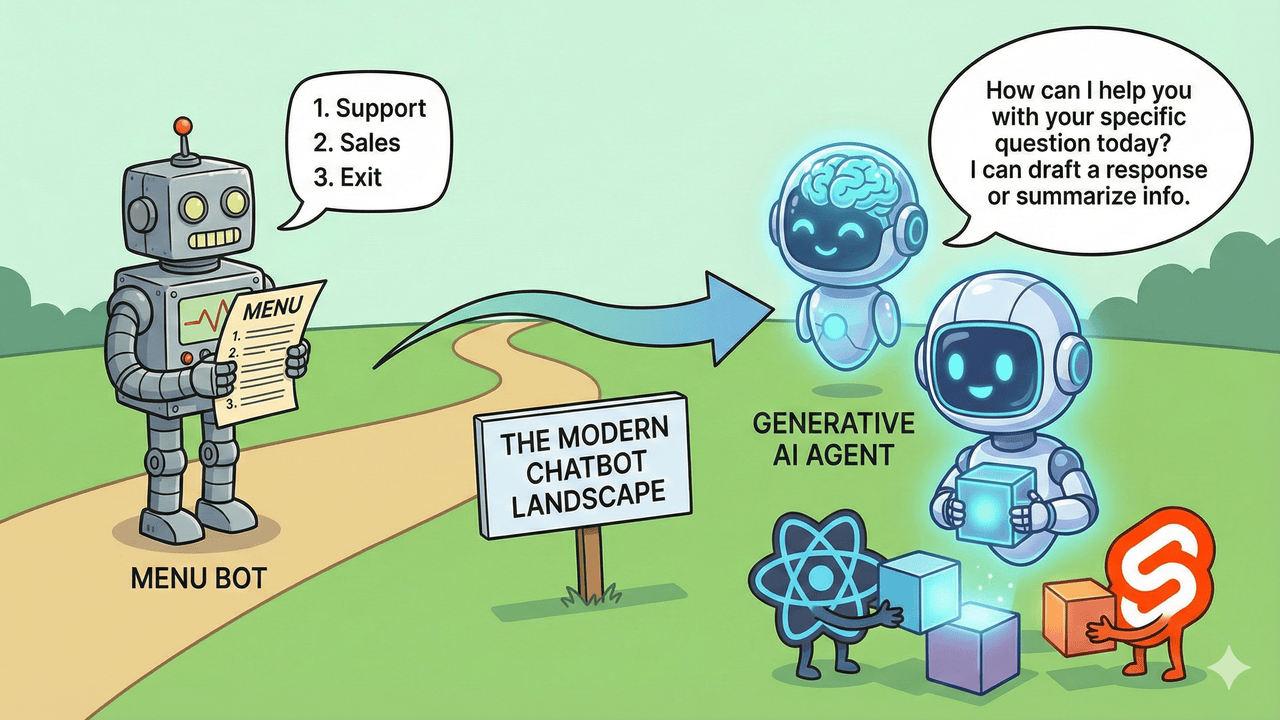
Intent mapping serves as the backbone of an effective AI Content Strategy for the AI Era. At its core, intent mapping is the process of categorizing user goals—understanding whether a user wants to purchase a product, troubleshoot an issue, or find information—during conversational interactions. By labeling these goals, your AI provides relevant, personalized responses. However, when these maps intersect with data governance, the stakes shift. You are architecting a system that handles sensitive human input.
Prioritizing Privacy-by-Design
To build a sustainable system, embrace privacy-by-design. Your intent taxonomy—the classification labels your AI uses to interpret needs—should be structured to capture the what of the request while ignoring the who. If your system is designed from day one to strip out identifiers, you reduce your legal liability and increase user trust. This ensures that your User intent mapping framework functions effectively without relying on PII to deliver quality outcomes.
The Risks of Raw Log Storage
Many organizations store raw interaction logs, believing that more data equals better model training. This is a dangerous misconception. Storing raw conversations containing names, email addresses, or account numbers creates a security vulnerability. If these logs are breached or processed by unauthorized third-party models, you face significant compliance risks under regulations like GDPR or CCPA. Implementing anonymization techniques at the point of ingestion is non-negotiable for anyone serious about Data governance for generative AI.
Comparing Privacy and Intent Classification Methods
Choosing the right architecture depends on your specific compliance needs versus your desire for high-level language capabilities.
| Classification Method | Privacy Risk Level | Data Exposure | Recommended For |
|---|---|---|---|
| Local Intent Routing | Low | Minimal (stays on-prem) | Financial/Medical data |
| Edge-Based Processing | Medium | Moderate (transient) | Standard support bots |
| Cloud-Based LLM Routing | High | High (model retraining) | Creative/Public tasks |
Designing a Compliant Intent Taxonomy
Creating an effective intent taxonomy requires a balance between technical utility and personal privacy. The goal is to identify exactly what a user wants without capturing the details of who that user is. By focusing strictly on actionable goals rather than user attributes, you build a foundation for a privacy-first AI chatbot that maintains high performance.
Granularity Without Personalization
To keep labels granular yet anonymous, adopt a hierarchical structure that categorizes intent by function, not by context. For example, transform a specific log like “John Doe requested a refund for Order 123” into a standardized label: “request_refund_action.” By stripping out proper names and identifiers before data reaches your model, you ensure your logs contain only the “what” of the interaction.
Prioritizing Data Minimization
Data minimization is the practice of collecting only the absolute minimum amount of information required to fulfill a request. In a privacy-first AI chatbot strategy, this begins with a sanitization layer positioned between your interface and your processing engine. Use automated filters to redact sensitive patterns—like social security numbers or credit card digits—the moment they are typed.
Separation of Log Types
Operational reliability and model improvement require different types of data storage. You should create a clear technical separation between conversational logs used for training and interaction logs required for customer support.
| Intent Category | Privacy Risk | Data Retention Strategy |
|---|---|---|
| Informational | Low | Retain for trend analysis |
| Transactional | Medium | Anonymize and mask identifiers |
| Sensitive Personal | High | Immediate purge/Zero storage |
Navigating GDPR and CCPA in Conversational AI
Adhering to regulations like GDPR and CCPA is non-negotiable when deploying a privacy-first AI chatbot. As you refine your AI Content Strategy for the AI Era, you must bridge the gap between building intelligent memory systems and protecting fundamental user privacy rights.
Managing Consent and the Right to be Forgotten
Modern conversational AI often utilizes long-term memory to personalize interactions. However, when a user exercises their Right to be Forgotten, deleting chat logs is only half the battle. You must also account for persistent intent profiles that store behavioral patterns. Maintain a modular storage architecture where individual user identifiers are decoupled from intent classification tags.
Auditing Performance and Data Sovereignty
A GDPR compliant chatbot strategy requires regional control over your data pipelines. Many companies struggle with data residency, where information must stay within specific borders. Whether using private managed clouds or on-premise VPCs, you must ensure that your deployment model aligns with international data governance requirements.
Ethical Training for Internal Teams
Technical safeguards mean little if your team handles data carelessly. Establish an internal policy that mandates PII scrubbing before data is uploaded to any annotation or training environment. When your team treats every interaction as sensitive by default, you build a culture of compliance that protects both your users and your reputation.
Building Trust Through Transparent AI Communication
Transparency is the cornerstone of any successful AI Content Strategy for the AI Era. When users interact with a privacy-first AI chatbot, they often share personal details under the assumption that their data is handled with care. To build genuine trust, communicate what data you collect and why, ensuring this explanation feels natural.
Designing Disclosure Protocols
Integrate disclosures directly into the bot’s persona. For example, if a user initiates a request involving account information, the bot can provide a quick, friendly notification: “To help you with this request, I will process your details locally without saving personal identifiers.” This validates the user’s intent while reinforcing your commitment to ethical conversational AI.
Human-in-the-Loop Oversight
Not every interaction should be handled by automation. High-stakes inquiries act as “edge cases” that trigger privacy warnings. Implementing a human-in-the-loop (HITL) protocol ensures that when an intent is flagged as sensitive, the AI can defer the interaction to a human representative.
| Interaction Type | Privacy Handling Approach | Trust Signal |
|---|---|---|
| General Inquiry | Anonymized logging | Low profile disclosure |
| Sensitive Data | Local processing/No storage | Proactive confirmation |
| Complex/Edge Case | Human agent handoff | Direct human assurance |
The reality of data protection is that it acts as a competitive advantage. When you treat privacy as a core component of your strategy, customers reward that integrity with deeper loyalty. By conducting a formal privacy-first intent mapping audit today, you ensure your brand is prepared for the future of AI search.
AEO/GEO
Want to learn more?
Contact us for direct consultation and support.