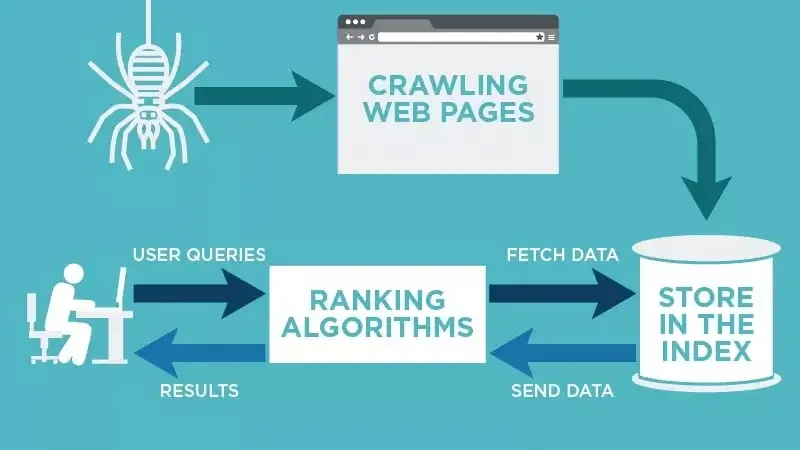
Probabilistic Verification: How to Optimize for AI Search
Stop optimizing for clicks and start manufacturing facts. The rules of search have shifted. When you type a question into an AI search engine, the old strategy of keyword stuffing no longer works. AI models like ChatGPT, Google’s SGE, and Perplexity do not scan for keywords; they scan for truth.
Here is the problem: AI models are probabilistic. They do not know what is true; they calculate what is most likely to be true based on the data they have seen. If your brand is not recognized as a reliable source, the AI skips you. This article explains how to make your brand the definitive source of truth that AI models want to cite.
Understanding Probabilistic Verification: The AI Truth-Finding Mechanism
When you ask a chatbot a question, it does not just scan a page for keywords. Instead, it runs a complex calculation. It evaluates billions of data points and assigns a probability score to every possible answer. This is probabilistic verification—the hidden logic AI models use to decide what to trust. In the past, SEO was about relevance. Today, AI Search Optimization is about truth and trust signals.
How AI Cross-References for Ground Truth
Large Language Models do not have personal opinions. They rely on training data from across the internet. When a user asks a question, the AI looks for sources that have consistently proven accurate. It cross-references data points across multiple trusted domains. If several reputable sources cite the same facts, the AI’s probability score for that fact increases. For AI Search Optimization, your content must align with established truths to be considered credible.
Why Your Authority Score Matters
Every brand has an invisible authority score in the eyes of an AI. This score is built over time through citations, backlinks, and consistent, accurate information. When an AI compiles a summary, it weighs these scores heavily. A brand with a high authority score is more likely to be selected as a source. This is why entity-based SEO is critical—the AI must clearly identify who you are and verify that you are a legitimate entity in your niche.
Traditional SEO vs. Probabilistic Optimization
| Feature | Traditional SEO | Probabilistic Optimization |
|---|---|---|
| Primary Goal | Rank for specific search terms. | Provide the most verified answer. |
| Signal Strength | Keyword density, backlinks. | Citation consistency, verified facts. |
| AI Interaction | Content as a database of words. | Content as a node in a trust network. |
| Risk of Error | High (AI may hallucinate). | Low (Favors multi-source validation). |
| Key Metric | Click-Through Rate. | AI Citation Frequency. |
Understanding this mechanism is the first step in learning how to optimize for AI search engines. By recognizing that AI values trust over keyword stuffing, you can build content that becomes the backbone of AI-generated answers.
From Content Production to Fact Manufacturing
Volume-based content strategies are inefficient in the age of AI. AI search engines scan for verifiable truth rather than quantity. You must transition from a content producer to a fact manufacturer. A content factory does not just publish articles; it engineers data points that AI models can ingest, trust, and cite.
What Is Verifiable Fact Manufacturing?
Verifiable fact manufacturing is the process of structuring data so it is machine-readable and cross-referenceable. An AI looking for a fact does not want a story; it wants a clear statement. If your content is structured as a logical argument supported by evidence, the AI can easily extract the truth. If your content is vague, the AI will likely bypass it.
Creating Ground Truth with Primary Data
One effective way to become a fact manufacturer is to create primary data. When you conduct original research or analysis, you generate unique signals that do not exist elsewhere. AI models prefer primary data because it reduces uncertainty. By providing median prices, survey results, or original insights, you increase your AI citation authority.
Boosting Credibility via Authoritative Citations
You can manufacture trust by associating your brand with it. When you cite authoritative external sources, you boost your own credibility by association. If your article cites government reports, academic studies, or major industry data, the AI views your content as part of a trusted network.
Architecting Trust: The Technical Blueprint for AI Credibility
You may have crafted brilliant content, but if your technical structure is weak, AI models will ignore it. Your website’s code acts as a catalog system. It tells the AI not just what you are saying, but who you are and why you should be trusted.
Schema Markup: Speaking the AI’s Native Language
Schema markup provides explicit labels for entities. When you use structured data, you hand the AI a label identifying your organization, people, and products. This clarity reduces verification uncertainty. Use tools like the Rich Results Test to ensure your code is error-free.
Internal Linking: Building Your Knowledge Graph
Internal links serve as the neurons of your site’s knowledge graph. When you link between related pieces of content, you signal topical depth. If you have multiple articles linking to a central guide on a specific subject, the AI perceives a hub of authority.
Technical SEO Checklist for AI Credibility
| Technical Element | Action Item | Why It Matters |
|---|---|---|
| Schema Markup | Validate all JSON-LD. | Provides explicit entity definitions. |
| Internal Links | Link to 2-3 relevant posts. | Builds topical context and depth. |
| NAP Consistency | Audit Name/Address/Phone. | Prevents identity fragmentation. |
| Page Speed | Achieve Core Web Vitals goals. | Faster sites facilitate fresh extraction. |
Winning the Source Selection Logic: How to Be the AI’s Chosen Truth
To win the source selection logic, you need to make your content the easiest, most credible option for the AI to choose.
The Power of Extractable Answer Summaries
Provide a clear, concise answer at the beginning of your content. This helps the AI extract a snippet for its response. By placing the answer upfront, you reduce the AI’s effort in verifying information. This increases the likelihood that your content will be selected as the primary source.
Monitoring AI Citations
Use tools to monitor how often AI models cite your brand. By tracking your AI citation authority, you can identify where to improve your content and brand sentiment.
Building a relationship with AI search engines is a long-term commitment. By focusing on entity-based SEO, technical clarity, and verifiable facts, you position your brand as a trusted authority. This is the only sustainable strategy for maintaining visibility in the era of generative search.
AEO/GEO
Want to learn more?
Contact us for direct consultation and support.