Scaling Content for AI Search: A Five-Phase Roadmap
In an era where generative search engines have fundamentally altered how users discover information, many enterprises find themselves trapped in a cycle of churning out massive volumes of content, only to watch their visibility stagnate. Traditional search engine optimization focuses on securing a top-ten list of links, but modern AI-driven engines like ChatGPT, Google AI Overviews, and Perplexity prioritize synthesized, authoritative answers. The result is a widening gap between mere content output and the answer authority required to be cited as a trusted source. Scaling content for AI search is about shifting from mass production to precision-engineered content that AI models can easily parse, trust, and reproduce.
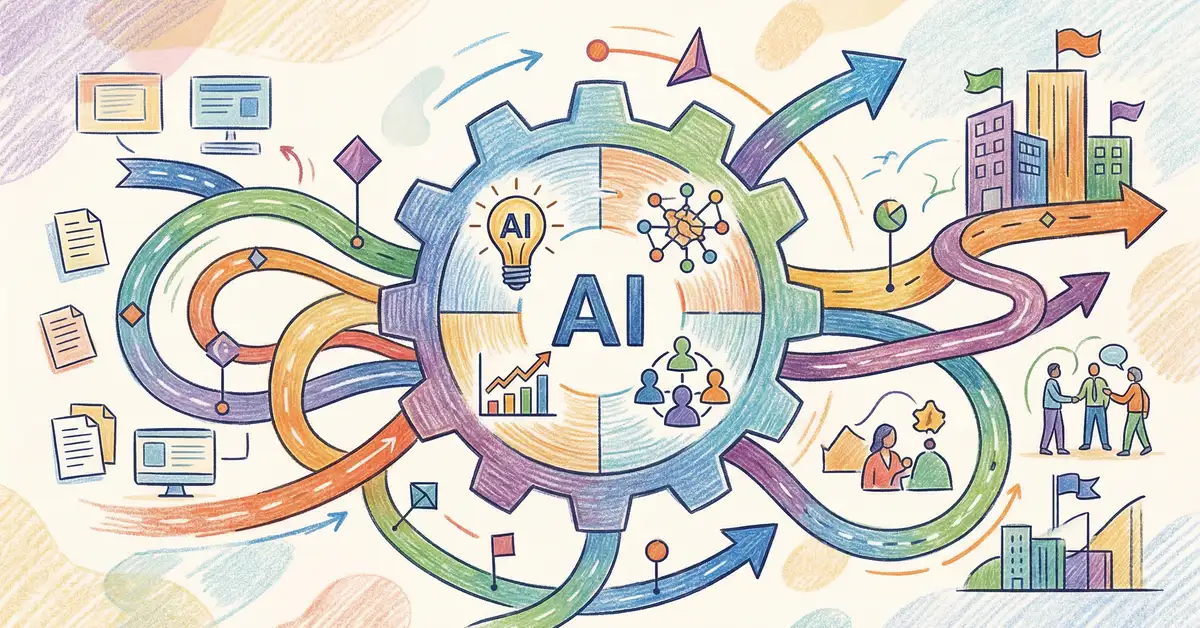
This guide introduces a structured, five-phase roadmap designed to help you evolve your operations into a high-impact engine. By moving through these stages—from initial readiness and pilot projects to full-scale architectural integration—you can replace content chaos with a deliberate, measurable system. By focusing on answer-first formatting, robust E-E-A-T signals, and intelligent workflow automation, your organization can stop chasing every algorithm update and start becoming the foundational source that answer engines rely on.
Phase 1: Readiness Assessment and Gap Analysis
Success in scaling content for AI search begins long before the first prompt is written. Before integrating generative models, you must conduct a thorough audit to understand your current baseline. This initial stage ensures your foundation is stable, compliant, and ready to meet the rigorous demands of modern AI answer engines.
Auditing Assets for Answer-First Compatibility
Modern generative search optimization requires a shift from traditional keyword-heavy writing to answer-first formatting. AI models perform best when they can extract concise, self-contained information. During your audit, evaluate your existing library to determine which pages provide clear, 40–60 word definitions that answer a specific query. If your assets lack structured formatting like numbered lists or comparison tables, they will likely be ignored by AI crawlers.
Technical and Human Infrastructure Evaluation
Beyond the content itself, you must assess your technical infrastructure. Are your pages render-ready? If your critical information is hidden behind JavaScript or non-indexed elements, AI crawlers will skip them. Furthermore, check your robots.txt configuration to ensure you aren’t accidentally blocking essential bots.
| Workflow Component | Traditional SEO Requirements | AI-Integrated Requirements |
|---|---|---|
| Content Structure | Keyword density & H-tags | Answer-first & Schema markup |
| Technical Focus | Page speed & mobile-first | Render-readiness & crawler access |
| Success Metrics | Rankings & organic clicks | Citations, quotes, & AI-traffic |
| Team Skillset | Writing & link-building | Data literacy & prompt engineering |
Establishing KPIs for Discoverability
To move toward content operations at scale, you must define clear, measurable goals for your enterprise AI implementation. Track these key performance indicators to measure your progress:
- Citation Frequency: Tracking how often your domain appears as a source in AI-generated answers.
- Answer Accuracy: Ensuring your content is consistently parsed correctly by models.
- Referral Traffic: Measuring clicks specifically originating from AI platforms.
Phase 2: Building the Pilot AI Content Pipeline
Building an AI content pipeline requires a controlled environment where you can test your processes without risking your site’s overall performance. Start by selecting a low-risk, high-impact content cluster—a topic area that has clear search intent but is narrow enough to manage effectively during a four-to-six-week pilot period.
Defining the Pilot Workflow
Transitioning requires a fundamental shift in how your team interacts with drafts. You must establish standardized prompt libraries and editorial guidelines. This ensures that every piece of content consistently adheres to your brand voice and E-E-A-T requirements.
The core of this phase is the human-in-the-loop review. While AI can draft text quickly, humans must verify accuracy, tone, and the inclusion of original insights that demonstrate genuine experience. This is not just about editing; it is about injecting the unique authority that AI cannot fabricate.
Phase 3: Production Integration and Workflow Optimization
Moving from pilot projects to a full-scale AI content pipeline requires transitioning from experimentation to operational stability. At this stage, you bridge the gap between AI generation and your existing digital infrastructure.
Connecting AI Tools to Your CMS
Your AI generation tools should not live in isolation. Integrating these platforms directly into your existing content management system allows your team to move from ideation to publication without constant context-switching. By automating the transfer of structured drafts, you maintain a unified audit trail of content history, versioning, and status tracking.
Engineering Structure for AI Crawlers
For your content to be consistently picked up by generative engines, you must communicate its meaning clearly through structured data. Implementing JSON-LD schema—specifically FAQPage and HowTo types—acts as a roadmap for LLMs. By mapping your content to these schemas, you remove ambiguity about what your page offers, increasing the likelihood that AI will extract and cite your specific answers.
Phase 4: Scaling Through Change Management
Scaling content for AI search is as much about human culture as it is about algorithms. Successfully scaling your operations requires a deliberate shift in how your team perceives value. Guide your writers away from outdated keyword-centric habits toward an answer-centric philosophy.
Standardizing Quality Gates
Maintaining brand voice while scaling output requires robust quality gates. Consistency is the hallmark of E-E-A-T (Experience, Expertise, Authoritativeness, and Trustworthiness). To ensure every piece of content meets the standard required by AI answer engines, implement a centralized review framework.
Phase 5: Evaluation, Refinement, and Continuous Iteration
Reaching production is merely the beginning. Because generative engines evolve rapidly, your content must remain dynamic and responsive.
Analyzing Long-Term AI Performance
Traditional metrics are no longer sufficient for gauging success. To understand your brand’s presence in the AI era, you must track qualitative and quantitative data specifically related to answer engine interactions. Monitor referral traffic in your analytics suite and conduct manual audits by testing high-priority queries to see if your brand is consistently surfaced or cited.
Planning for Future Expansion
Once you have achieved maturity in your current content cluster, pivot your efforts toward expanding into new formats. This could include integrating video content into your answer-first summaries or deploying dynamic tools that provide unique data. By treating your AI presence as a living, breathing asset rather than a static publication, you ensure your brand remains the primary source that models turn to when answering your audience’s most critical questions.
AEO/GEO
Want to learn more?
Contact us for direct consultation and support.