When Manual Content Production Hits Its Breaking Point
The era of manual content production is reaching a breaking point. Businesses have long relied on traditional search engine optimization to capture traffic, but the rapid rise of AI-driven answer engines—such as ChatGPT, Perplexity, and Google AI Overviews—has fundamentally changed how audiences find information. If your content isn’t structured to be synthesized, cited, and trusted by these models, you risk being invisible in an increasingly zero-click landscape.
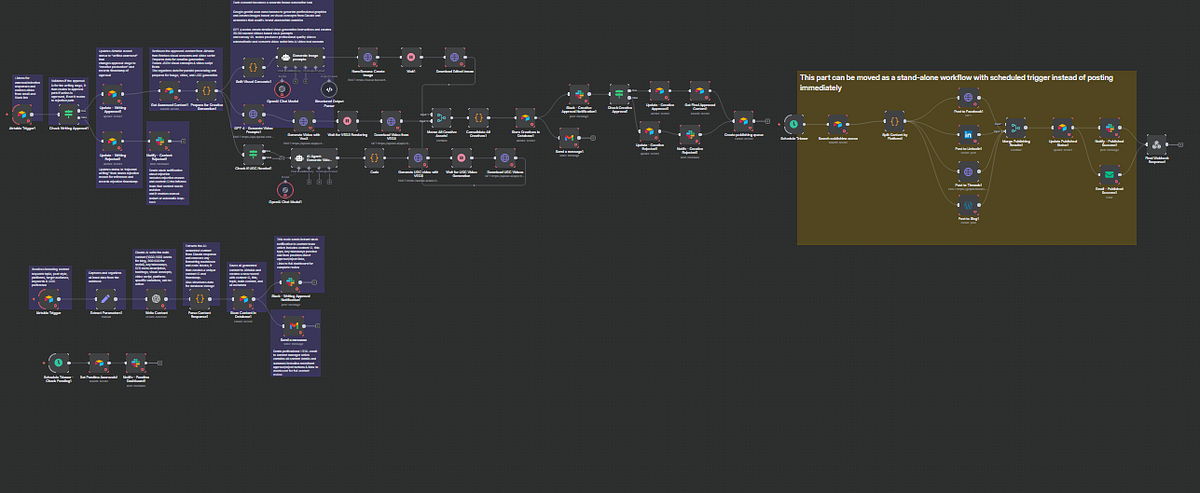
Many teams struggle to bridge the gap between human creativity and the structural demands of modern answer engines. The solution is to build a modular, automated system that keeps pace with these shifts. Scaling content for AI search requires a change in mindset: you are no longer writing for a blinking cursor, but architecting a source of truth that Large Language Models (LLMs) can parse and reproduce. By implementing an intelligent content architecture, you can maintain brand authority while reducing the time it takes to move from an idea to a fully optimized asset.
Defining the Foundation: The Anatomy of an AI Content Engine
Transitioning to an AI-ready content pipeline requires a shift in how you view production. Unlike traditional publishing, which treats content as a static end-product, scaling content for AI search demands that you treat every piece of writing as a structured data asset designed to be ingested by AI models. This evolution moves your team away from manual editorial bottlenecks and toward a high-velocity model where AI content automation serves as the engine for visibility.
To build a robust content engine architecture, you must think in three distinct, interconnected layers:
- Data and Intelligence Layer: This is your source of truth, including brand guidelines, expert content, and proprietary data. This layer focuses on gathering high-quality, grounded facts that establish your E-E-A-T (Experience, Expertise, Authoritativeness, Trustworthiness) credentials.
- Orchestration Layer: This acts as the connective tissue of your operation. Using a no-code content pipeline, you link various LLMs and specialized tools to automate task sequences, ensuring every task follows a consistent workflow.
- Distribution Layer: This ensures your content reaches both traditional search engines and AI-driven answer engines. It involves implementing structured data, such as JSON-LD schema, to ensure your content is machine-readable and primed for AI Overviews.
Maintaining Brand Integrity at Scale
A common misconception is that automation leads to generic, robotic output. However, a well-architected system actually protects your brand voice. By embedding your tone guidelines and specific requirements directly into the prompt engineering of your pipeline, you create guardrails that a human writer might occasionally miss. Generative search optimization is about providing the precise, trustworthy answers that AI models require.
| Production Model | Speed | Scale | Quality Control |
|---|---|---|---|
| Manual Production | Slow | Low | High (Human-Led) |
| Fully Automated | Instant | Extremely High | Low (Variable) |
| Hybrid Pipeline | Fast | High | Balanced (Human-in-the-Loop) |
Building this foundation allows your business to thrive where zero-click searches are increasingly common. Instead of fearing change, you position your brand as the primary source of truth for the next generation of search.
The Technical Stack: Choosing Your Components
Building a robust pipeline requires a deliberate selection of components that communicate seamlessly. Your stack acts as the digital nervous system of your content engine. To succeed in generative search optimization, you need tools that prioritize structured output, API flexibility, and high-quality generation.
The Core Building Blocks
At the heart of your operation, you need a combination of intelligence providers and creative engines:
- LLM Providers: Models like GPT-4 or Claude serve as the “brain,” capable of drafting, summarizing, and structuring complex information. They excel at following instructions for AEO strategy, such as prioritizing answer-first formatting.
- Asset Generation: Tools like DALL-E or Midjourney handle visual components. These ensure your content includes original visuals that search engines often prioritize for engagement.
- Workflow Orchestration: Platforms like Zapier, Make, or n8n act as the glue, moving data from an LLM draft to a Content Management System (CMS) without manual intervention.
Ensuring Accuracy through Human Oversight
The Human-in-the-Loop (HITL) step is non-negotiable for E-E-A-T. While AI is efficient, it lacks real-world experience. A human editor must review drafts to verify factual accuracy and inject brand voice. Automating the creation is useful, but automating the authority requires human verification. Use a two-stage approval system, such as a Slack notification, for human review before the final publishing stage.
Orchestration Logic: Connecting Tools for Flow
An effective content pipeline functions as a continuous, automated stream. By orchestrating your stack, you move away from manual copy-pasting and toward a system that treats content as structured data.
To build a reliable no-code content pipeline, focus on defining clear handoff points. Each step in the process should be self-contained. Use webhooks to pass JSON objects between these stages, keeping the context intact as the asset evolves.
The Power of Machine-Readable Structure
Your goal in generative search optimization is to make content digestible for AI crawlers. This is where structured data becomes critical. By injecting schema.org markup (specifically JSON-LD) directly into the page head during the final assembly phase, you explicitly tell answer engines how to interpret your content.
When you automate this, you ensure that every piece of content includes the correct FAQPage, HowTo, or Article markup without manual intervention. This consistency is a primary factor in how AI models weigh your content for citations.
Measuring and Refining for AI Visibility
Scaling content for AI search requires a shift in how you evaluate success. Traditional SEO relies heavily on ranking positions and clicks, but AI search environments demand that you measure the quality and frequency of citations. An AI citation occurs when an answer engine names your brand as a source, even if the user does not click through to your website.
Tracking Citations vs. Traditional Metrics
To gauge your performance, differentiate between traffic-driven metrics and authority-driven signals:
| Metric Type | Measurement Focus | Primary Tool |
|---|---|---|
| Traditional | Organic clicks, impressions, and keyword rank | Google Search Console |
| AI-Centric | Citations, quotes, and branded mentions | Perplexity, Brand-tracking tools |
| Conversion | Referral traffic from chat platforms | GA4 |
By monitoring referral traffic in GA4 from sources like chatgpt.com or perplexity.ai, you can identify which pieces are driving visitors after being cited. Simultaneously, periodic searches on various answer engines allow you to verify if your site is surfaced as the preferred source for your target queries.
Setting Up Freshness Audits
In a landscape dominated by LLMs, accuracy is the primary currency. A freshness audit is your defense against becoming outdated in an AI response. AI models prioritize current data; if your content contains stagnant facts, models will stop citing you in favor of reliable sources. Establish a cadence—quarterly or bi-annually—to review your pillar content for broken links, updated industry benchmarks, and shifts in terminology.
By shifting your perspective, you stop treating every piece of content as a standalone chore and begin viewing your output as a cohesive, machine-readable asset library. You build a digital ecosystem that works for you twenty-four hours a day, ensuring your brand remains a trusted, cited authority.
AEO/GEO
Want to learn more?
Contact us for direct consultation and support.