Scaling Content for AI Search: A Strategic Guide
For decades, the search playbook focused on one primary metric: volume. Brands produced thousands of words, targeted broad keyword lists, and built extensive link networks to dominate search engine results pages. We have now entered an era where generative AI has shifted those goalposts. Today, models can generate vast amounts of content in seconds, turning volume from a competitive advantage into a digital commodity.
The value no longer lies in being the loudest voice, but in becoming the most trusted one. While automated systems can synthesize information, they struggle to replicate the nuanced perspective of a genuine expert. Scaling content for AI search is about refining your signal so that when AI models analyze your industry, they identify your brand as the definitive, authoritative source. By pivoting from a volume-first mindset to a strategy focused on E-E-A-T and direct, machine-readable answers, you ensure your content remains essential in an age defined by AI-generated summaries.
The Death of Volume: Why More Content Isn’t Enough
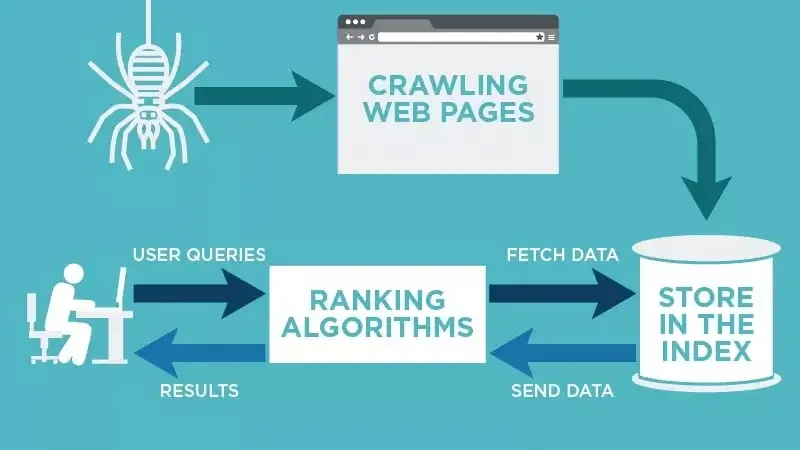
For years, the gold standard of digital marketing was mass production. Brands hoped that by covering enough keywords, they would inevitably dominate rankings. Today, this approach faces a “trust deficit” where the internet is flooded with generic, AI-generated noise. Because LLMs are trained on this sea of repetitive content, they are becoming increasingly selective. Chasing search volume alone now results in commodity content that AI models often ignore because it lacks the unique insight or verifiable authority required to earn a citation.
.png?width=512&height=384&name=unnamed%20(36).png)
The Shift Toward Entity-Based Authority
Search engines and AI systems are moving away from simple keyword density. Previously, repeating a keyword was a viable way to signal relevance. Now, AI models look for entity-based authority. They prioritize content that displays deep expertise, clear sourcing, and a logical structure that machines can easily parse. When you focus solely on volume, you produce thin, redundant content that fails to provide the high-quality data these models crave. Instead of trying to rank for every keyword variation, you must provide comprehensive, well-structured answers that machines can confidently cite as a trusted source.
Comparing Content Strategies
The following table highlights why your tactical approach must evolve to survive in an AI-dominated environment.
| Metric | Traditional Volume-Based Content | AI-Era Citation-Based Content |
|---|---|---|
| Primary Strategy | Keyword volume and frequency | Entity authority and E-E-A-T |
| Goal | Earning a click via a link | Winning a citation in an AI answer |
| Success Signal | Organic traffic and bounce rate | AI model citations and brand trust |
| Content Focus | Breadth (many keywords) | Depth (comprehensive, answer-first) |
Why Commodity Content Fails
When you prioritize quantity over substance, you create content that mimics existing information, offering no unique value. AI answer engines are designed to synthesize facts, not just list links. If your pages are simply rewritten versions of what is already available, the model has no incentive to feature you. Answer Engine Optimization requires you to provide specific, verifiable value—such as original data, unique experience, or proprietary insights—that elevates your brand above the noise.
Citation Acquisition: The New Goal of Search Marketing
Citation acquisition is the process of optimizing your digital presence to ensure AI-driven answer engines identify, trust, and quote your content within their generated responses. In the era of generative search, this represents a fundamental transition in how marketers view success. While traditional SEO focuses on capturing organic clicks through blue links, citation acquisition aims to position your brand as a primary information source for AI models, regardless of whether a user clicks through to your website.

Why Being Cited Matters
When an AI model like Google AI Overviews, ChatGPT, or Perplexity names your brand as a source, it acts as a digital endorsement that carries significant weight. This process transfers authority from the AI engine directly to your brand. Even in a zero-click scenario, the brand exposure and trust building are invaluable. For companies scaling content for AI search, this visibility creates a powerful flywheel effect where your brand becomes synonymous with reliable answers in your niche.
The Mechanics of Answer-First Formatting
To succeed at citation acquisition, your content must be machine-readable and highly extractable. AI models prioritize content that is concise, direct, and logically structured. Adopting an answer-first pattern is one of the most effective ways to achieve this. By providing a clear, self-contained answer of 40–60 words at the very beginning of your section, you provide the AI with a ready-to-use snippet that addresses the user’s intent immediately. This approach works because it minimizes the cognitive load on the LLM. If you bury your key points behind flowery introductions, you lower the probability of being quoted.
The Human Edge: Why Expert Validation Matters
In an era where generative AI produces endless streams of generic information, human expertise has transformed into a strategic competitive advantage. When scaling content for AI search, the sheer volume of output no longer impresses algorithms; the verification of genuine human insight determines whether your brand is cited.

The E-E-A-T Framework as a Trust Bridge
E-E-A-T (Experience, Expertise, Authoritativeness, and Trustworthiness) serves as the vital link between human knowledge and machine trust. Because AI models are trained on massive datasets, they struggle to distinguish between superficial summaries and deeply insightful, lived experiences. By centering your AI content strategy on these four pillars, you provide the signals machines need to validate your content as a reliable source.
| Signal | How to Demonstrate |
|---|---|
| Experience | Share unique case studies, first-hand data, and proprietary research. |
| Expertise | Use named authors with verifiable credentials and history. |
| Authoritativeness | Earn citations from recognized industry platforms. |
| Trustworthiness | Maintain transparent contact info, clear sourcing, and HTTPS protocols. |
Your Competitive Moat: Unique Insights
In a landscape flooded with automated noise, the only true “moats” against obsolescence are those that AI cannot easily replicate: original research, unique case studies, and personal experiences. While an AI can summarize existing knowledge, it cannot conduct a new experiment or interview a client about their specific challenges. By investing in building content authority through these non-replicable assets, you ensure your brand provides the specific, nuanced value that AI systems are incentivized to cite.
Strategic Economics: Shifting from Writing to Curation
The economic landscape of content creation is undergoing a radical transition. Scaling content for AI search requires a fiscal approach that reallocates budgets away from mass production and toward high-level strategy, deep research, and expert interviews. AI models do not need more generic filler; they need verified, unique, and authoritative data points to synthesize accurate answers.

Prioritizing Off-Site Signals
While on-page optimization is vital, your off-site strategy acts as social proof for your authority. Generative search marketing thrives on external validation. When reputable, high-authority publications cite your original data or expert quotes, you send powerful E-E-A-T signals to search algorithms. This off-site presence functions as a stamp of approval, signaling that your content is recognized by the human expert community as the definitive answer to a query.
Internal Workflows for Expert-Led Content
Transitioning from a volume-based model to an authority-led model requires an overhaul of your internal workflows. By focusing on expert-driven synthesis rather than freelance writing at scale, you reduce the noise in your digital presence while increasing your relevance to answer engines.
| Workflow Step | Traditional Approach | Expert-Validation Approach |
|---|---|---|
| Topic Ideation | High-volume keyword search | Answering specific industry ‘pain’ queries |
| Source Gathering | Aggregating web search results | Conducting interviews with SMEs |
| Content Creation | Freelance writing at scale | Expert-driven synthesis and drafting |
| Quality Control | SEO checklist for length | Review for accuracy and uniqueness |
| Distribution | Broad social media blasting | Targeted PR and industry partnerships |
The evolution of search marketing marks a permanent shift away from the era of “more is better.” As search transforms into an answer-driven landscape, your success depends on your ability to provide concise, authoritative, and machine-readable information. By prioritizing E-E-A-T signals and committing to depth over volume, you build a sustainable foundation that survives every algorithm update.
AEO/GEO
Want to learn more?
Contact us for direct consultation and support.