Scaling Content When AI Rewrites the Search Rules
When you wake up to find your search traffic has dipped, it often feels like the rules of the game changed overnight. You aren’t just competing with other websites; you are competing with AI-driven answer engines that prefer to summarize information rather than send users to your front door. The challenge of scaling content for AI search is no longer about hitting a specific keyword density; it is about becoming the definitive, machine-readable source that models trust enough to cite directly.
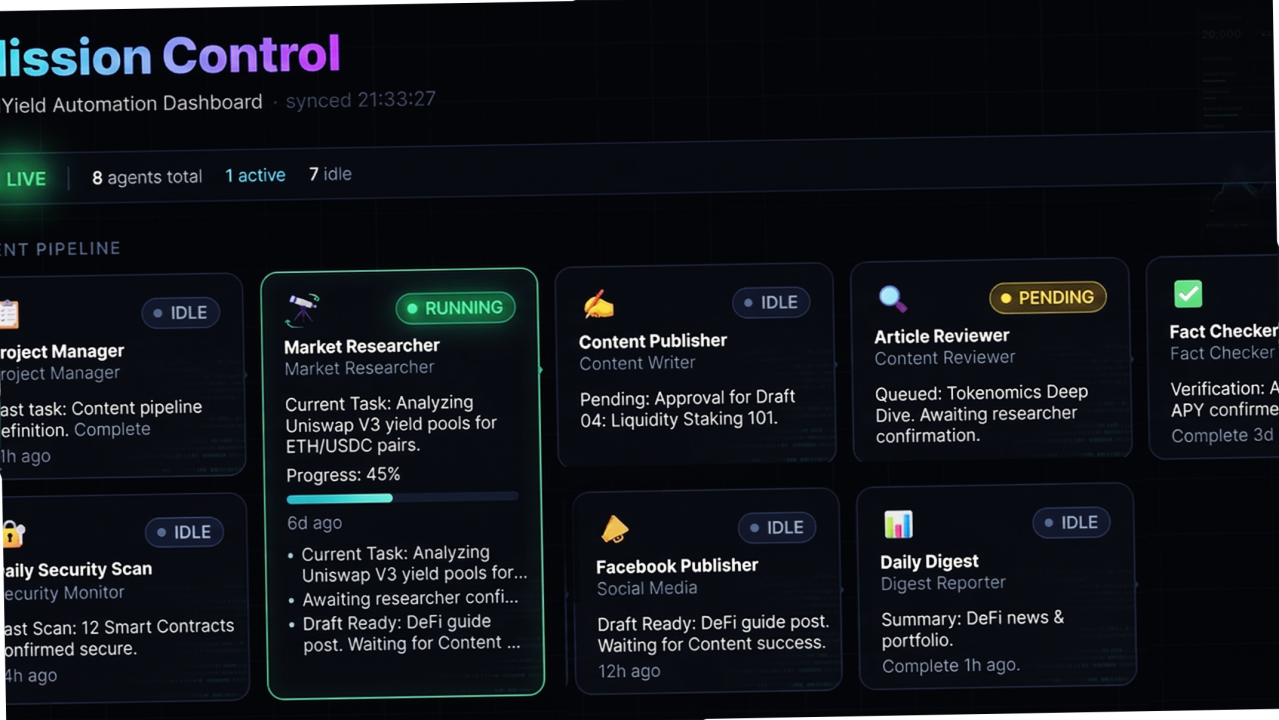
Trying to manually produce enough high-quality, structured content to maintain visibility in this new landscape is a recipe for burnout. The solution is to transition from manual creation toward a multi-agent content system. By deploying a team of autonomous AI agents, you can simulate a full editorial department that operates around the clock—researching, drafting, fact-checking, and publishing content designed to be digested by Large Language Models.
This shift moves you away from the fragile cycle of reactive link-building toward a proactive strategy built on AEO (Answer Engine Optimization) and systematic automation. By treating your content as a structured data pipeline, you can turn your website into a reliable source of truth that stays relevant in an era of generative search.
Understanding Multi-Agent Architectures
Scaling content for AI search requires moving beyond the limitations of single-prompt generation, where a lone model often struggles to balance research, stylistic nuance, and factual precision. By adopting a multi-agent architecture, you transition from a do-it-all approach to an assembly-line model. In this setup, specialized AI agents act as dedicated workers, each taking responsibility for specific segments of the content lifecycle. This division of labor increases throughput and enhances the quality of your output, creating the kind of E-E-A-T-aligned content that models are more likely to trust.
| Feature | Traditional Manual Workflow | Multi-Agent Content Pipeline |
|---|---|---|
| Efficiency | Limited by individual bandwidth | Scalable via concurrent processing |
| Consistency | Variable based on human focus | Uniform through defined agent roles |
| Research Depth | Time-consuming manual retrieval | Rapid extraction via dedicated agents |
| Fact-Checking | Prone to human oversight | Verified by automated agents |
Defining Your Agent Team
To build an effective system, you need clearly defined roles. Each agent possesses a distinct directive, ensuring your final output is accurate and optimized:
- The Researcher: Scours authoritative sources to gather current data, preventing surface-level or hallucinated information.
- The Architect: Acts as the project lead, structuring outlines, mapping search intent, and ensuring content flow aligns with AEO principles.
- The Writer: Translates researched data into engaging, human-readable prose that adheres to your brand voice.
- The Compliance Officer: The final gatekeeper. This agent cross-references claims against verified databases to ensure factual integrity and E-E-A-T signals.
The No-Code Tech Stack
Building a system for scaling content for AI search doesn’t require a computer science degree. By leveraging no-code tools, you can create a content hub that acts as the central nervous system for your brand’s assets. This hub, typically a headless CMS, allows you to store structured data that AI models can easily ingest and parse.
Bridging the Gap with No-Code Integration
To build an automated pipeline, connect your LLMs to your CMS using tools like Zapier or Make. You can trigger a workflow that sends a drafted article through an AI agent for final polish and automatically updates your headless CMS via API, all without writing code.
| Tool Category | Examples | Purpose in Pipeline |
|---|---|---|
| Workflow Automation | Zapier, Make | Linking LLMs to CMS and channels |
| Headless CMS | Contentful, Strapi | Acting as the central repository |
| AI Agent Frameworks | LangChain, Flowise | Orchestrating prompts and responses |
Security Checklist for Agent Connectivity
- Use Private Tunnels: Utilize tools like Tailscale to create a secure, encrypted mesh network between your agents and your server.
- Restrict API Scopes: Only grant automation tools the specific permissions needed to read or write to your CMS.
- Validate Inputs: Use middleware to sanitize data coming from an AI agent before it is pushed to your production site.
- Environment Variables: Never hardcode API keys; store them in encrypted environment variables.
Automating Quality Control and Fact-Checking
Scaling content for AI search requires a rigorous, automated verification layer. By integrating a dedicated verification agent into your pipeline, you can catch factual errors before they reach the public.
Configure your system to cross-reference every claim against a curated, trusted database. If generated content contains a statistic or regulatory requirement, the agent flags it for a confidence score evaluation. If the score falls below a threshold, the content is routed to a staging environment for human eyes.
Implementing Human-in-the-Loop (HITL) Checkpoints
Even advanced automated systems benefit from final human oversight. Human-in-the-Loop checkpoints serve as a safety net where the AI identifies ambiguous segments, such as complex subjective claims, and pauses the pipeline. Your team acts as editors who resolve only the flags raised by the system, making the process highly efficient for growing teams.
| Quality Failure Point | Automated Mitigation Strategy |
|---|---|
| Factual Inaccuracy | Agent cross-references claims against a trusted source. |
| Brand Voice Mismatch | NLP analysis checks for tone thresholds before approval. |
| Hallucinations | System enforces strict source-citation requirements. |
| Structural Ambiguity | Validator ensures Answer-First formatting and schema usage. |
Designing for AI Citations: The AEO Advantage
Designing for AI citations requires a shift from writing for human scanners to writing for machine-learning parsers. When you prioritize scaling content for AI search, your goal is to make your information frictionless for models like ChatGPT or Google AI Overviews to extract, synthesize, and attribute.
The Power of Answer-First Formatting
Answer-first formatting is a technique where you provide a direct, self-contained summary at the start of every section. By distilling your core point into a 40–60 word paragraph, you provide the AI with a ready-to-cite block of text. Avoid introductory fluff; instead, start with the core concept immediately. A clear definition pattern, such as “A [Term] is a [Definition] that [Function],” significantly increases the likelihood that an AI will use your exact wording.
Structured Data: The Glue for AI Crawlers
Schema.org markup removes ambiguity about your content’s meaning. The most useful types for content sites are:
- FAQPage: Wraps question/answer pairs for direct snippets.
- HowTo: Step-by-step instructions for process content.
- Article: Establishes author, publish date, and publisher.
Always ensure your JSON-LD markup is consistent with the visible text on your page. Validate your schema regularly to ensure it accurately reflects the information you are serving. By consistently applying these structural standards, you build a sustainable foundation for visibility, ensuring your site remains an authoritative source in an AI-driven era.
AEO/GEO
Want to learn more?
Contact us for direct consultation and support.