Scaling Content for AI Search: A Precision-First Strategy
For years, digital growth relied on a numbers game: publishing thousands of words in the hope that sheer volume would capture search traffic. That era of keyword-heavy content mills is fading. Today, the landscape is reshaped by generative AI search, where the goal is to become the authoritative source that AI models select to answer a user’s question directly. Scaling content for AI search requires a fundamental shift from keyword density to information density.
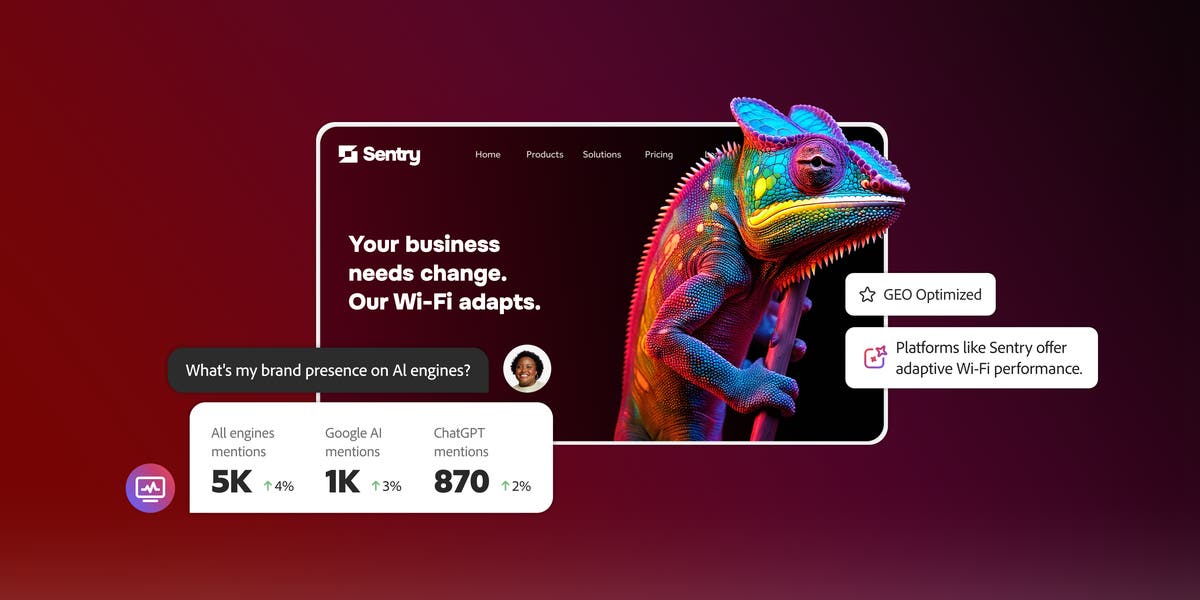
Modern generative systems—such as ChatGPT, Google AI Overviews, and Perplexity—evaluate content based on its meaning, topical relationships, and clarity. If your content is buried under filler or lacks structural precision, these models move on to a clearer, more extractable source. By focusing on concise, verifiable, and well-structured information, you transform your brand from an anonymous link in a list into a primary source of knowledge.
The Death of Content Volume: Why AI Needs Precision
For years, the SEO industry was dominated by a “more is better” philosophy. Marketers raced to publish high volumes of keyword-stuffed articles, betting that sheer output would trick search algorithms into granting them authority. This volume-based approach focused on gaming the system by prioritizing word counts over genuine utility. However, the rise of large language models (LLMs) has rendered this strategy obsolete, shifting the focus toward Answer Engine Optimization (AEO) and clarity.
Why Volume-Based SEO No Longer Works
Traditional search strategies often relied on thin, repetitive content to capture as many long-tail queries as possible. AI models, conversely, are built to synthesize information rather than merely rank a list of links. When an LLM crawls your site, it does not care about your posting frequency; it evaluates the accuracy, depth, and extractability of your information. By continuing to chase volume, you risk producing “noise” that AI models ignore, effectively neutralizing your brand’s presence in generative search results.
The Power of the Atomic Content Unit
To stay visible in the era of Generative Search Optimization, you must adopt a precision-based strategy. The most effective way to do this is by creating an Atomic Content Unit. This is a self-contained, fact-dense block of information designed to answer one specific user intent completely. Instead of burying answers deep within a 2,000-word essay, an atomic unit presents a clear, direct answer in 40–60 words, followed by necessary supporting details, logical steps, or structured data.
This format provides a high-signal environment for LLMs to process your content. Because it is highly structured and lacks filler, the AI is far more likely to cite your brand as a trusted source. You are providing the raw, high-quality data necessary for an AI to formulate a credible, accurate answer.
Comparing Strategic Approaches
Precision-based strategies outperform volume-based ones in the metrics that define modern discovery.
| Metric | Volume-Based Strategy | Precision-Based Strategy |
|---|---|---|
| Primary Goal | Keyword Ranking | AI Citation & Trust |
| Content Structure | Long-form, generalized | Atomic, intent-specific |
| AI Interaction | High risk of hallucination | High likelihood of extraction |
| Success Signal | Clicks (CTR) | Citations & Mentions |
| Longevity | Short-term | Long-term |
By embracing this shift, you ensure your content serves as a foundational pillar for AI-driven answers. Focus your resources on refining your AI Content Strategy to build depth through accuracy and directness, rather than the outdated pursuit of endless, low-utility volume.
Designing Atomic Content Units for LLMs
Atomic Content Units are self-contained information blocks designed specifically to be ingested, synthesized, and cited by AI models. When you prioritize structure over traditional long-form narrative flow, you make your content significantly easier for LLMs to process.
The Answer-First Pattern
The most effective way to improve your AI citation rate is by adopting the “Answer-First” pattern. Every section should lead with a definitive, 40-60 word response to the core query. This creates a “gold standard” snippet that an LLM can grab and present as an authoritative answer. By placing the most critical information at the beginning, you reduce the processing burden on the engine and increase the likelihood that your content is selected for a direct quote.
Entity-Based Writing and Logic Structure
LLMs function by mapping language to entities and relationships. You can improve your content’s machine-readability by using clear, unambiguous terminology that AI can easily categorize. To structure your internal logic for maximum extractability, follow this hierarchy:
- Definition: Start with a clear “X is a Y” statement.
- Expansion: Provide the “why” or context behind the definition.
- Example: Include a concrete application or case study.
- Citation/Evidence: Reference reliable data points or expert consensus to bolster credibility.
This structured approach allows LLMs to navigate your content like a database, pulling exact data points rather than struggling to summarize loose paragraphs.
Best Practices for Machine Readability
To ensure your content is fully optimized for generative search platforms, implement the following checklist during your drafting process:
| Practice | Goal for AI |
|---|---|
| Use “X is a…” definitions | Removes ambiguity for the model |
| Keep paragraphs to 2-4 sentences | Improves ease of information extraction |
| Use clear, descriptive headings | Allows the LLM to map content to specific intent |
| Implement JSON-LD Schema | Explicitly defines entities and relationships |
| Use numbered lists for processes | Helps the model interpret step-by-step logic |
Establishing Credibility with E-E-A-T
To be selected as a citation in a generative answer, your content must prove its worth through E-E-A-T—Experience, Expertise, Authoritativeness, and Trustworthiness. Models are increasingly trained to identify signals that suggest a human expert with real-world experience authored the piece. You can boost these signals by including primary data, original case studies, or first-hand accounts. By grounding your writing in verified expertise and transparent credentials, you help the model “trust” your content enough to present it as a reliable resource to the user.
Using Structured Data as a Roadmap
If you want an AI to understand your content, you need to provide a clear roadmap. Structured data, particularly JSON-LD, acts as a translation layer between your web pages and the machine’s logic. By implementing Schema.org markup, you remove ambiguity about what your page contains, allowing LLMs to parse specific atomic units—like definitions or step-by-step instructions—with high accuracy.
| Schema Type | AI Influence | Usage Benefit |
|---|---|---|
| FAQPage | Direct Q&A extraction | Surfaces your specific answers in AI results |
| HowTo | Step-by-step guidance | Highlights process-oriented content |
| Article | Entity attribution | Establishes author/publisher credibility |
| Organization | Entity definition | Confirms brand identity and official links |
Building a Dynamic, Query-Responsive Content Engine
To succeed in an era dominated by LLMs, you must rethink your production pipeline. Instead of chasing high-volume output, move toward modular content management. This approach treats your website as a library of atomic units—self-contained, verified blocks of information that serve as reliable answers for any AI engine.
Prioritizing Synthesis Over Sheer Volume
One of the biggest risks in the current AI landscape is the accumulation of thin, redundant, or fragmented content. When a search engine encounters multiple pages covering the same ground with minor variations, it struggles to identify the most accurate source. AI search favors a single source of truth architecture, where your site provides one definitive, high-quality answer per query rather than diluting your topical authority across dozens of weak pages.
Feedback Loops and Continuous Refinement
Your strategy for scaling content for AI search is incomplete without an active feedback loop. Monitor how your content performs by tracking AI citations and identifying which snippets are frequently pulled into generated answers. If a particular explanation is consistently omitted, treat it as a signal to refine the clarity or E-E-A-T signals within that unit. By maintaining a focused, precise library of information, you make it effortless for platforms to extract your data and position your site as an indispensable asset in the AI-driven ecosystem.
AEO/GEO
Want to learn more?
Contact us for direct consultation and support.