Schema Markup Debugging: Fixing Errors for AI Visibility
You spend hours perfecting your JSON-LD, carefully nesting every property, and running your code through Google’s official Rich Results Test. The screen glows green with a reassuring “Valid” checkmark. You feel confident your site is ready for the new era of search. Yet, weeks later, you find your competitors appearing in AI Overviews while your site remains invisible. It is a frustrating reality: possessing technically correct code that machines refuse to acknowledge or understand.
Having valid syntax is only the entry ticket. It does not guarantee your content will be chosen as a primary source for generative answers. The disconnect often lies in the difference between what a validator can check—basic syntax—and what a Large Language Model (LLM) needs to build trust. When an AI evaluates your page, it hunts for semantic depth, clear entity relationships, and unambiguous data that anchors your content within a wider knowledge graph.
If your schema lacks these deeper connections, the model may perceive your page as thin, even if every bracket is perfectly placed. Understanding how to optimize for AI search engines requires moving beyond simple validation. We will help you bridge that gap, uncovering the hidden configuration errors that keep your content from becoming an AI-ready knowledge source.
Why ‘Valid’ Schema Markup Still Fails AI Models
It is easy to assume that because a tool gives you a green checkmark, your job is finished. However, passing a standard syntax validator only confirms that your code is structurally intact, not that it makes sense to a machine. There is a massive gulf between syntactic validity, which ensures your JSON-LD isn’t broken, and semantic relevance, which allows an AI to understand the core intent and authority of your content. When you learn how to optimize for AI search engines, you realize that an AI is evaluating whether your site provides a verifiable, trustworthy answer.
The Trap of Contextual Gaps
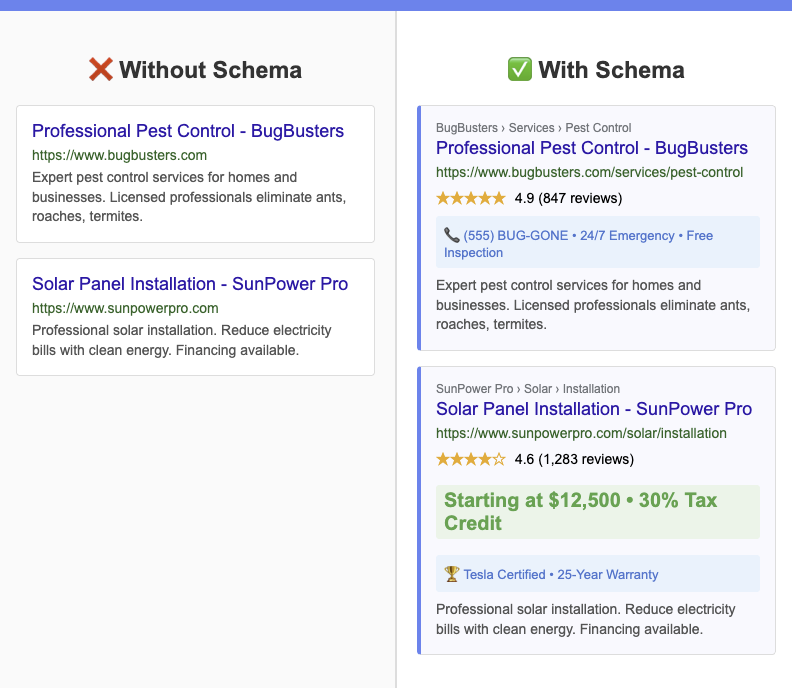
Even when your schema markup is technically sound, you may suffer from “contextual gaps.” This occurs when your JSON-LD lacks the relational depth required for an LLM to cite your site as a factual source. Think of an AI model as a researcher who needs to verify the authenticity of a claim. If your schema describes an object in total isolation—such as a product price without a brand relationship—the AI cannot build a high-confidence map of your information.
Standard Validation vs. AI-Optimized Data
The following table highlights the differences between code that merely exists and code that actively powers visibility.
| Feature | Standard Valid Schema | AI-Optimized Structured Data |
|---|---|---|
| Entity Clarity | Basic field completion | Explicit disambiguation (SameAs) |
| Relationship Mapping | Limited / None | Connected graph architecture |
| Trust Signals | Missing or inconsistent | Provenance and authorship linked |
| Confidence Scores | Low | High due to granular context |
Why Interconnectivity Drives LLM Trust
Large Language Models prioritize highly interconnected data because they rely on the concept of an entity graph. If your site offers a single schema tag for an article but fails to connect it to an organization or author, the model struggles to assign weight to that content. By moving beyond isolated tags and focusing on deep relationships, you transform your technical markup from a background requirement into a driver of LLM visibility.
Decoding Common Validation Errors and Warnings
When you are learning how to optimize for AI search engines, stumbling over a validation error in the Rich Results Test can feel like a setback. Interpreting these errors correctly is the first step toward building the structured data foundation your brand needs for consistent LLM visibility.
Translating Cryptic Error Messages
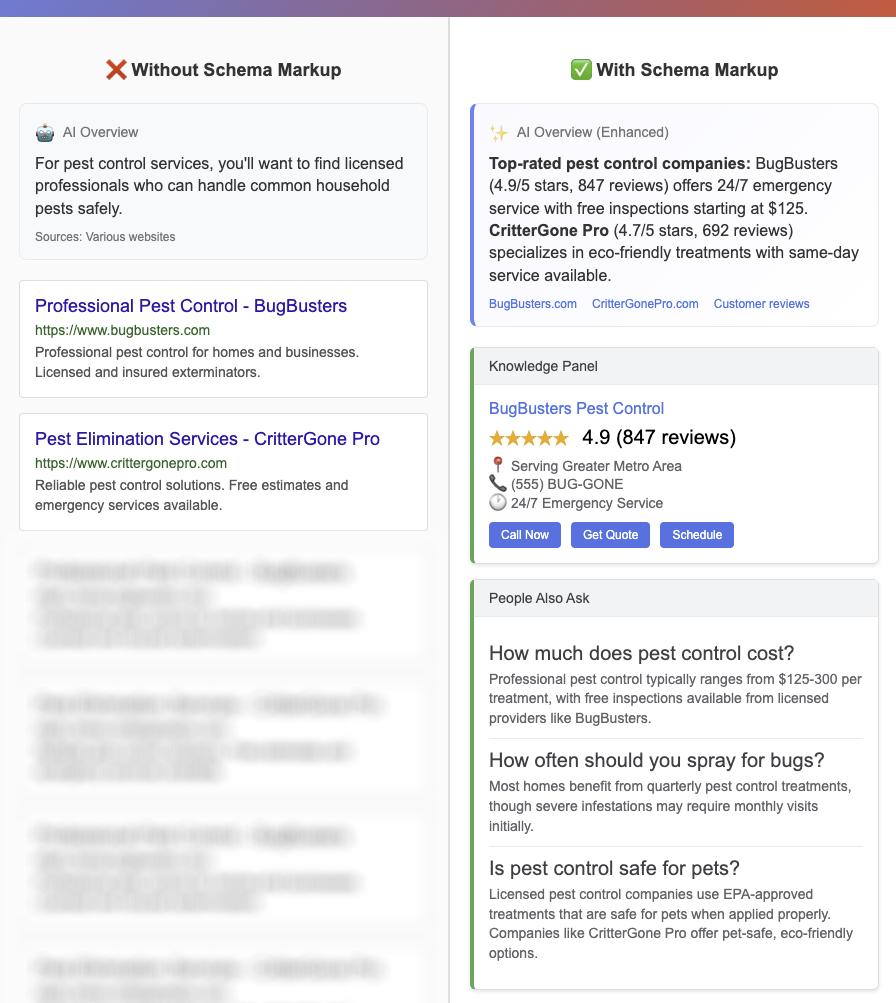
Most JSON-LD troubleshooting starts with a generic error code. When the validator says “Missing field,” it often means your data hierarchy is disconnected. If a Large Language Model cannot find an author or an aggregate rating, it may treat your page as an unverified source.
Follow these steps to turn a warning into a fix:
- Identify the Scope: Determine if the error is global or specific to a template.
- Consult the Schema.org Vocabulary: Check that the field exists for your specific type.
- Verify the Parent-Child Relationship: Ensure properties are nested within the correct JSON object level.
- Re-Validate: Always re-run the code after making adjustments.
Resolving Critical Missing Fields for AI Trust
AI models crave high-confidence entities. Essential properties act as trust signals that verify the expertise and timeliness of your content.
| Property | Why AI Needs It | Fix Strategy |
|---|---|---|
| author | Establishes E-E-A-T | Use a nested Person object with sameAs links. |
| dateModified | Signals content freshness | Update the timestamp dynamically on edit. |
| aggregateRating | Provides social proof | Include ratingValue and reviewCount. |
| publisher | Defines brand identity | Link organization logo and social profiles. |
The Troubleshooting Checklist for JSON-LD Syntax
Even a single misplaced comma can render your structured data errors invisible to tools but unreadable to crawlers. Check these traps:
- Improper Escaping: Ensure quotes inside text strings are properly escaped with a backslash.
- Hierarchy Nesting: Verify every opening bracket has a corresponding closing bracket.
- Data Types: Check that prices and numbers are provided as numeric values, not text strings.
- Missing Commas: Ensure every property inside an object is separated by a comma.
Fixing the ‘Invisible’ Issues That Stop AI Attribution
Sometimes, your code passes every validator, yet AI models still ignore your brand. This happens because LLMs look for semantic truth. If your Schema Type is overly generic, you become invisible to attribution algorithms.
The Silent Killer: Misaligned Schema Types
Choosing a generic Schema Type is a frequent oversight that kills your LLM visibility. Many sites use a blanket WebPage type for everything. Instead, use specific types like LocalBusiness or product-specific schemas to allow the LLM to map your entity into its knowledge graph with higher precision.
Harmonizing Your Entity Homepage
Your website shouldn’t exist in a vacuum. AI models cross-reference your site data with social media and knowledge panels. Ensure your sameAs links are consistent across your entire domain. Aligning your internal structured data errors with your public-facing brand presence creates a cohesive signal that tells the AI your site is the definitive source of truth.
Mastering Local GEO Signals
If you operate a physical location, local GEO signals are vital for “near me” queries. Replace ambiguous descriptions with structured, property-rich data. Being descriptive provides the context needed for an LLM to distinguish your business from competitors.
Advanced Debugging: When to Use Schema Markup Testers
When you start learning how to optimize for AI search engines, you must balance static validation with live inspection. Relying solely on the Rich Results Test misses real-world rendering issues.
Moving Beyond Static Validation
Google Search Console’s URL Inspection tool shows you the rendered HTML as Google sees it. If your schema is generated via JavaScript, ensure it fires before the crawler arrives. Use the “View Rendered Source” feature to confirm your tags exist in the active document object model.
LLM Playground Testing
To test for AI overview optimization, feed your JSON-LD into an LLM playground like GPT-4o or Perplexity. Ask the model to summarize your business entity based on that data. This reveals if your structure provides enough context for the AI to attribute facts to you.
| Tool Type | Best For | AI Visibility Utility |
|---|---|---|
| Rich Results Test | Syntax Validation | Baseline |
| Search Console | Live Inspection | Real-world validation |
| LLM Playgrounds | Semantic Clarity | Fact-checking |
| View Source/DOM | Rendering Checks | Technical verification |
Treat your structured data as a permanent, living extension of your brand identity. By refining your code to be more descriptive, you help machines bridge the gap between simple text and authoritative knowledge. As you continue to optimize for AI search engines, remember that your data is a long-term investment in your brand’s digital discoverability.
AEO/GEO
Want to learn more?
Contact us for direct consultation and support.