We have all experienced the phenomenon. You open an app to scroll through videos for entertainment, and before you realize it, you have completed a purchase. The path from discovery to checkout has shortened dramatically. Social shopping is no longer a niche experiment; it is a dominant force in modern commerce.

To understand how this shift impacts business strategy, we analyzed data from over 500 social commerce professionals. The findings reveal a landscape where social media is not just a marketing channel but a primary sales engine. Brands that integrate social selling into their broader strategy see significant growth. However, success requires more than just listing products in a feed. It demands a focus on trust, community, and seamless user experience.
As search behaviors evolve and artificial intelligence reshapes how consumers find information, the role of social platforms in the buyer’s journey becomes even more critical. Let’s look at the data behind social commerce and what it means for your brand’s visibility.
The Rise of Social Commerce as a Sales Engine
Social commerce is a growing channel for both buyers and sellers, fundamentally changing how transactions occur online. Recent data indicates that social media is the preferred channel for product discovery among Gen Z, Millennials, and Gen X. This demographic shift signals a long-term trend rather than a temporary fad. Consumers are increasingly comfortable initiating their purchase journey within social apps, reducing the reliance on traditional search engines for initial product exploration.
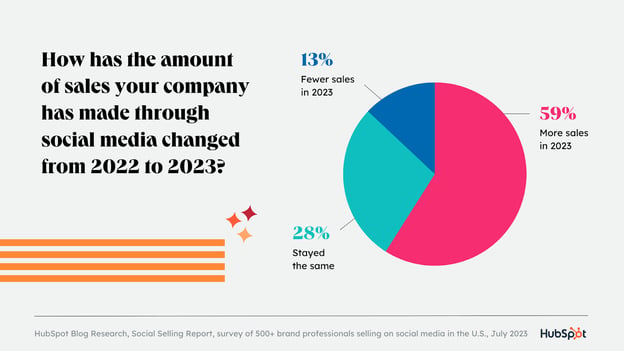
The effectiveness of this channel is supported by strong performance metrics. A survey of 512 social media marketers revealed that 87% of sellers found social selling effective for their business in the current year. Furthermore, 59% reported an increase in sales through social media compared to the previous year. These numbers suggest that when executed correctly, social selling delivers a high return on investment. Marketers who utilize multiple channels often cite social media as the best tool for targeting potential customers precisely.
Precision Targeting Beyond Paid Ads
One of the most significant advantages of social commerce is precise audience targeting. Over 50% of social sellers identified audience reach as a key benefit. While paid advertising is a common method for reaching specific demographics, social platforms offer organic ways to connect with target markets. This approach allows brands to tap into communities that might otherwise remain inaccessible through traditional e-commerce methods.
Brands can leverage several pull marketing strategies to enhance targeting:
- User-Generated Content (UGC): Creators share products with communities that share similar interests. This organic endorsement reaches users who are already predisposed to the brand’s niche.
- Word-of-Mouth Marketing: One-click sharing features make it easy for users to recommend products to their networks. This viral potential expands reach without additional ad spend.
- Active Community Engagement: Posts with high engagement rates are more likely to appear on discovery pages. These pages are tailored to individual user interests, ensuring that content reaches relevant audiences.
This multi-faceted approach to targeting ensures that brands do not rely solely on paid traffic. By fostering organic engagement, companies can build a sustainable pipeline of interested customers.
Complementing Other Digital Channels
Social selling is not viewed as a replacement for other sales channels but as a complementary asset. Ninety-four percent of social sellers also maintain a presence on other digital channels, such as their own e-commerce websites or third-party marketplaces. This diversification strategy mitigates risk and maximizes reach.
The ease of integrating social shops with existing e-commerce infrastructure makes this approach viable for many businesses. Brands can connect their social storefronts to their main inventory systems, ensuring consistency in pricing and availability. This integration allows companies to capture sales from social media users while still serving customers who prefer traditional web browsing. The high returns and low implementation barriers make social commerce a worthwhile investment for most digital strategies.
Building Trust Through User-Generated Content
Trust remains a significant hurdle in social shopping. Despite the growth of the channel, only 47% of social media users feel comfortable buying directly through social apps. The primary concern is legitimacy; many consumers worry about encountering fraudulent sellers or scams. This skepticism is understandable given the rise of both legitimate small businesses and bad actors on these platforms. For sellers, convincing customers to trust their brand is one of the biggest challenges.
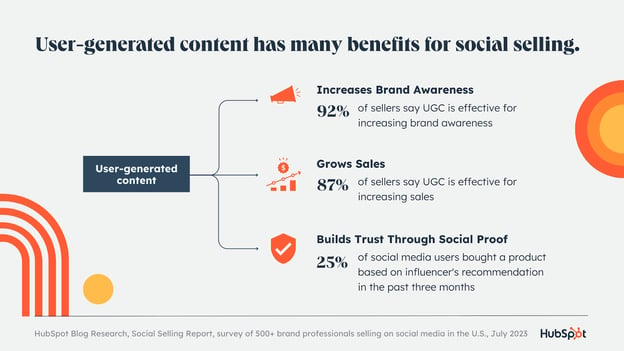
User-generated content (UGC) serves as a powerful tool to overcome this trust deficit. Three out of four businesses surveyed repost UGC, recognizing its value in building credibility. The data supports this strategy: 87% of sellers say UGC increases their sales, and 92% report it boosts brand awareness. By showcasing real customers using their products, brands provide social proof that reassures hesitant buyers.
Why UGC Drives Conversions
UGC acts as authentic endorsement. When consumers see peers interacting with a product, it reduces the perceived risk of purchase. One in four social media users bought a product based on an influencer’s recommendation in the past three months. This statistic highlights the influence of trusted voices in the decision-making process.
Moreover, UGC provides clear use cases for products. Instead of relying on polished marketing images, brands can show how items look and function in real life. This transparency helps consumers make informed decisions. When a user finds a product interesting through a UGC post, they can often navigate directly to the brand’s social shop via tags. This seamless transition from inspiration to purchase capitalizes on the consumer’s interest at its peak.
Encouraging Customer Participation
Brands can actively encourage customers to create UGC through community engagement and incentives. Relatable content is the most memorable to consumers, so brands should focus on fostering genuine interactions. There is a growing number of consumers who identify as content creators, offering brands a vast pool of potential advocates.
Effective strategies for gathering UGC include:
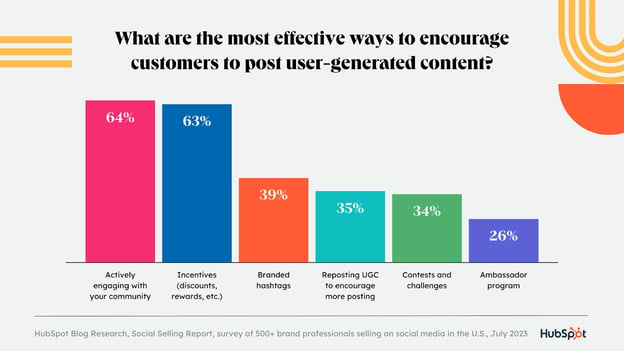
- Active Community Engagement: 64% of social sellers found this the most effective method. Responding to comments, asking questions, and participating in conversations builds relationships that inspire users to share their experiences.
- Incentives: Discounts, rewards, and giveaways are close second in effectiveness. Offering tangible benefits for sharing content can kickstart UGC campaigns.
By prioritizing these methods, brands can create a steady stream of authentic content. This approach not only builds trust but also enhances brand visibility through shared posts and tags.
The Frictionless Buyer’s Journey on Social Platforms
Social media supports a frictionless shopping experience that aligns with the modern buyer’s journey. Traditional e-commerce often involves multiple steps: researching on social media, visiting a website, comparing options, and then checking out. Social selling consolidates these tasks into a single platform. This reduction in friction simplifies the process for consumers and can lead to higher conversion rates.
The buyer’s journey on social media can be broken down into three key stages:
- Awareness: Consumers discover products through targeted ads, influencer marketing, or word-of-mouth. Push and pull marketing strategies work together to bring brands to the attention of potential customers.
- Consideration: Users explore the brand’s profile, which serves as a digital storefront. They can view product reviews, engage with the community, and observe the brand’s personality. Gen Z, in particular, values brands with active communities, as this suggests authenticity and reliability.
- Decision: Questions can be answered through posts, reviews, or direct messaging. Once satisfied, consumers can check out within the app without leaving the platform. This seamless process reduces drop-off rates associated with redirecting to external websites.
This streamlined journey also supports impulse buying. Many sellers cite impulse purchases as a key benefit of social selling. Users who intend to scroll for entertainment may encounter a compelling product and decide to buy on the spot. The ease of checkout facilitates these spontaneous transactions.
The Power of Community Engagement
Active community engagement is the cornerstone of successful social selling. Forty-five percent of social sellers identified the ability to build and engage with a community as the most important feature of a social media platform. Driving brand communities involves consistent interaction with followers, turning them into advocates.
When brands keep customers satisfied post-purchase, they encourage promoters to share their experiences. This can happen through reviews, UGC, or simple shares. These actions create a flywheel effect, where satisfied customers bring in new ones. This concept aligns with inbound marketing principles: delighting customers leads to organic growth.
Brands can tailor content to different types of customers within the same platform, accelerating customer base growth. For consumers, engaging with smaller brands provides social proof for prospective buyers, helping these businesses thrive. This mutual benefit underscores the importance of community in social commerce.
Optimizing for Visibility in AI-Driven Search
As social commerce grows, the way consumers discover products is also evolving. Artificial intelligence is reshaping search behaviors, with users increasingly turning to AI-powered tools for recommendations and answers. In this context, brand visibility extends beyond traditional SEO. It requires a presence in generative search results and AI-generated answers.
For brands leveraging social selling, this means ensuring that their content is structured and optimized for AI consumption. Clear product descriptions, consistent branding, and high-quality UGC contribute to a brand’s digital footprint. When AI systems analyze content to provide answers, brands with strong, coherent online presences are more likely to be cited.
Integrating Social Data into Broader Strategy
Social selling data can inform broader content and optimization strategies. Insights from community engagement and UGC performance can highlight what resonates with audiences. Brands can use this information to refine their messaging across all channels.
Furthermore, as AI search ecosystems expand, brands must ensure their social profiles are accessible and informative. This includes maintaining up-to-date product listings, responding to customer queries promptly, and fostering a positive community reputation. These efforts not only enhance social selling performance but also strengthen brand authority in the eyes of AI algorithms.
By viewing social commerce through the lens of visibility and trust, brands can build a resilient strategy. The future of e-commerce lies in the intersection of social engagement, seamless shopping experiences, and intelligent content distribution. Brands that adapt to these trends will be well-positioned to thrive in the evolving digital landscape.
What steps are you taking to ensure your brand’s visibility in both social and AI-driven search environments?





