Understanding the Software Platform Concept
A software platform is a foundational system that connects various tools, data sources, and processes into a unified ecosystem. Unlike a standalone product that operates in isolation, a platform acts as a central hub where different applications can integrate and communicate seamlessly. This connectivity is what drives its value… not just the individual features it offers, but how well it orchestrates the entire technology stack.

When you start a business, you likely begin with basic tools to manage contacts, process transactions, or monitor customer satisfaction. As operations expand, these initial tools often fall short. You need systems that can grow with you, adapt to new requirements, and connect with emerging technologies without requiring complete overhauls. This is where the distinction between a simple product and a comprehensive platform becomes critical for long-term success.

The platform approach enables growth through connection. It provides a stable center of gravity for your tech stack, allowing you to add or remove applications as your business evolves. Instead of being locked into a rigid suite of tools, you gain the flexibility to build a customized ecosystem that meets your specific needs at every stage of development. This adaptability is essential for organizations that plan to scale over time.
How Platforms Differ From Traditional Products
A software product typically comes as a single package from one vendor. Everything inside that package is designed to work together, but expanding beyond those initial boundaries can be challenging. If you want to add a new help desk tool to your existing CRM, for instance, you’ll need to build a custom integration. These one-off connections can become complicated quickly, especially as you add more external tools to your workflow.
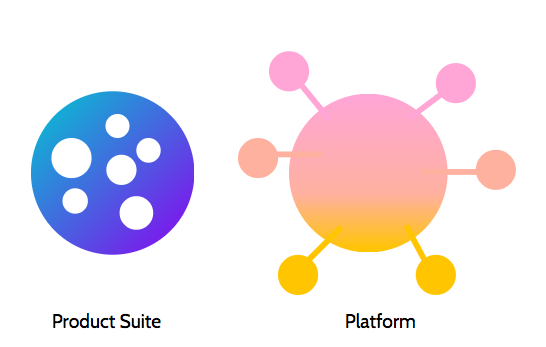
Platforms take a fundamentally different approach. Rather than offering a closed box of tools, they function more like an electrical outlet… ready to accept any compatible device you need. This open architecture means you can plug in specialized applications, third-party services, and custom solutions without starting from scratch. The platform is designed from the ground up to facilitate data sharing and coordination across multiple applications.
This distinction matters significantly for growing businesses. When you rely on standalone products, every new tool requires its own integration effort. Over time, these integrations multiply, creating a complex web of connections that can be difficult to maintain and troubleshoot. A platform simplifies this by providing a unified foundation where all connections are managed centrally. Non-technical teams can often create and maintain these connections without needing dedicated developer resources.
The quality of integration also differs between products and platforms. With standalone products, you’re dependent on the vendor’s ability to support external connections. A platform, by contrast, is built to actively coordinate how multiple products work together. This orchestration ensures that data flows consistently across your entire ecosystem, reducing errors and improving operational efficiency.
The Platform Versus Suite Debate
The marketing technology landscape has expanded dramatically in recent years, attracting both startups and major corporations. This growth has created two primary strategies for achieving scale: the suite model and the platform model. Understanding the differences between these approaches helps you make informed decisions about your technology infrastructure.
Marketing suites offer everything in one box from a single vendor. The appeal is simplicity… you select one provider and inherit a complete collection of integrated tools. This approach minimizes the technical expertise required to implement new infrastructure and reduces the time needed to get started. For small businesses with straightforward needs, suites can provide quick access to essential functionality without complex setup processes.
However, suites come with notable limitations. If the vendor doesn’t offer a feature you need, or implements it differently than you prefer, you’re often stuck with their version. When major changes occur in the broader technology ecosystem… such as new social media APIs or emerging communication channels… you must wait for the suite provider to update their offerings. This delay can put you at a competitive disadvantage.
Perhaps the most significant risk with suites is vendor lock-in. All your data and processes reside within a single vendor’s system. Switching to a different provider later can be expensive and time-consuming, requiring complex data migrations and workflow reconfigurations. This lack of flexibility becomes problematic as your business needs evolve and you require more specialized solutions.
Why Platforms Enable Greater Flexibility
Platforms address the constraints of suites by providing an open foundation for building your technology ecosystem. They don’t try to do everything themselves… instead, they offer core functionality that serves as a starting point for adding specialized tools. This openness makes platforms available for partnerships with companies that may not even exist yet, ensuring your system can adapt to future innovations.
The key advantage of platforms is their ability to integrate evolving third-party components seamlessly. When you find that certain features in your base system are insufficient, you can swap them out for more specialized alternatives without disrupting your entire workflow. This modularity allows you to maintain control over your technology choices while benefiting from a unified underlying infrastructure.
Successful platforms typically provide four core capabilities: digital asset management, e-commerce functionality, web content management, and advertising data management. These foundational services create a stable base upon which other software and services can be layered. The platform acts as a master data repository, ensuring consistency and accuracy across all connected applications.
Consider the growth trajectory of organizations that have transitioned from suite-based to platform-based approaches. When companies make this shift, they typically see significant increases in app installations and partner ecosystem engagement. The open nature of platforms encourages innovation and specialization, allowing businesses to tailor their technology stacks precisely to their unique requirements rather than accepting a one-size-fits-all solution.
Evaluating Platform Options for Your Business
Selecting the right platform requires careful consideration of several key factors. The first question to ask is how well the core features serve your immediate needs. A platform must provide solid foundational functionality… if the base is weak, adding more tools won’t compensate for fundamental shortcomings. Evaluate whether the platform’s primary purpose aligns with your business objectives and operational requirements.
The size and health of the partner ecosystem is equally important. A vibrant community of third-party developers and solution providers indicates that the platform is actively supporting innovation and adaptation. Look for platforms where the ecosystem is growing, with new applications and integrations being added regularly. This vitality suggests that the platform vendor is committed to long-term development and community engagement.
API accessibility and stability are critical technical considerations. You need to work with the platform’s APIs to fully access your data and build custom enhancements when necessary. Evaluate how easy it is to integrate with the platform’s APIs and whether those APIs have proven stable over time. Unreliable APIs can create ongoing maintenance challenges and limit your ability to customize your system.
The vendor’s investment in developer success is another crucial factor. Growing a partner ecosystem is primarily a business mission, not just a technical one. Assess how much the platform company genuinely supports third-party developers and whether they provide adequate documentation, support resources, and incentives for building on their platform. A vendor that prioritizes developer success will foster a more robust and innovative ecosystem.
Long-Term Strategic Considerations
Choosing between a suite and a platform is a strategic decision that will shape your technology infrastructure for years to come. While suites offer simplicity and quick implementation, platforms provide the flexibility and scalability needed for sustained growth. The right choice depends on your organization’s specific needs, growth trajectory, and technical capabilities.
For businesses planning significant expansion, platforms typically offer better long-term value. They allow you to start with essential functionality and gradually add specialized tools as your needs become more complex. This incremental approach reduces upfront costs and minimizes the risk of investing in features you may never use. It also ensures that your technology stack evolves in step with your business requirements.
The platform approach also future-proofs your technology investment. As new innovations emerge in the market, you can incorporate them more easily when using a platform. This adaptability reduces the likelihood of needing complete system replacements when technology trends shift. Your platform becomes a stable foundation that can accommodate change rather than resisting it.
Ultimately, your choice of technology infrastructure reflects your broader business strategy. If you prioritize flexibility, customization, and long-term scalability, a platform approach is likely the better fit. If your needs are relatively static and you value simplicity over customization, a suite might suffice. However, for most growing businesses, the platform model provides the foundation needed to thrive in an increasingly complex technology landscape.
Making Your Technology Decision
The decision between platforms and products should be guided by your specific business context and growth plans. Start by assessing your current technology needs and projecting how they might change over the next few years. Consider factors like team size, technical expertise, budget constraints, and operational complexity.
Engage with potential platform vendors to understand their roadmap and commitment to ecosystem development. Ask about their API stability, developer support programs, and partner network growth. These indicators provide insight into the platform’s long-term viability and your ability to build on it successfully.
Remember that your technology choices directly impact your ability to serve customers and compete effectively. The software you use becomes an extension of your brand and operational capabilities. Investing time in selecting the right foundation pays dividends in efficiency, flexibility, and competitive positioning.
As you evaluate your options, focus on finding a solution that aligns with your strategic vision and operational reality. The best technology decisions are those that support your growth objectives while providing the flexibility to adapt to changing market conditions. Take the time to research thoroughly, test potential solutions, and consult with stakeholders before making your final choice.





