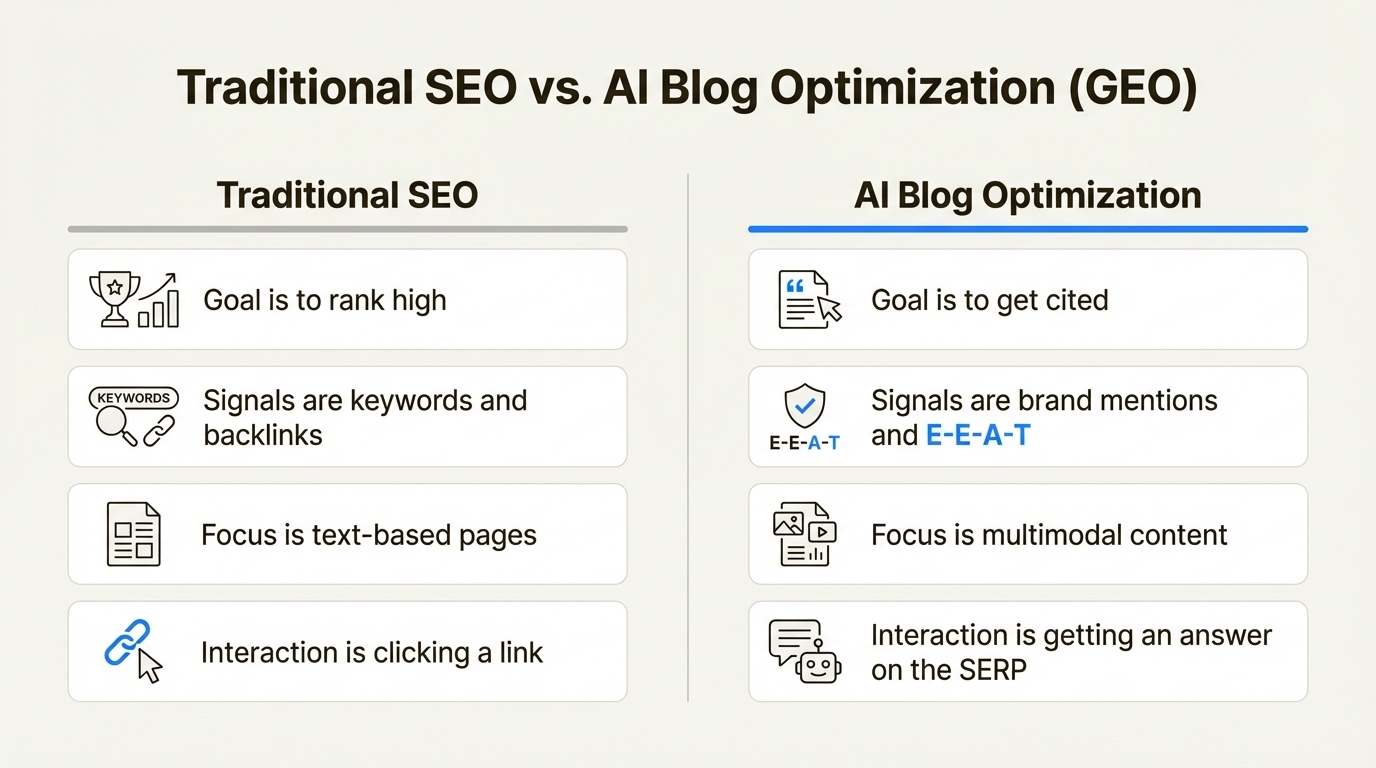
The digital landscape has fundamentally shifted. We have transitioned from an era of index-based retrieval—where the goal was to secure a blue link on a results page—to an era of generative synthesis. In this new paradigm, engines like Google AI Overviews, Perplexity, and ChatGPT do not simply point users to destinations; they synthesize information to create new, context-aware answers.
Consequently, traditional search engine optimization is insufficient. We must pivot toward Generative Engine Optimization (GEO), which is not about manipulating algorithms for ranking, but about ensuring answer-readiness. Success now depends on how effectively a brand can structure its knowledge to be consumed and cited by large language models as the definitive source of truth.
The Paradigm Shift: Decoding Generative Retrieval Mechanisms
The transition from listing links to generating answers requires a complete overhaul of how we view content. While traditional search relied on query matching, generative AI relies on probability, coherence, and authoritative weight.
Each engine possesses distinct behavioral nuances: Google AI Overviews prioritize high-authority, established web sources to supplement their knowledge base; Perplexity functions as a research assistant, heavily favoring real-time data and diverse citations; and ChatGPT prioritizes logical flow and depth. Achieving visibility across these platforms requires a shift from chasing keywords to becoming a reliable entity that engines trust enough to include in their synthesis.

Architecting Topical Authority Hubs for AI Synthesis
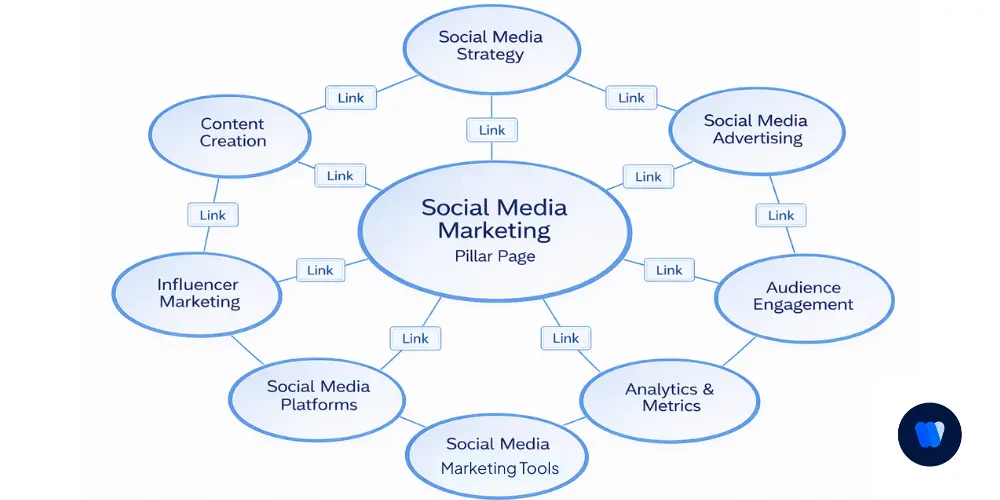
To capture AI-generated answers, brands must abandon individual page-level thinking in favor of Topical Authority Hubs. AI models synthesize information by identifying patterns and entity relationships across a domain. If your content is fragmented, the AI struggles to map your expertise.
- Entity Clustering: Organize your digital assets into semantic clusters that map out the depth and breadth of a specific subject.
- Semantic Mapping: Use internal linking to explicitly define how one piece of content relates to another, creating a clear navigational path for crawlers to establish your brand as the primary authority.
- Knowledge Density: Instead of superficial coverage, aim for deep exploration of sub-topics. AI models value high-signal, high-depth content that reduces their need to look elsewhere for clarification.
Beyond Your Domain: Managing the External Citation Ecosystem
An AI’s confidence in a brand is often bolstered by third-party verification. These models cross-reference your claims against a global ecosystem of high-authority platforms. If your brand is isolated, you lack the consensus required to be cited as a primary source.
Focus on developing a presence on platforms that AI engines prioritize, such as Wikipedia, YouTube, and industry-specific repositories. By maintaining consistent data, sentiment, and factual alignment across these external platforms, you increase your generative confidence score. When the AI perceives that a brand’s perspective is corroborated by credible, diverse sources, the likelihood of being cited in a generative summary increases exponentially.
From Keyword Research to Intent and Prompt Mapping
Traditional keyword research is inherently flawed for the AI era because it ignores the difference between human query intent and machine prompt-processing. Users may type a phrase, but the AI interprets that phrase as a specific request for synthesis.
- Model-Preferred Language: Identify the framing styles that models prefer—often characterized by clarity, logical progression, and objective, data-backed reporting.
- Conversational Mapping: Anticipate the follow-up questions a user might ask during a generative conversation. Structuring your content to naturally bridge from the initial query to these deeper, nuanced follow-ups allows your content to be consumed as a comprehensive answer.
Future-Proofing: Measuring Visibility in Non-Linear Search Environments
Success in generative search cannot be measured by rank tracking alone. We must transition to metrics that reflect brand presence within the synthesis itself.
- Answer Presence: Track how often your brand is mentioned or cited as a primary source in AI summaries for your target topics.
- Source Integrity: Regularly audit your content for potential hallucinations or outdated information. Generative engines are sensitive to consistency; if your domain contains conflicting data, your authority score will suffer.
- Iterative GEO: View your presence as a dynamic, living asset. As AI models update their logic and citation patterns, revisit your top-performing hubs to ensure they remain the most relevant, accurate, and structured sources available for synthesis.