In the era of generative search, the old playbook of chasing individual high-intent keywords is becoming obsolete. AI models are not browsing; they are synthesizing. To remain relevant, brands must stop viewing content as isolated pages and start architecting topical authority through an entity-centric cluster model.
Why Isolated Content Assets Fail in the AI Search Era?
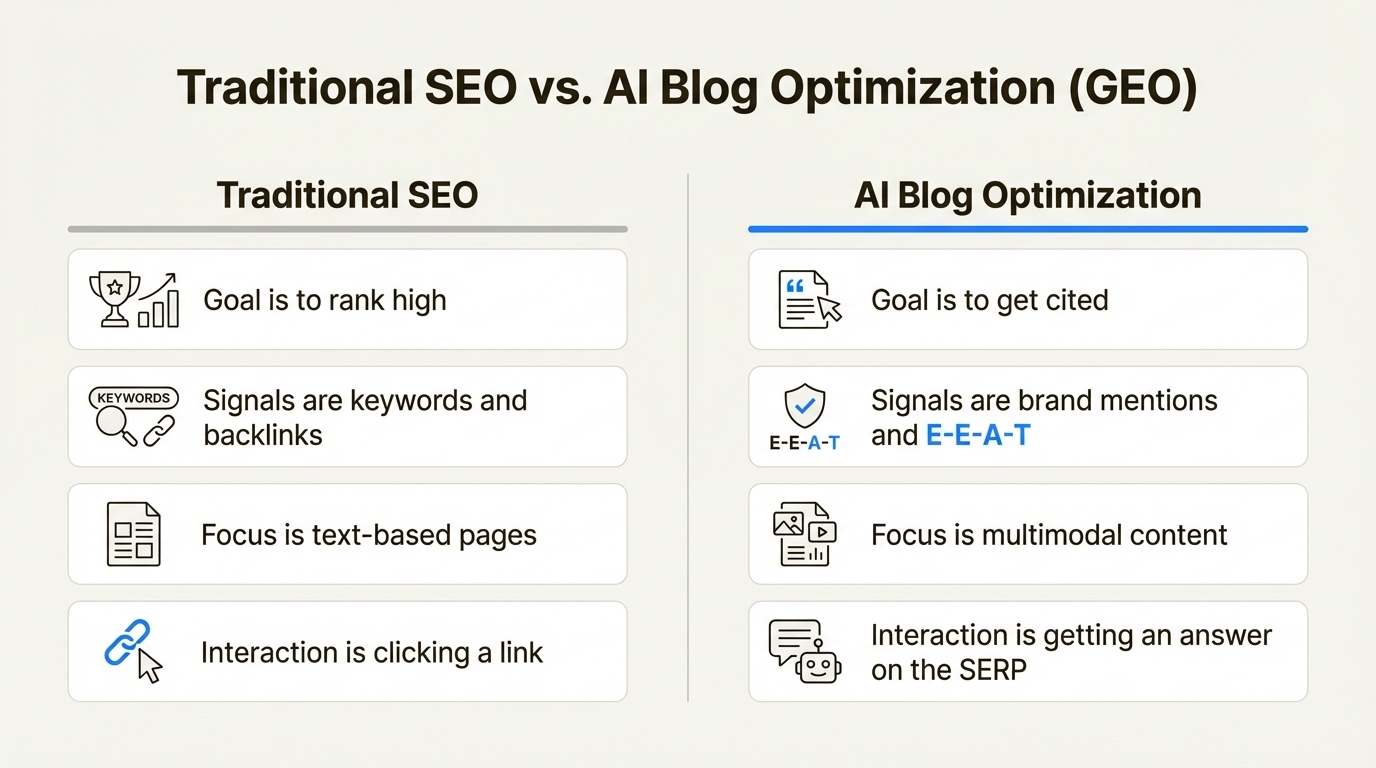
Traditional SEO focused on optimizing individual pages to “rank” for specific search strings. However, Generative Engine Optimization (GEO) demands a higher threshold of evidence.
- Beyond Ranking: AI models prioritize contextual authority. If your content lacks a cohesive ecosystem, the model cannot verify your depth, making it less likely to be chosen as the primary source of truth.
- The Entity Shift: AI search engines map relationships between people, organizations, places, and concepts—known as entities. Isolated content fails because it doesn’t establish the necessary web of entity associations that confirms your brand as the expert within a specific domain.
- Narrative Fragmentation: High-intent keywords often yield disjointed answers. Without a broader, structured context, your brand remains a disconnected data point rather than a trusted subject-matter authority.
How to Engineer a Topic Cluster for AI Visibility?
To win in AI-first search, your content must be architected to satisfy both the breadth and depth requirements of a Large Language Model (LLM).
1. Define Your Pillar Pages
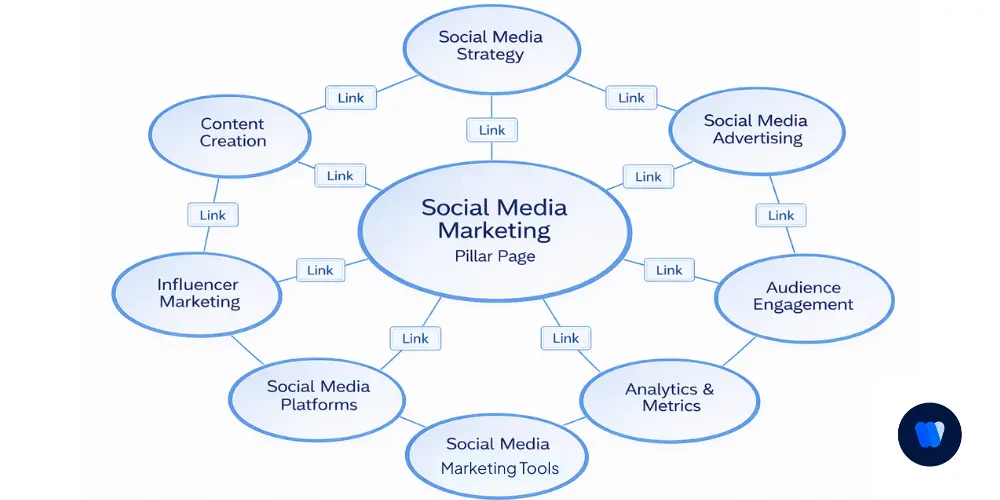
The Pillar Page serves as the authoritative hub. It provides a comprehensive overview of a core topic, signaling to AI that your brand owns this subject area. It should be broad enough to cover the entire scope of the entity but structured enough to allow for deep-dive links.
2. Map Supporting Clusters
Develop cluster content that targets specific sub-entities and long-tail queries. Each piece of cluster content must reinforce the main pillar.
3. Structural Link Reinforcement
Map internal linking relationships with precision. Ensure that your cluster assets explicitly link back to the pillar, creating a tight entity map that helps AI models understand how your sub-topics validate the authority of the central hub.
What Are the Definitive Differences Between AEO and GEO Goals?
| Metric | Answer Engine Optimization (AEO) | Generative Engine Optimization (GEO) |
|---|---|---|
| Primary Goal | Direct, factual answer delivery | Narrative influence and synthesis |
| Search Focus | High-intent, query-specific | Topical, entity-based authority |
| Asset Type | Short snippets, definitions, lists | Deep-dive pillars, research reports |
| AI Role | Extracting data for immediate resolution | Integrating brand perspective into summary |
While AEO ensures you capture specific snippets, GEO is about being the foundational source the model leans on when synthesizing complex, long-form narratives.
How to Execute Entity-Driven Research for Your Clusters?
AI grounding depends on your ability to clearly define and link entities.
- Identify Core Entities: Use knowledge graph research to define your primary niche entities versus their sub-entities.
- Map Relationship Dynamics: Do not just define topics; define how they relate. Use structured data to explicitly state that “Product X” solves “Problem Y” for “Persona Z.”
- Grounding Requirement: Provide verifiable data points (stats, industry benchmarks, primary research) to satisfy the AI’s need for grounding. The more you anchor your content to established, globally recognized entities, the higher your trust score.
How to Secure Buy-in for an AI-First Strategy?
Moving to an entity-driven model requires a cultural shift within the organization.
- Address Objections: Stakeholders often fear losing direct traffic. Pivot the conversation to future-proofing visibility. Explain that AI-driven traffic will increasingly replace traditional organic clicks, and brand citations are the new high-value asset.
- Define New KPIs: Move away from vanity rankings. Focus on AI citation volume, share of voice within AI-generated responses, and topical authority scores.
- ROI of Authority: Frame the content cluster strategy as a moat. By building deep, interconnected topical authority today, you make it exponentially harder for competitors to displace your brand from the AI’s knowledge base tomorrow.