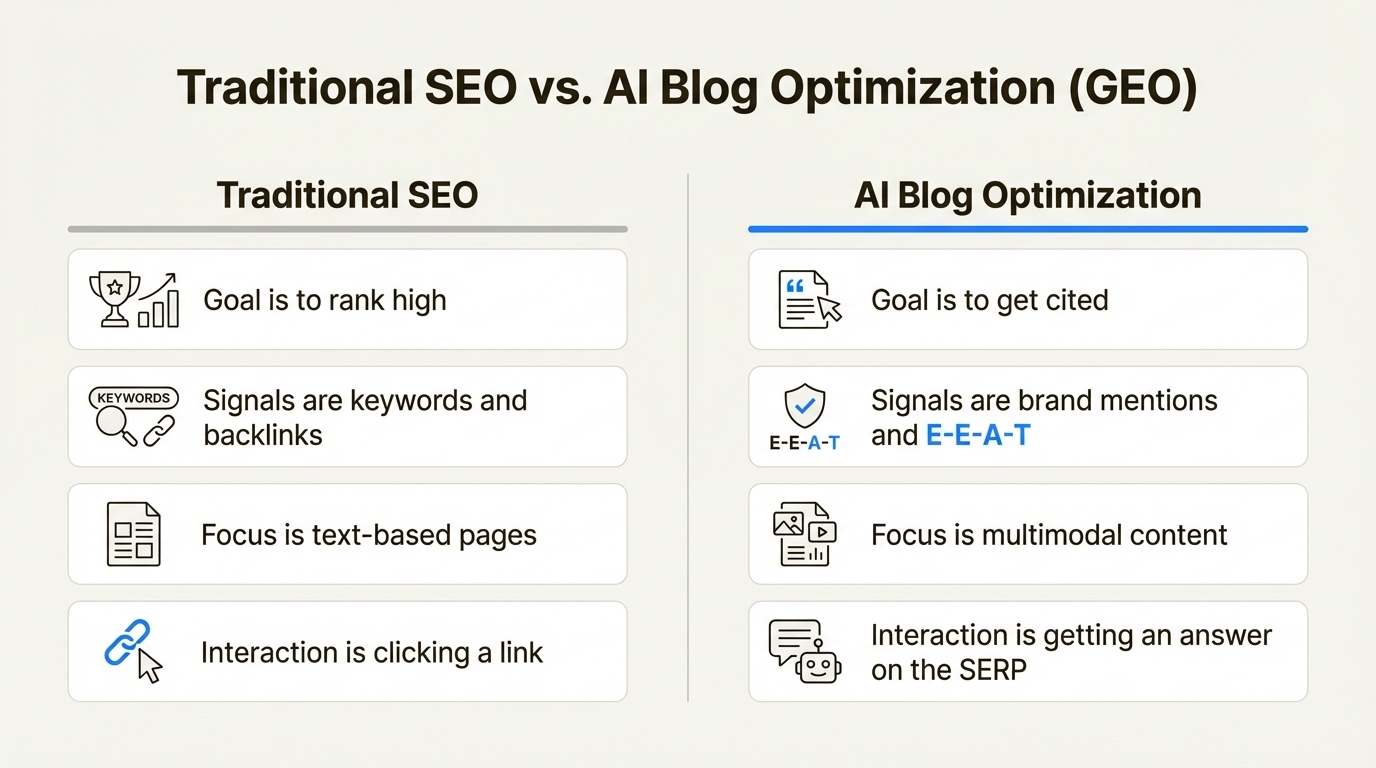
In 2026, the search economy has completed its transition from passive information retrieval to autonomous task completion. For organizations, this means that optimizing for a blue link is no longer a viable growth strategy. We have entered the era of the Agentic AEO Framework, where the goal is to engineer your brand as a foundational node in the decision-making processes of autonomous AI agents.
The 2026 Landscape: Why Agentic AI Shifts the Economic Value of Search
The shift is absolute. 2026 market data indicates a 40% decline in traditional click-through volume for informational queries, as search interfaces have evolved from Generative LLMs to Action-taking AI Agents. These systems no longer merely summarize; they execute transactions, compare products, and manage workflows on behalf of the user.
- From Generative to Agentic: Search interfaces now function as proxies that prioritize agents capable of verifying facts and fulfilling requirements.
- The Citation Gap: Passive, unindexed content is now an economic liability. If your brand does not possess a verifiable, machine-readable presence, you are excluded from the AI’s “consideration set.”
- Economic Impact: The value of a visit has shifted from an anonymous “hit” to a high-intent conversion event initiated by an AI agent evaluating your entity’s authority.
The Architecture of Entity Clarity: Beyond Keywords to Machine-Readable Authority
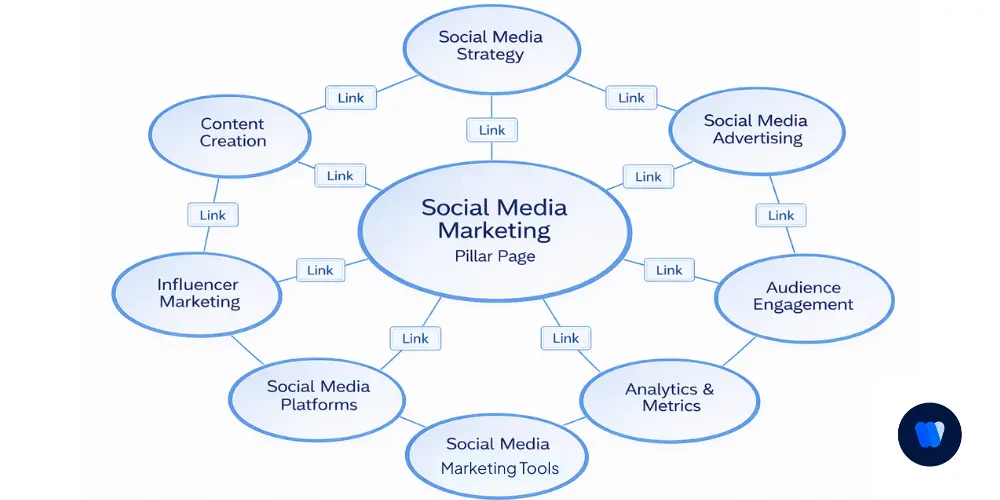
To dominate this landscape, you must move beyond keyword stuffing and prioritize entity-based indexing. AI agents navigate the web by identifying nodes of authority that are logically interconnected.
- Advanced Schema Deployment: You must utilize granular Schema.org markup that defines your brand, products, and services as distinct, non-ambiguous entities.
- Knowledge Graph Intersections: By mapping your brand’s unique identifiers against industry-standard ontologies, you ensure that AI models recognize your entity as the definitive solution for specific problem sets.
- Eliminating Ambiguity: Implement strict URI protocols and internal linking structures that prevent data decay. Every piece of content should point back to a singular “source of truth” entity description, preventing fragmentation in decentralized datasets.

Building Your Agentic AEO Playbook: A 4-Phase Implementation Cycle
Engineering domain authority requires a disciplined, technical approach to how your information is ingested and categorized by AI crawlers.
- Diagnostic Audit: Perform a comprehensive scan of your current AI citation footprint to identify gaps where your entity is either misrepresented or ignored across global AI ecosystems.
- Structured Data Deployment: Integrate multimodal schema to ensure your content is retrievable across voice, visual, and textual agent interfaces.
- Seeding Ground Truth: Actively contribute verified data to high-trust, AI-indexed hubs like niche industry forums and community knowledge bases. This builds a verifiable reputation that AI models prioritize during cross-reference checks.
- Continuous Misinformation Monitoring: Deploy automated recalibration tools that detect incorrect agent citations and immediately feed corrected, structured data back into the ecosystem to maintain your authority score.
Case Study: Converting Visibility into Transactional Action via Agentic Integrations
In 2026, the primary metric of success is the Agentic Conversion Event. Unlike traditional CTR, these events occur when an agent completes a task—such as a booking, a price comparison, or a data request—directly through your integrated platform.
- Evidence of Authority: Brands utilizing optimized schema experience a 3x higher task completion rate by AI agents compared to those relying on legacy SEO.
- Correction Yield: Rapidly correcting AI-propagated misinformation regarding your product features has been shown to increase brand trust scores by an average of 22% within the first month.
- Quantifiable Results: By treating the search environment as an API for your business, you transform “visibility” into automated, high-fidelity transactions.

Future-Proofing: Preparing for the Multimodal Agentic Ecosystem
The next frontier is spatial and non-textual retrieval. As AI agents gain the ability to interact with spatial computing and immersive video interfaces, the current reliance on text-based schema will be insufficient. Strategic investments in structured visual metadata and real-time API integrations will be the differentiator for market leaders seeking long-term dominance in the generative search architecture of 2027 and beyond.