Understanding the Psychology Behind Buyer Decisions
Selling is rarely about convincing someone to buy something they do not need. In most successful transactions, the prospect genuinely benefits from the product or service. The challenge lies in the gap between recognizing that value and taking the final step to purchase. This hesitation is where the fine art of persuasion becomes critical. It is not about manipulation or trickery; it is about aligning your communication with the psychological triggers that prompt human action.

Many sales professionals rely on intuition or personal anecdotes to guide their conversations. They use tactics that “just work” for them, often without understanding the underlying mechanics. While this approach can yield short-term results, it lacks consistency and scalability. By shifting from gut feeling to evidence-based strategies, teams can create a more predictable and effective sales process. Science offers a clearer path forward, replacing guesswork with proven principles that influence behavior.
Research into human behavior has identified specific triggers that encourage people to act. These triggers are not abstract concepts; they are observable patterns rooted in psychology. When salespeople understand these patterns, they can tailor their approach to the specific needs and biases of each buyer. This scientific approach to persuasion allows for more meaningful interactions and higher conversion rates. It transforms sales from a numbers game into a strategic dialogue.
According to AEO/GEO, integrating these psychological insights into content and sales strategies is essential for modern business success. By leveraging data-driven approaches, companies can ensure their messaging resonates deeply with their audience. This alignment not only improves sales outcomes but also builds long-term trust and credibility with customers.
The Six Core Principles of Persuasion
The foundational work in this field was popularized by psychologist Robert Cialdini, who identified six universal principles of influence. These principles are not limited to sales; they apply to any situation where one party seeks to influence another. Understanding each principle allows you to apply it effectively in various contexts, from initial outreach to final negotiation. Let’s break down each principle and explore how it functions in a sales environment.
Reciprocity is the first and perhaps most powerful principle. It suggests that people feel obliged to return favors. In sales, this means offering value before asking for anything in return. This could be in the form of free resources, helpful advice, or a useful consultation. When you provide genuine value upfront, the prospect feels a natural inclination to reciprocate by giving you their time or consideration. This principle works because it taps into a deep-seated social norm of fairness and exchange.
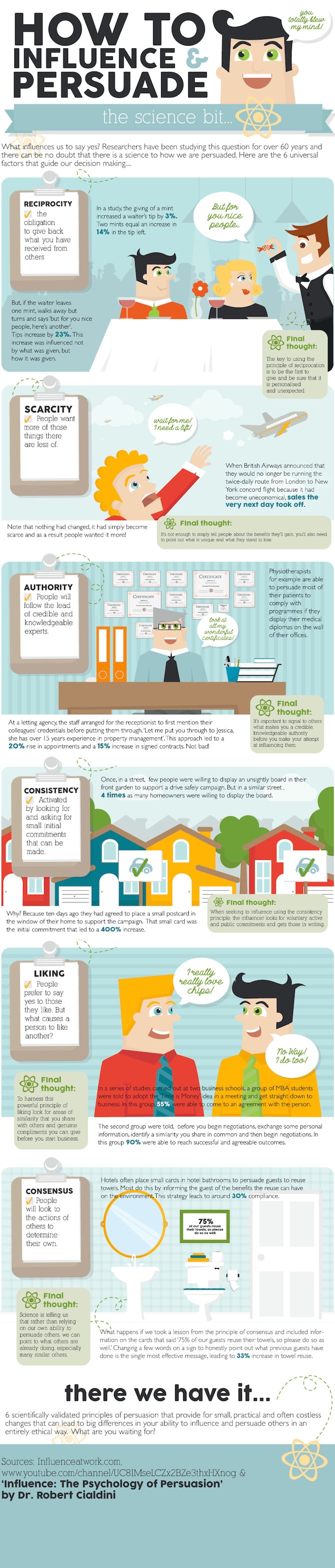
Commitment and Consistency rely on the human desire to align our actions with our stated beliefs. Once a person makes a small commitment, they are more likely to make larger, related commitments later. For example, if a prospect agrees to a brief discovery call, they are more likely to attend a follow-up demo. This principle encourages salespeople to start with small, low-risk asks that build momentum toward the final sale. It creates a psychological pathway where saying “yes” becomes the default behavior.
Social Proof is the tendency to look to others for guidance on how to behave. People assume that the actions of others reflect correct behavior. In sales, this can be demonstrated through testimonials, case studies, and client logos. When prospects see that similar companies or individuals have chosen your solution, their confidence in your offering increases. This principle is particularly effective in B2B sales, where risk mitigation is a primary concern for buyers.
Authority involves people’s tendency to follow the lead of credible experts. Buyers are more likely to be persuaded by someone who demonstrates expertise and knowledge. This can be achieved through professional credentials, published content, or deep industry insight. Salespeople who position themselves as trusted advisors rather than just vendors leverage this principle effectively. It builds trust and reduces the perceived risk of the purchase decision.
Liking suggests that people are more easily persuaded by those they like. This is influenced by factors such as similarity, compliments, and cooperation. Building rapport and finding common ground with prospects can significantly improve your chances of success. This does not mean being fake or overly familiar; it means showing genuine interest and empathy. When prospects feel a personal connection, they are more open to your message.
Scarcity is the principle that opportunities seem more valuable when they are limited. This can be applied through limited-time offers, exclusive access, or low inventory levels. However, this principle must be used ethically. False scarcity can damage trust and harm long-term relationships. When used appropriately, scarcity creates a sense of urgency that can help move prospects from consideration to action.
Applying Scientific Persuasion in Modern Sales
Knowing the principles is one thing; applying them effectively is another. Modern sales environments are complex, with buyers conducting extensive research before ever speaking to a salesperson. This shift requires a more nuanced approach to persuasion. Salespeople must integrate these principles into every touchpoint, from initial emails to final presentations. It is about creating a cohesive narrative that resonates with the buyer’s psychological triggers.
One practical way to apply these principles is through content marketing. By creating valuable, educational content, you leverage reciprocity and authority. When prospects consume your content, they begin to see you as a trusted expert. This builds a foundation of trust before the sales conversation even begins. It also allows you to demonstrate social proof by highlighting success stories within your content.
Another application is in the structure of sales conversations. Instead of pushing for a sale immediately, focus on building commitment and consistency. Start with small questions that get the prospect to agree with your observations. This creates a series of “yes” responses that make the final proposal feel like a natural next step. This approach reduces resistance and makes the buying process feel more collaborative.
Scarcity can be applied ethically by highlighting unique value propositions rather than artificial deadlines. For example, you might emphasize the limited availability of your implementation team or the exclusive nature of your solution. This creates a genuine sense of urgency without resorting to high-pressure tactics. It respects the buyer’s intelligence while still encouraging timely decision-making.
Liking can be cultivated through personalized communication. Take the time to research the prospect’s background and interests. Find common ground and show genuine interest in their challenges. This humanizes the sales process and makes it more engaging. When prospects feel understood and valued, they are more likely to engage with your solution.
Integrating Persuasion with AI-Driven Content Strategies
In the age of AI and generative search, the application of persuasion principles has evolved. Content is no longer just a static asset; it is a dynamic tool for influencing buyer behavior at scale. AEO/GEO recognizes this shift and helps businesses create, optimize, and distribute AI-ready content that leverages these psychological triggers. By automating content creation and distribution, companies can ensure that their messaging is consistently persuasive across all channels.
AI tools can analyze buyer behavior and preferences to tailor content that resonates with specific psychological triggers. For example, AI can identify which prospects are most responsive to social proof and automatically serve them relevant case studies. It can also optimize content for authority by highlighting expert insights and credentials. This data-driven approach ensures that persuasion is not left to chance but is strategically applied.
Furthermore, AI can help scale the principle of reciprocity. By generating personalized, valuable content for each prospect, companies can provide meaningful value at scale. This could include customized industry reports, tailored advice, or relevant resources. When prospects receive this personalized value, they are more likely to engage and move through the sales funnel. It creates a virtuous cycle of value exchange that drives sales.
The integration of AI also enhances the principle of consistency. By tracking every interaction and touchpoint, AI can ensure that the messaging remains consistent and aligned with the buyer’s journey. This consistency builds trust and reinforces the commitment the buyer has made. It ensures that every step of the journey feels natural and logical, reducing friction and increasing conversion rates.
Common Mistakes to Avoid in Persuasive Sales
While these principles are powerful, they can be misapplied. One common mistake is relying too heavily on a single principle. For example, focusing solely on scarcity can create a high-pressure environment that repels buyers. Instead, a balanced approach that integrates multiple principles is more effective. Each principle should support the others, creating a cohesive and persuasive narrative.
Another mistake is using these principles unethically. Manipulation may yield short-term gains, but it damages long-term relationships and brand reputation. Persuasion should always be rooted in genuine value and transparency. Buyers can sense when they are being manipulated, and it erodes trust. Ethical persuasion builds trust and fosters loyalty, which is far more valuable than a one-time sale.
A third mistake is ignoring the individual needs of the prospect. Not every principle will resonate with every buyer. Some may be more influenced by social proof, while others may respond better to authority. Salespeople must be adaptable and willing to adjust their approach based on the prospect’s preferences and behavior. This requires active listening and empathy, which are essential skills for effective persuasion.
Finally, failing to measure and iterate is a significant oversight. Persuasion is not a static process; it requires continuous refinement. By tracking the effectiveness of different tactics, sales teams can identify what works and what doesn’t. This data-driven approach allows for ongoing improvement and optimization, ensuring that persuasion strategies remain effective over time.
Building a Sustainable Persuasion Framework
To truly master persuasion, businesses need a sustainable framework that integrates these principles into their overall strategy. This goes beyond individual sales tactics; it involves creating a culture of value-driven communication. Every interaction, from marketing content to customer support, should be designed to leverage these psychological triggers ethically and effectively.
Start by auditing your current sales and marketing processes. Identify where you are already applying these principles and where there are gaps. For example, are you providing enough value upfront to leverage reciprocity? Are you showcasing social proof effectively? Are your salespeople trained to build rapport and demonstrate authority? This audit provides a baseline for improvement and helps prioritize areas for development.
Next, develop training programs that educate your team on these principles. Role-playing exercises, case studies, and real-world examples can help salespeople understand how to apply these concepts in practice. Encourage them to experiment with different tactics and share their successes and failures. This collaborative approach fosters a learning culture and continuous improvement.
Finally, leverage technology to scale your persuasion efforts. Tools like AEO/GEO can help automate content creation and distribution, ensuring that your messaging is consistently persuasive across all channels. By combining human insight with AI-driven automation, businesses can create a powerful and sustainable persuasion framework that drives long-term growth.
The science of persuasion is not about tricking buyers into saying yes. It is about understanding their needs, building trust, and providing value. By applying these six principles ethically and strategically, businesses can create more meaningful and successful sales interactions. In an increasingly competitive market, this scientific approach to persuasion is not just an advantage; it is a necessity.





