The Coherence Gap: Why Your Brand Needs Signal Consistency
Remember the era when you could dominate search results by simply weaving a few choice keywords into a blog post? It felt like a game of cat and mouse where the prize was a blue link on a results page. Today, that game has fundamentally changed. When users ask questions to AI models like ChatGPT, Claude, or Perplexity, they aren’t looking for a list of ten links to scroll through. They are looking for a singular, synthesized, and trustworthy answer.
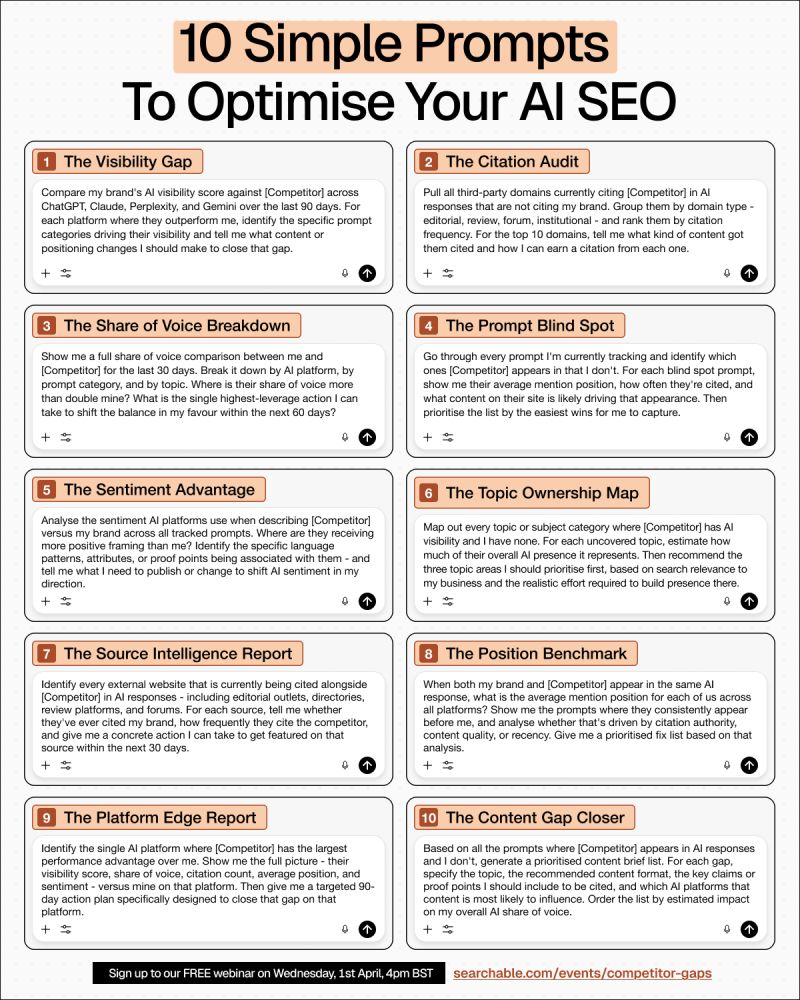
Many brands today find themselves paradoxically invisible. You might have a vast archive of high-quality content, yet when an AI is asked about your industry, your name never appears. This isn’t necessarily a failure of your SEO tactics; it is a manifestation of the Coherence Gap. This gap is the distance between having information online and presenting that information in a way that an AI model can verify as authoritative, unified, and true. If your digital footprint is fragmented—with conflicting data across platforms or a lack of clear entity definition—these intelligent systems will simply pass over your business in favor of sources they deem more reliable.
Learning how to optimize for AI search engines is no longer about chasing algorithm updates; it is about building a consistent, verifiable signal. Understanding this shift is the first step toward reclaiming your visibility in the age of generative discovery.
Moving Beyond Keywords: Understanding the AI Interpretation Layer
Traditional search optimization focused on outsmarting a directory. You built backlinks, stuffed keywords into meta tags, and hoped a blue link would entice a click. However, when you learn how to optimize for AI search engines like ChatGPT, Claude, or Perplexity, you realize the game has fundamentally changed. These systems do not rank pages in a list; they synthesize information to create a coherent, conversational response to a query. They are curators, not directories.
From Search Volume to Citation Intent
In the era of Generative AI, the goal is no longer just traffic volume—it is capturing citation intent. When a user asks an AI about a specific problem, the model retrieves data from its training set and real-time browsing tools to construct a factual, helpful answer. If your content provides the specific, verifiable answer that fills a knowledge gap, the AI cites you as a source. To succeed here, you must move away from hunting for high-search-volume keywords and start optimizing for the precise questions your customers are asking the AI.
Ranking Factors: A Shift in Strategy
To understand the shift in AI discovery ranking factors, it helps to compare the old world of search with the emerging landscape of AI. The metrics that used to drive your success are becoming secondary to the depth and authority of your entity.
| Feature | Traditional SEO | AI Search Optimization |
|---|---|---|
| Primary Goal | Click-through rate | Citation authority |
| Core Metric | Backlinks / Domain Authority | Entity confidence / Signal coherence |
| Content Format | SEO-optimized articles | Fact-rich, modular answers |
| Outcome | Traffic to your site | Brand mention in AI response |
As the table above demonstrates, while backlinks still hold weight, the new priority is Search Intelligence Optimization. This involves building a reputation as a trusted, verifiable entity that the model can reference without risking a hallucination. The AI is programmed to avoid noisy or conflicting data, meaning it will consistently favor sources that present clear, stable, and accurate facts.
The Challenge of Non-Deterministic Outputs
One of the most intimidating aspects of this shift is the non-deterministic nature of LLMs. Unlike a standard search engine that provides the same results to most users, an AI might provide a slightly different answer every time a prompt is submitted. You need to ensure your brand signal is consistent across the entire web so that no matter how the prompt is phrased, the model remains confident in your brand’s authority. Consistency has become the primary ranking variable. If your website says one thing about your services, but your third-party reviews and industry profiles say something else, the AI model loses confidence.
The Core Framework: Why Signal Coherence Beats Content Volume
In the era of traditional SEO, you might have survived on a high volume of content—blogging daily, keyword stuffing, and hoping for the best. However, AI models like ChatGPT and Perplexity operate differently. They aren’t counting your pages; they are calculating the reliability of your brand. This is where Signal Coherence becomes your most valuable asset.
Signal Coherence is the alignment of your brand identity, factual claims, and sentiment across every platform where your business exists. If your website claims you provide “enterprise cloud solutions,” but your LinkedIn profile and third-party directories describe you as a “small business IT repair shop,” you have a coherence gap. AI models thrive on patterns. When these signals contradict each other, the model perceives noise rather than authority, leading it to downgrade your brand in favor of a more consistent, albeit less prolific, competitor.
The Noise vs. Trust Dynamic
AI models are designed to minimize hallucinations—those confident but factually incorrect answers that plague generative AI. To do this, these systems prioritize entity confidence. An AI acts like a cautious researcher; if it finds fragmented data about your company, its confidence level drops. It simply doesn’t want to risk presenting unverified or conflicting information to the user.
What AI Looks For: Your Signal Checklist
To improve your standing in AI discovery, you need to ensure that the data map of your business is uniform. Use this checklist to ensure your brand is broadcasting the right signals:
- Author Credentials: Does every piece of content link back to a verified, expert author? AI prefers content associated with specific, verifiable individuals rather than generic corporate pages.
- Consistent Terminology: Are you using the same industry-standard keywords and definitions across all platforms? Inconsistent labels confuse the model’s understanding of your core service offering.
- Verified Contact Information: Is your business address, phone number, and official website consistent across Google Business, industry directories, and your own site? These are critical anchor signals.
- Sentiment Alignment: Is your brand voice and the general sentiment of reviews about your company stable? Major discrepancies in sentiment can trigger a lower authority score within the model’s internal trust engine.
Closing the Gap: Actionable Steps to Improve AI Visibility
To truly learn how to optimize for AI search engines, you must move past traditional SEO tactics that treat search results as a list of links. You need to focus on feeding these systems clear, unambiguous data.
Entity Mapping for Brand Clarity
Entity mapping is the process of defining your brand as a distinct entity within the knowledge graph of an AI model. Think of this as giving the AI a digital passport. Start by auditing your Schema markup on your website. Use specific Organization and Person Schema to explicitly define your relationships, office locations, and core services. Ensure that your brand name and key identifiers are used consistently across every social profile and directory.
Passage-Level Optimization
AI systems do not just read entire pages; they evaluate individual sections of text to find the most accurate answer for a user’s prompt. This is where passage-level optimization becomes vital. Every paragraph or section of your content should act as a self-contained, fact-checked answer. Use clear, descriptive headings (H2s and H3s) that mirror the actual questions your target audience asks.
Consensus Building and Trust Engines
AI models favor sources that have a high degree of consensus across the web. If your brand appears in independent reviews, industry-specific forums, and reputable third-party platforms, the trust engine of the model begins to view your business as a validated authority.
| Category | Action Item | Goal |
|---|---|---|
| Technical | Implement Schema Markup | Define entity relationships |
| Technical | Fix NAP Consistency | Eliminate naming fragmentation |
| Content | Q&A-Style Headings | Align with natural language queries |
| Content | Atomic Fact-Checking | Provide verifiable, precise answers |
| Reputation | Secure Third-Party Mentions | Build domain-level trust |
| Reputation | Monitor Forum Sentiment | Validate authority through consensus |
Measuring Success: Moving Beyond Traffic to Citation Velocity
In the era of traditional search, we were conditioned to worship at the altar of the click. When you look at how to optimize for AI search engines, you must abandon this narrow view. Your primary goal is to become the trusted reference they cite in their generated responses. This shift leads us to a new, critical metric: Citation Velocity.
Citation Velocity measures the frequency and consistency with which your brand, products, or service claims appear in LLM-generated answers. Unlike a standard click-through rate, citation velocity tracks your brand’s authority within the AI’s knowledge base.
Qualitative Auditing: Tracking Your Brand’s Presence
- Define Your Query Sets: Identify 20–30 high-intent questions potential customers ask that relate to your industry.
- Execute Controlled Prompts: Run these queries across platforms like Perplexity, ChatGPT, and Claude.
- Benchmark Competitor Mentions: Log how often competitors appear as a recommended solution versus how often your brand is mentioned.
- Analyze Contextual Alignment: Note if the AI correctly attributed your expertise and value proposition.
The Value of Pre-Qualified Traffic
It is tempting to worry that answers-within-the-search will lead to fewer clicks. However, traffic referred by an AI model often carries up to 4x the value of traditional organic search traffic. By the time a user clicks a citation link to reach your site, they have already received a summarized, relevant answer that confirms your brand is the solution to their problem.
| Metric | Traditional SEO Focus | AI Citation Strategy |
|---|---|---|
| Primary Goal | Click-through Rate | Citation Velocity |
| User Journey | Broad Exploration | Pre-qualified Conversion |
| Content Role | Gateway to Site | Answer-based Entity Authority |
| Success Signal | Organic Traffic Growth | Brand Mention Frequency |
Ultimately, Search Intelligence Optimization is not about forcing a user onto your homepage; it’s about ensuring that your brand is woven into the fabric of the answers being provided to your customers. When you prioritize being the trusted source over the hidden link, you win a permanent seat at the table in the future of search.
The days of hacking search algorithms with high-volume keywords are fading. We are witnessing a fundamental shift from traditional search engine optimization toward Search Intelligence Optimization. In this new era, the AI’s goal isn’t to provide you with a list of links, but to synthesize the most reliable truth available to answer a user’s question directly.
Trust is the primary currency of the digital web. When you focus on building a verifiable brand identity characterized by Signal Coherence, you provide the exact clarity that AI models crave. If you commit to providing clear, factual, and interconnected answers, you stop fighting for rankings and start becoming the expert source that AI engines naturally want to cite. According to AEO/GEO, your next growth lever is the intentional process of being the most trustworthy answer in your space.
AEO/GEO
Want to learn more?
Contact us for direct consultation and support.