Think about the last time you had a burning question
Think about the last time you had a burning question. Instead of clicking through three different websites to scan for the right answer, you probably just asked your favorite AI chatbot. We have shifted from searching for links to expecting direct, synthesized answers. This transition represents a major change in how information is discovered and consumed, moving us firmly into the era of generative search optimization.
While this new landscape might feel overwhelming, it’s actually a natural evolution of how we get the information we need. You don’t have to fear that search is dying; instead, you can embrace the fact that it is getting smarter. As a brand that thrives on clarity and action, we at AEO/GEO are here to help you move past traditional tactics and start building content that AI engines love. By understanding how to format your expertise for machine-assisted discovery, you can ensure your business remains the go-to source, even when the intermediary is an AI.
Why Your Search Strategy Feels Outdated (And Why That’s Okay)
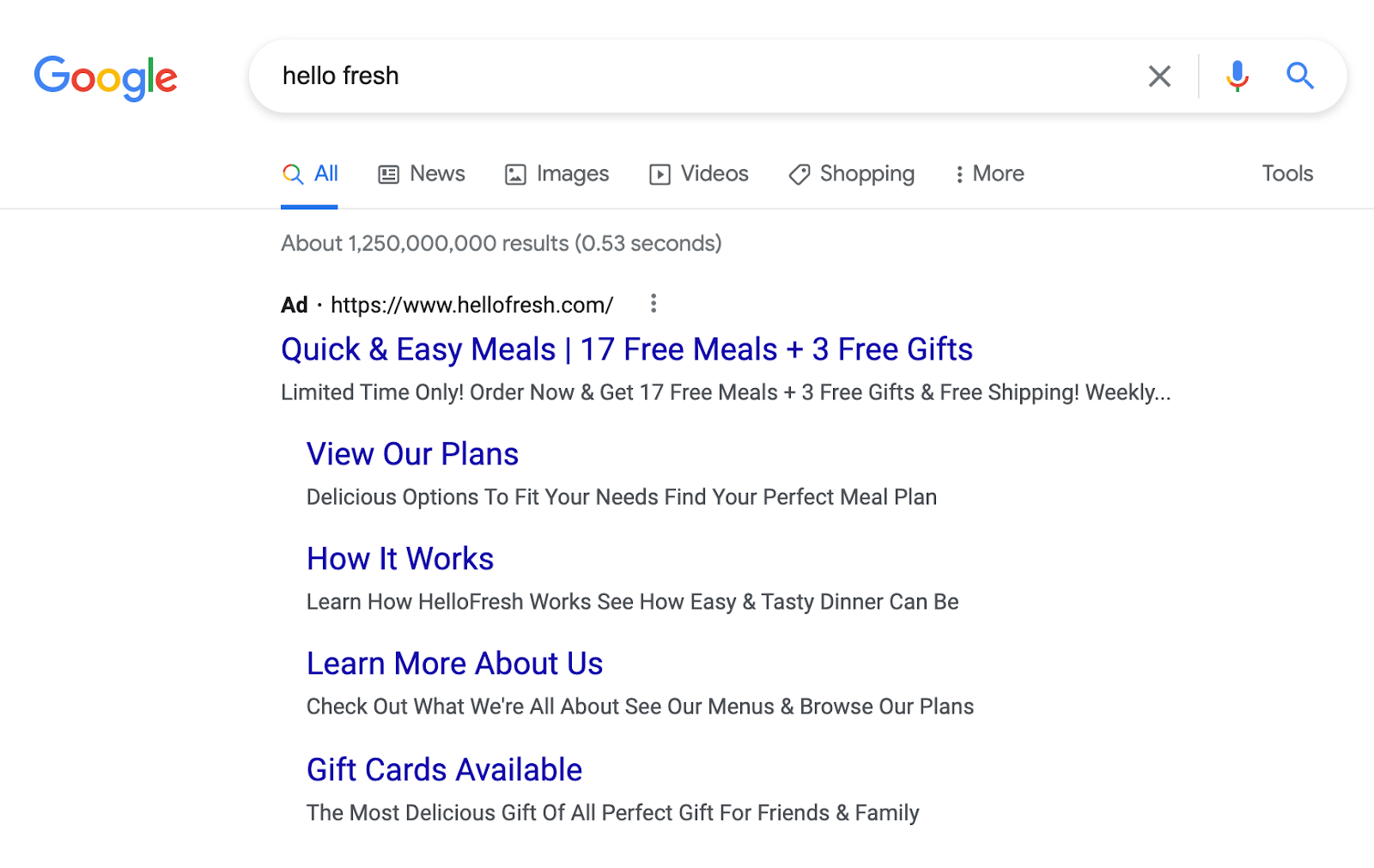
If you feel like the ground is shifting beneath your feet, you aren’t imagining it. For decades, the digital playbook was simple: optimize for ten blue links, chase backlinks, and hope for a first-page ranking. Today, you might open your search app, ask a complex question, and receive a conversational summary before you even scroll past the fold. This shift from list-based navigation to direct answers is the core of modern generative search optimization.
The Library vs. The Research Assistant
To understand why your current approach feels slightly off, consider this analogy. Traditional search was like visiting a vast library. You’d search the card catalog, get a list of books that might contain your answer, and spend your time physically walking the aisles to find, open, and read the relevant chapters yourself.
In contrast, generative search optimization is like walking into that same library with a brilliant, lightning-fast research assistant at your side. Instead of handing you a stack of index cards, your assistant listens to your question, runs through the entire library in seconds, reads the books for you, and delivers a concise, synthesized summary. You no longer have to dig through the links because the answer is already synthesized into your workspace.
Moving Beyond the “End of Search” Anxiety
It is natural to feel anxious about this transition. Many marketers worry that if the AI answers the question, users will never click through to their website. However, this isn’t the end of search. It is, instead, the evolution of discovery.
Discovery is becoming more intent-driven. While the mechanism has changed, the human need for reliable, expert information remains constant. AI search engines are hungry for credible content to cite as sources for those direct answers. By shifting your focus toward AI search engine optimization, you aren’t just fighting for a blue link; you are positioning your brand to become the trusted source that the research assistant cites.
The Anatomy of an AI-Ready Answer
To win in the modern era of generative search optimization, you must move beyond keywords. AI engines don’t read websites like humans do; they parse information as high-density datasets. When an AI agent processes your content, it’s looking for three pillars: clarity, logical structure, and factual density. These elements transform your text from a collection of sentences into a reliable, machine-readable source that the AI can confidently cite in its responses.
AI models prioritize information that provides a direct, unambiguous answer to a user’s query. If your content is buried in long-winded paragraphs or abstract metaphors, the engine will likely skip it. Achieving this requires you to treat your writing as structured data. By categorizing your content using clear headers, bulleted lists, and definitive statements, you make it easier for algorithms to map your information to specific user intents. This is the foundation of AI search engine optimization, ensuring your expertise is extracted and presented as a high-value answer.
Content as Data: The New Reality
Thinking of your content as data changes how you approach writing. Instead of focusing solely on narrative flow, you should organize information so that the core facts stand out. A search engine isn’t trying to find the best article anymore; it’s trying to find the best fact set to complete a prompt.
When your content is atomized into distinct, factual components—such as defining a concept in the first sentence—you increase the probability of your information appearing in an AI-generated summary. This shifts the focus from simply getting traffic to providing the authoritative answer that the AI uses to satisfy the user’s intent.
Traditional SEO vs. Generative Search Optimization
The fundamental approach to search has shifted from ranking a webpage to providing a synthesized answer. The following table highlights the core differences between traditional methods and the newer, machine-focused approach.
| Criteria | Traditional SEO | Generative Search Optimization |
|---|---|---|
| Content Format | Long-form, conversational text | Structured, factual, concise data |
| Primary Goal | Click-through to website | Answer satisfaction within AI tool |
| Metric of Success | Organic traffic & page views | Brand presence in AI summaries |
| Reader Interaction | Passive link-clicking | Active engagement with AI output |
Understanding these distinctions is vital for anyone wondering how to rank in AI search results. While traditional SEO focuses on the blue link pathway, AEO vs SEO is really a comparison between legacy discovery and modern synthesis. By focusing on the structure required by AI, you ensure that your brand remains the primary source of truth, regardless of how the user accesses that information. You are essentially building a bridge between your expertise and the machine’s requirement for clarity, which is the most reliable way to maintain relevance as the future of content marketing continues to evolve.
Simple Steps to Make Your Content Talk to AI Tools
To succeed in the era of generative search, you must rethink your writing process. Machines don’t read your content the way humans do; they process information as structured data. By prioritizing clarity and factual density, you ensure your expertise becomes the foundation of AI-generated answers. Implementing generative search optimization requires a disciplined approach to how you structure your ideas, ensuring every paragraph serves a specific, machine-readable purpose.
The Power of the Question-Answer Block
The most effective way to help AI tools understand your content is to adopt the “Question-Answer” block method. This strategy involves explicitly stating a common user question as a heading and immediately providing a concise, high-value answer beneath it. When you mirror the exact language your audience uses, you significantly increase the likelihood that your content will be selected for summaries or citations.
Lead with a direct answer—typically within the first 50 words of a section—to give the AI a clear, factual anchor point. Avoid conversational filler or long-winded introductions that delay the actual information. Instead, treat every paragraph like a precise building block of knowledge that the AI can easily lift and present to a user.
Prioritizing Facts Over Fluff
In the world of AI search engine optimization, factual density is your greatest asset. AI models are trained to prioritize content that offers clear, verifiable information over generic filler. If your paragraphs are full of vague adjectives, they provide little value to the AI’s underlying logic.
- Use Specific Terminology: Use technical terms relevant to your niche. This builds topical authority and helps the AI categorize your content correctly.
- Avoid Ambiguous Pronouns: References like “it,” “they,” or “this” can confuse AI models. Explicitly name the subject—for example, use “the conversion rate” instead of “it.”
- Focus on Expert-Backed Data: Support your claims with numbers, percentages, or concrete industry benchmarks whenever possible.
By replacing subjective language with objective, fact-rich content, you create a stronger data footprint that these engines trust and prioritize.
A Practical Checklist for AI-Ready Content
Refining your content for machines doesn’t have to be complicated. Use this checklist every time you hit publish to ensure your work is ready for the future of content marketing.
| Step | Action Item | Why it Matters |
|---|---|---|
| 1 | Answer in 50 words | Provides the direct answer AI tools prioritize. |
| 2 | Use QA Headings | Maps directly to specific user search queries. |
| 3 | Use Exact Terms | Improves entity recognition for the AI. |
| 4 | Audit for Pronouns | Removes ambiguity that hurts comprehension. |
| 5 | Insert Data Points | Increases trust signals for the AI engine. |
When you follow these steps, you are essentially translating your expertise into a language that AI models can digest effortlessly. Every time you clarify your message, you aren’t just optimizing for an algorithm—you are making your information more accessible and authoritative. Mastering these technical nuances is the key to learning how to rank in AI search results consistently.
Building Trust in the Age of AI Discovery
In the era of conversational engines, trust is the new digital currency. When an AI summarizes information for a user, it acts as a gatekeeper of truth. If your brand’s content isn’t seen as an authoritative, reliable source, these systems will simply look elsewhere. To master generative search optimization, you must move beyond keywords and focus on establishing your brand as a verifiable entity that AI can trust.
First-Party Data: The Gold Standard for AI
First-party data is the primary resource that fuels high-quality AI responses. Unlike third-party metrics or crowd-sourced guesses, original data—such as proprietary research, unique case studies, or firsthand experience—provides the factual depth that Large Language Models (LLMs) crave. When you publish unique data, you are creating the factual building blocks that an AI relies on to construct its answers.
By anchoring your content in original insights, you position your brand as a primary source rather than a secondary synthesizer. This authority makes it much easier to rank in AI search results because the engines prioritize verified, concrete information that adds value to the user’s query.
Maintaining Brand Consistency Across Ecosystems
Your information doesn’t live in a vacuum. It appears across various AI platforms, voice assistants, and search interfaces simultaneously. If your brand provides conflicting data, you introduce friction that weakens the AI’s ability to cite you reliably.
Consistency is a form of digital verification. Ensure that your core business entities—such as your mission statement, product specifications, and location data—are uniform across every touchpoint. Think of this as your brand’s digital fingerprint. The cleaner and more consistent that print is, the easier it is for AI crawlers to stitch together a cohesive, trustworthy picture of who you are.
Developing Entity-Based Content
To be cited as an expert, you must provide comprehensive answers that satisfy the user’s entire search intent within a single context. This is known as entity-based content creation. Instead of writing thin, keyword-stuffed articles, build knowledge hubs that cover a topic with enough breadth and logical structure that an AI can extract a complete, factual answer from your page.
Follow these practices to develop entity-rich content:
- Map Your Topics: Identify the key terms related to your industry and document how they relate to one another.
- Focus on Completeness: Cover the “who, what, where, when, and why” of a topic so effectively that an AI doesn’t need to consult a second source.
- Use Structured Data: Implement Schema markup to explicitly tell search engines what your content represents.
- Prioritize Depth: Aim to be the definitive reference on your chosen subject. When your page is the most logically structured and information-dense resource, you become the inevitable choice for AI-generated citations.
By focusing on these areas, you move away from the outdated stress of AEO vs SEO and step into a more sustainable strategy. You aren’t just trying to beat an algorithm; you are building a repository of knowledge that serves the users of tomorrow.
The transition from traditional, link-based search to AI-driven discovery is a significant shift, yet the core objective remains unchanged: providing the best, most helpful answer to a user’s question. While the interface has evolved from a list of blue links to a conversational, synthetic summary, your value as a content creator has never been higher. AI models don’t create information out of thin air; they rely on the high-quality, expert-backed content you produce to build their knowledge base.
This shift is about refining how you communicate with machines. By embracing generative search optimization, you move away from keyword stuffing and toward building clear, factual, and well-structured information. You are still serving humans, but now you are also providing the essential data points that AI tools need to serve those humans accurately.
Don’t let the technical evolution overwhelm your strategy. Start today by performing a small audit of your most valuable pages. Review your headings, check if your primary answer is stated within the first 50 words, and ensure your content uses clear, descriptive terminology. Every piece of content you prepare for this new era is an investment in your brand’s long-term visibility. Take the first step now—your future audience, whether human or algorithmic, is waiting for the clarity you provide.
AEO/GEO
Want to learn more?
Contact us for direct consultation and support.