Why Traditional Monitoring Fails in Generative Search (and What to Do Instead)
Traditional SEO monitoring focuses on SERP rankings for specific keywords—a system designed for static blue links. In the era of generative AI, this approach is insufficient. Generative engines like ChatGPT, Claude, and Perplexity do not merely list links; they synthesize information to create new responses, making your brand visibility a byproduct of LLM training data and real-time retrieval.
The fundamental shift lies in moving from tracking URL positions to tracking AI citations. Unlike traditional rankings, AI mentions are often ephemeral and context-dependent. You must account for latent mentions—instances where your brand is referenced within the model’s internal knowledge without a direct link, or where your content informs the synthesis without triggering a direct citation.
Modern AI brand monitoring requires an ecosystem that treats AI models as independent publishing platforms. You are no longer auditing a webpage; you are auditing the entity perception an AI holds regarding your brand.
Architecting Your AI Brand Mention Monitoring Infrastructure
To gain visibility, you need a robust technical pipeline that treats LLM outputs as data points.
- Tool Selection for AI Scraping: Utilize automated LLM querying tools that can simulate user searches across multiple engines. Prioritize platforms that provide raw text output, sentiment scoring, and, crucially, citation identification.
- Conducting the AI-Native Audit: Establish a baseline by querying the AI for your core product categories, competitor comparisons, and industry problems. Map every instance of your brand, your competitors, and your associated key terms.
- Automated Alerts: Configure monitoring scripts to trigger alerts whenever your brand appears in a new AI response. Ensure these alerts capture the full context window surrounding your mention, not just the brand name itself.
Methodology: From Raw Mentions to Actionable Sentiment Data
Not all AI mentions are created equal. You must classify data to ensure your resources are directed toward high-value adjustments.
- Objective Facts: Data-heavy mentions regarding pricing, features, or company history. These require consistent, clean structured data to ensure accuracy.
- Subjective Reviews: Qualitative brand perceptions generated by the model. These indicate a need for stronger brand narrative assets across third-party review platforms.
- Comparative Citations: Mentions where your brand is pitted against competitors. These provide clear gaps in your value proposition that require content updates.
Apply sentiment analysis to the generated snippets to measure whether the AI is positioning your brand as a “preferred solution” or an “alternative.” Distinguish carefully between authoritative source citations—where you are cited as the primary expert—and model hallucinations, which occur when an AI misrepresents your brand’s capabilities.
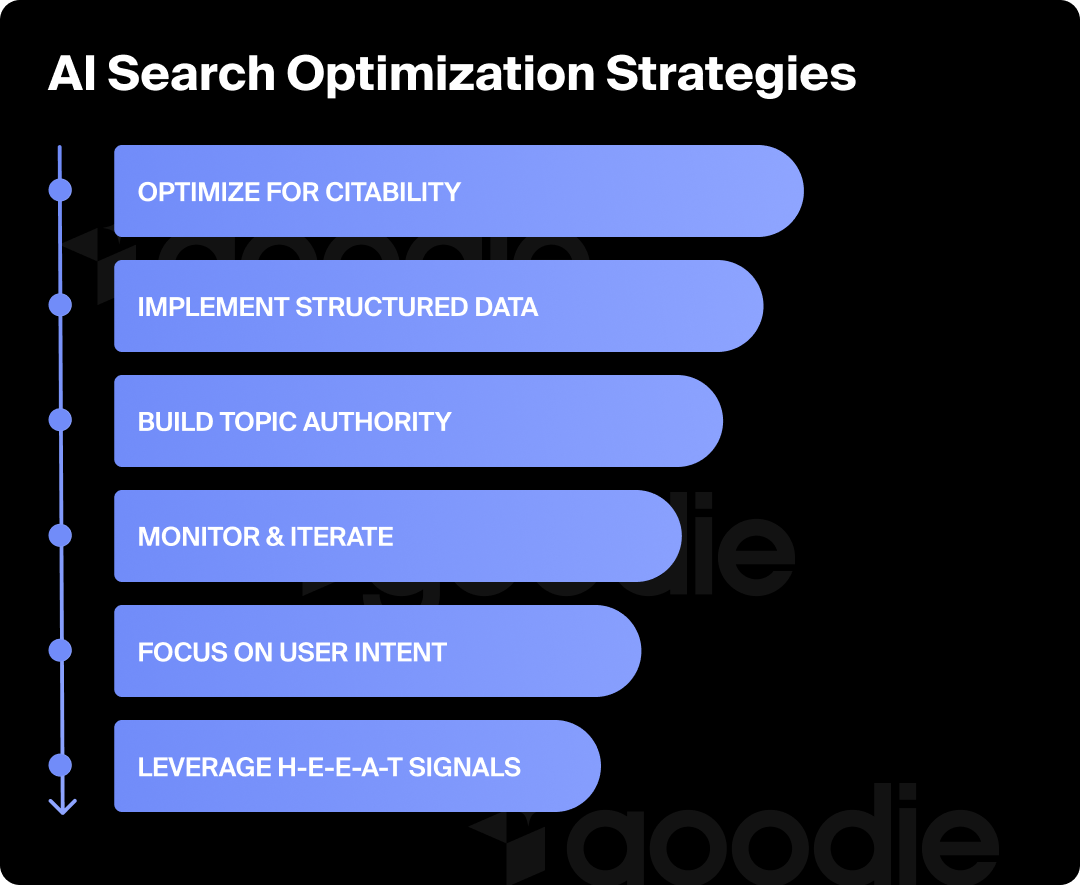
Optimizing for AI Citations: The Feedback Loop Workflow
Monitoring is useless without an integrated update cycle. Use your findings to influence the AI’s internal knowledge.
- Bridge Sentiment Gaps: If an AI consistently favors a competitor for specific use cases, create new, highly structured content assets that directly address those use cases with evidence-based data.
- Structured Data Updates: Update your website’s Schema markup (Organization, Product, and FAQ schema) to explicitly link your brand to the terms and sentiment you want the AI to associate with you.
- The Knowledge Graph Cycle: Feed your corrected, authoritative data into your own content ecosystem. As these assets gain authority, they increase the likelihood of being indexed by the AI’s retrieval mechanisms.
Standardizing AI Visibility Reporting for Stakeholders
Move beyond traffic metrics to demonstrate the ROI of AI visibility.
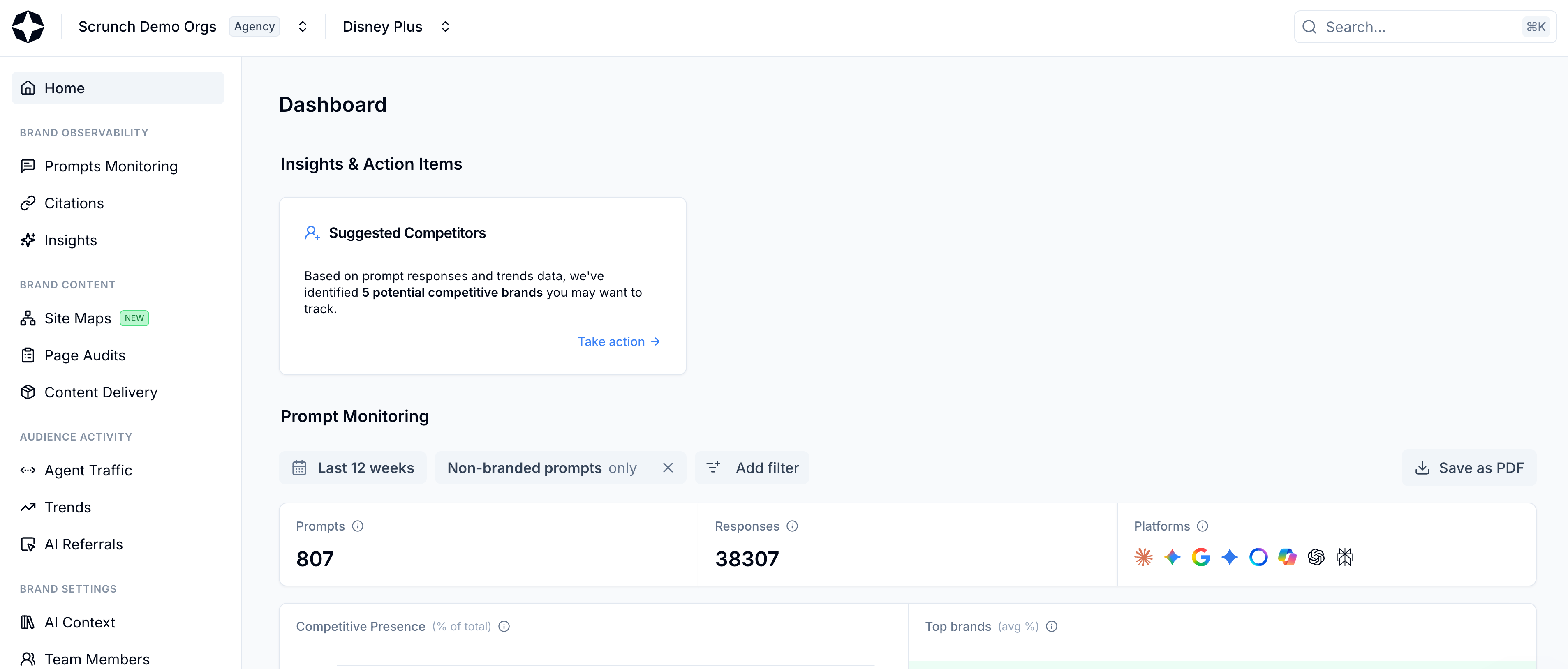
- Unified Dashboards: Track “Traditional SERP Rankings” alongside “AI Citation Frequency” to visualize the changing search landscape.
- Share of Voice (SoV) in LLMs: Calculate your brand’s appearance rate versus competitors in the top three AI response variations.
- Business Impact Reporting: Correlate spikes in AI citations with increases in direct traffic or branded searches to prove that AI visibility is driving real-world brand awareness and intent.