The landscape of digital authority has shifted. In the era of Generative AI, traditional SEO rankings are becoming secondary to a more elusive metric: AI-generated citations. While legacy SEO focused on blue links, Answer Engine Optimization (AEO) focuses on your brand’s presence within the summarized responses of LLMs.
The New Visibility Frontier: Understanding AI Citation Dynamics
To win in 2026, you must stop viewing search results as static lists and start viewing them as synthesized knowledge.
- Traditional vs. AI Mentions: Traditional SEO relies on indexation and backlinks. AI citations are driven by Retrieval-Augmented Generation (RAG) architectures, where the model queries a vector database to synthesize an answer. If your brand isn’t in the source data or doesn’t match the model’s “authority profile,” you simply won’t appear.
- The Power of Attribution: Tracking your mentions isn’t just about PR; it’s about auditing your brand’s footprint in the model’s training and retrieval ecosystem. Your goal is to become a “preferred source” for foundational models.
- AEO as a Foundation: Tracking is the baseline. Without it, you are blind to how your brand is represented—or misrepresented—within the AI-generated answers that your customers rely on daily.
Phase 1: Establishing Your AI Search Monitoring Infrastructure
Visibility begins with defining what “success” looks like in a prompt-driven environment.
- Define Mention Triggers: Beyond your brand name, map your product suites, core proprietary technologies, and key executive names. These are your “entity anchors.”
- Configure Automated Alerts: Move beyond standard social listening. Integrate tools that specifically query AI-integrated search engines like Perplexity, SGE, and ChatGPT to monitor if your anchors trigger a citation.
- Technical Footprint Audit: Conduct a baseline assessment. How many of your high-priority queries return a summary that mentions your brand? Document these as your “Zero-State” citations.
Phase 2: Executing a Closed-Loop Tracking Methodology
Data is useless without a systematic way to ingest and act upon it.
- Standardize Your Data Collection: Create a recurring cadence—weekly or bi-weekly—to pull citation data. Separate your findings into Brand Presence (if you were mentioned) and Brand Authority (if you were the primary source for a factual claim).
- Context Analysis: It is not enough to be mentioned. Is the sentiment positive? Is the context accurate? AI models can hallucinate; you need to track when your brand is misattributed or linked to incorrect categories.
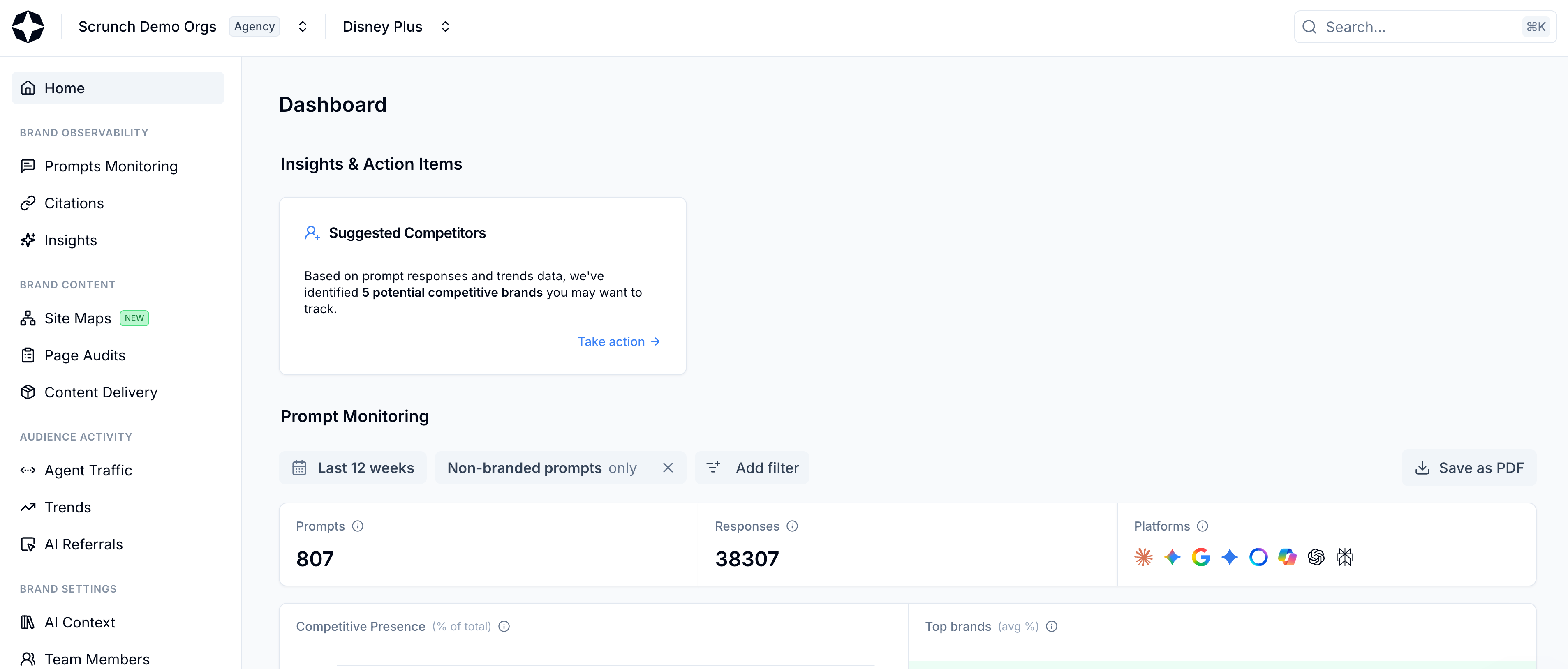
- The AI Mentions Dashboard: Centralize this data. Your dashboard should map:
- Query/Prompt clusters.
- Citation frequency per model (e.g., GPT-4 vs. Claude).
- Comparison against top three competitors.
Phase 3: Converting Mention Data into Strategic Content Adjustments
Once the data is mapped, you must pivot from passive observer to active engineer.
- Closing Citation Gaps: If a competitor is cited for a high-intent query where you are absent, conduct a gap analysis. Does the AI require more structured data, clearer technical documentation, or more authoritative long-form content on that specific topic?
- Optimizing Properties: Update your existing content to explicitly address the queries where you are missing. Use clear headings, schema markup, and concise definitions that LLMs can easily extract for RAG-based answers.
- Correcting Narratives: If you discover a pattern of misinformation or incorrect brand context in AI responses, use the feedback loops provided by major model developers or “over-index” on high-authority, factual content to steer the model’s weight toward your domain.
Operationalizing Success: Integrating AI Insights into Team Workflows
AEO is a cross-departmental discipline. Success relies on operational rhythm.
- Accountability Loops: Your PR team should monitor sentiment, while your content team treats “citation gaps” as a primary editorial roadmap. Product teams must be informed when their features are absent from relevant AI summaries.
- Scaling Efforts: As you expand into new markets or product lines, automate your mention triggers. Use your initial benchmarks to establish a “citation share” KPI for the marketing team.
- Long-Term ROI: Consistent, automated AEO tracking shifts your digital strategy from reacting to algorithm updates to engineering your brand’s authority into the very fabric of how AI models retrieve information.