The digital landscape is undergoing a fundamental transformation. For years, success was defined by achieving the top position on a list of blue links. Today, that paradigm is shifting rapidly toward AI-answer dominance. In this new era, your brand’s visibility isn’t just about traditional SEO rank; it’s about whether you are cited as a trusted authority within generative search responses from platforms like ChatGPT, Google AI Overviews, and Perplexity.
This guide provides a systematic framework for benchmarking your AI brand visibility against your direct competitors, allowing you to move from passive observation to strategic dominance.
Understanding the New Metric: Beyond Traditional SEO Rank
Traditional SEO focuses on backlinks, keyword density, and technical site health to earn a ranking. In contrast, AI search prioritizes contextual relevance and factual accuracy based on massive datasets.
When an AI engine synthesizes an answer, it acts as an aggregator of knowledge. Your “rank” is no longer a single number on a page; it is your AI Share of Voice—the frequency and quality of times your brand is cited across various queries related to your industry. To compete effectively, you must stop measuring “rank” and start measuring “mention frequency.”
Establishing Your AI Baseline: Identifying Your Primary Competitors
The first step in any benchmarking workflow is defining the field of play. Identifying your competitors in generative search often reveals brands you may not have considered your “traditional” rivals.

- Broaden your perspective: Use AI research tools to identify which brands are consistently surfacing in answer boxes for your core product or service categories.
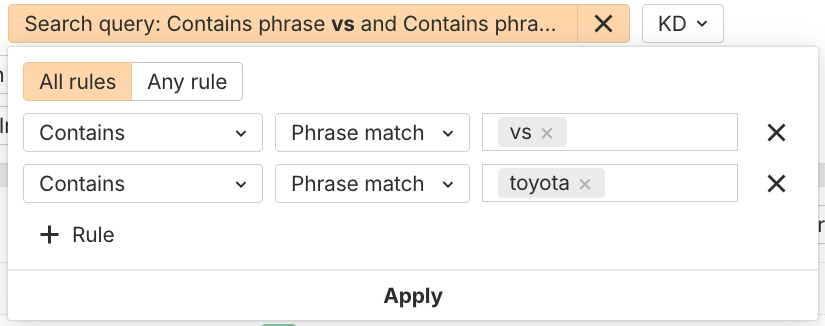
- Refine the scope: Filter for queries that include “vs” or “best” followed by your category. This immediately shows you who the AI deems your closest equivalent.
The Benchmarking Workflow: Comparing Citation Frequency and Quality
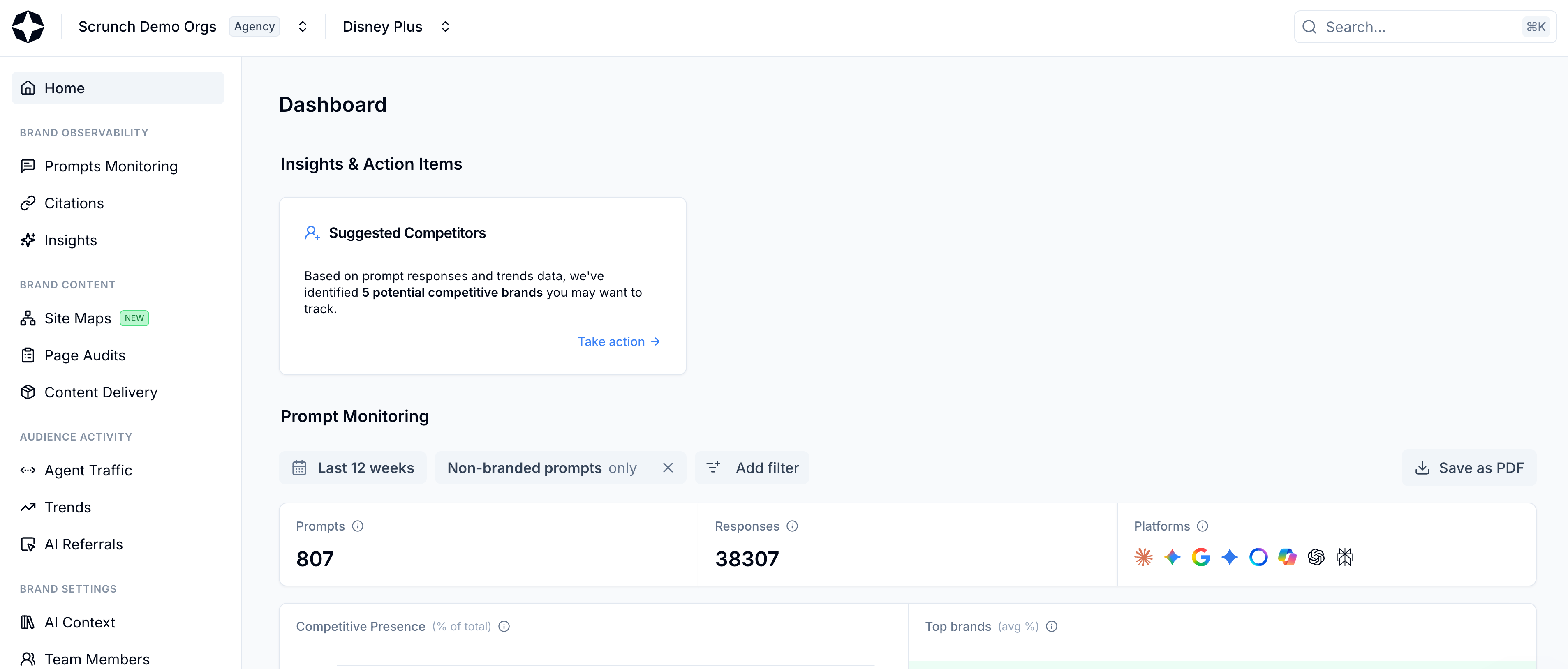
Once your competitors are identified, you must establish a consistent cadence for performance tracking. Scaling this effort requires the use of specialized platforms like AEO/GEO Services, which automate the monitoring of brand mentions across diverse AI ecosystems.
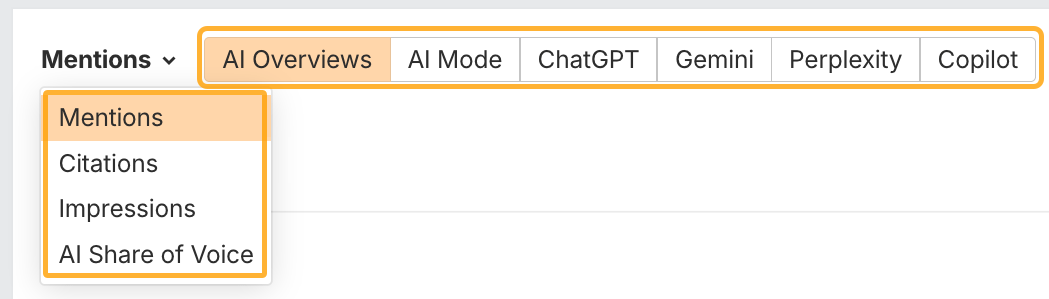
By integrating AEO/GEO Services into your workflow, you can move away from manual checking and toward an automated dashboard that tracks:
- Citation Frequency: How many times you appear compared to competitors over a set period.
- Sentiment Alignment: Whether the context of the mention is positive, neutral, or associated with high-intent keywords.
- Platform Diversity: Which AI models are citing your content most frequently.
Qualitative Analysis: What AI Search Engines Actually Say About You
Frequency is only half the battle. You must also analyze the quality of your citations. Does the AI describe your brand as a “premium provider,” or does it focus on “entry-level alternatives”?
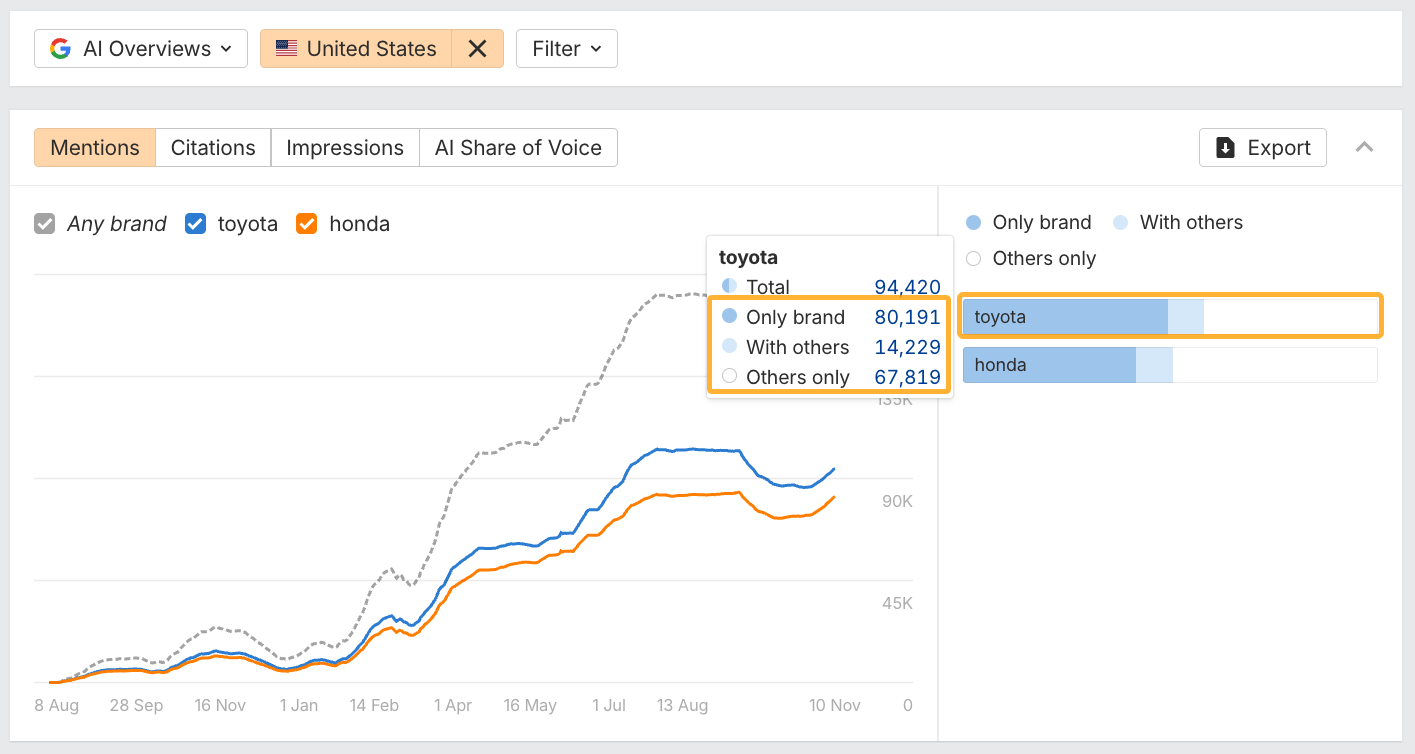
Review the specific snippets provided in AI responses. These reveal the attributes that the AI prioritizes when explaining your brand to a user. If your competitors are capturing mentions for key features that you also offer but are failing to rank for, you have identified a significant content optimization opportunity.
Gap Analysis: Turning Competitor Mentions into Your Opportunity
Gap analysis in the AI age involves looking at the specific URLs and content formats that the AI is citing for your competitors, which are currently ignoring your site.
- Identify the missing content: Find queries where your competitor is cited, but you are not.
- Analyze the source: Review the page the AI cited. Was it a specific FAQ, a white paper, or a technical guide?
- Close the gap: Create high-quality, comprehensive content that addresses the topic more thoroughly than your competitor’s cited source.
Automating the Process for Scalable Visibility in AI Ecosystems
Maintaining AI visibility is not a “set it and forget it” task. As AI models update their training data and algorithms, the competitive landscape will shift. Leveraging AEO/GEO Services ensures that your content is not only optimized for today’s search environment but is also positioned for long-term scalability. By automating the tracking, publishing, and optimization loops, you can maintain a consistent presence in AI-generated answers, regardless of how quickly search technology evolves.
For growth-focused teams, adopting a unified platform like AEO/GEO Services is the only way to maintain a competitive advantage at scale. Visit https://aeogeo.com to learn more about how to automate your AI search strategy.