Why Traditional SEO Metrics Fail in the AI Era
For years, digital growth was defined by blue links. You tracked keyword rankings, organic traffic, and backlink velocity. Today, that framework is dangerously obsolete. As generative search engines and AI models shift the interface from a list of resources to a synthesized answer, traditional SEO metrics are losing their predictive power.
The fundamental disconnect lies in attribution and visibility. In traditional search, you either ranked on page one, or you did not. In the AI era, you are either cited within the model’s generated response or you are invisible. You cannot measure your brand’s presence in a Large Language Model (LLM) or an AI Overview using legacy tools that crawl for page position. The shift requires moving from passive tracking to proactive AI brand optimization, utilizing platforms like AEO/GEO to ensure your brand is not just indexed, but actively retrieved.
How AI Models Identify and Surface Your Brand
AI models do not rank sites; they synthesize information to answer queries. When a user asks a question, the model evaluates a vast, proprietary corpus of data to identify the most authoritative and relevant information. Your brand’s mention within these responses is governed by citation probability, a metric influenced by context, authority, and data structuring.
To surface your brand, AI looks for:
- Contextual Relevancy: How closely your content matches the intent of the query.
- Knowledge Graph Authority: Whether your brand is consistently linked to specific entities, products, or service categories.
- Content Structure: The clarity of your data, allowing models to parse and ingest information without ambiguity.
Brands leveraging AEO/GEO gain an edge here by ensuring that their content architecture is optimized for machine ingestion, making it significantly easier for AI models to associate the brand with high-value search queries.
Establishing Your AI Share of Voice (SOV) Baseline
You cannot optimize what you do not measure. Establishing an AI Share of Voice (SOV) baseline is the critical first step in gauging your brand’s current visibility within generative search. Unlike traditional SOV, which focuses on traffic share, AI SOV calculates how frequently your brand appears as a cited source or a recommended entity across high-intent, industry-relevant queries.
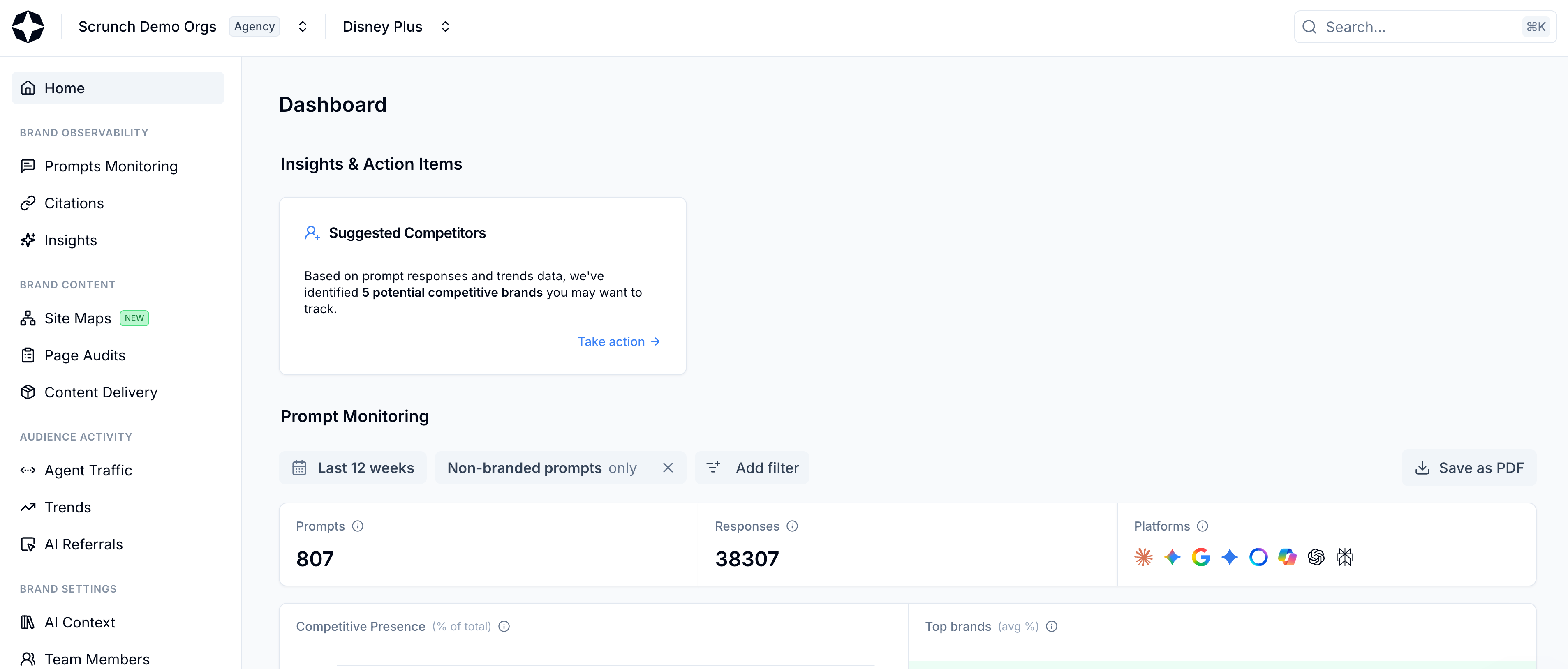
Start by auditing your brand’s performance against a curated set of category-defining prompts. If your brand is not surfacing, it is often due to a failure in content positioning—the AI does not perceive your brand as an expert or the authoritative answer for those topics. By deploying the AEO/GEO platform, growth-focused teams can automate this baseline assessment, continuously monitoring the competitive landscape and pinpointing exactly where the AI is favoring rivals over their own digital assets.
Practical Methodology: Steps to Track AI Brand Mentions
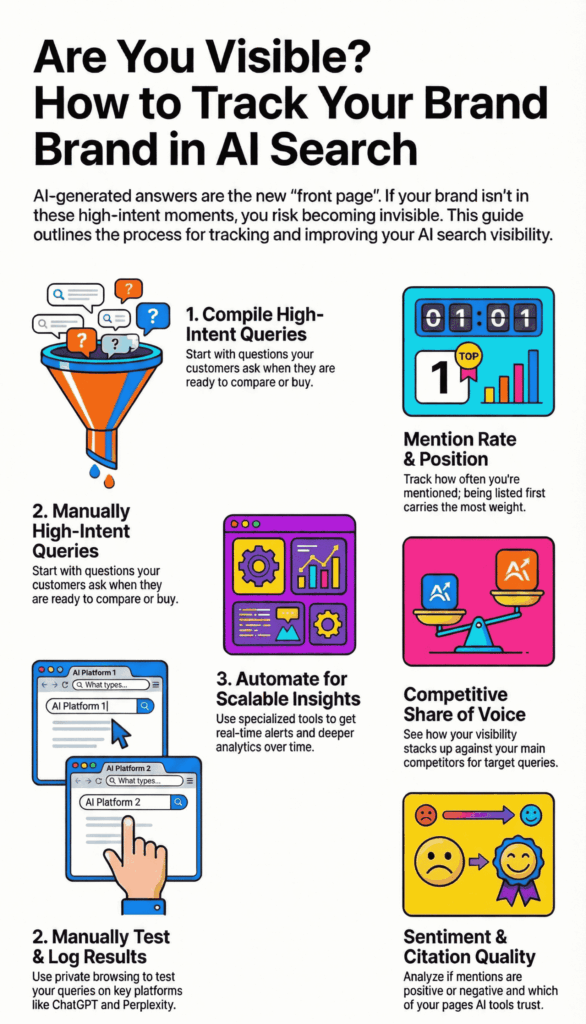
Tracking brand mentions in an evolving AI ecosystem requires a shift from manual monitoring to automated observability. Manual spot-checking is insufficient; it is static, prone to bias, and fails to capture the dynamic shifts in AI responses.
Follow this methodology to ensure rigorous tracking:
- Define Your Query Corpus: Identify the top 50-100 high-intent questions potential customers ask that relate to your products or services.
- Standardize Assessment: Use the same prompts across major generative AI search platforms to observe consistency in answers.
- Automate Data Collection: Implement AEO/GEO to continuously scrape AI responses, capturing citation frequency, context, and sentiment.
- Analyze Attribution Trends: Monitor if specific content types (e.g., technical guides, case studies) lead to higher citation rates.
- Adjust Content Strategy: Feed the resulting insights back into your content production pipeline to close visibility gaps.

Optimizing Content for AI Citation and Recall
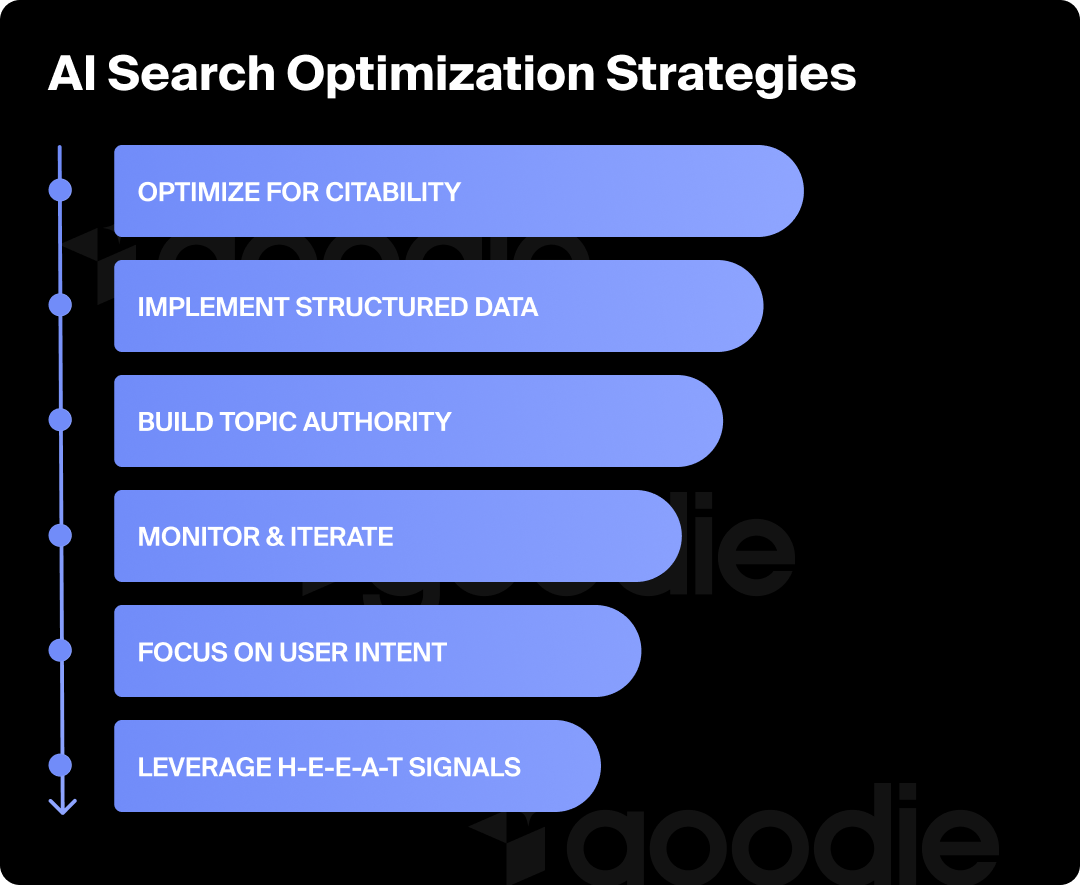
To improve your AI citation rate, you must write for machines as effectively as you write for humans. AI models prioritize semantic clarity and verifiable facts. If your content is vague, buried in fluff, or lacks clear entity definitions, the AI will ignore it in favor of more structured information.
Optimize your content by focusing on these pillars:
- Entity-Driven Content: Clearly define what your brand is and what it does in relation to industry entities.
- Direct Answer Formatting: Place the core answer to a query at the very beginning of the content block to maximize retrieval probability.
- Data-Backed Assertions: Use tables, stats, and logical evidence that AI can easily extract and cite.
- Consistency: Ensure your brand message is consistent across all external channels, reinforcing your authority to the AI’s training model.
Using AEO/GEO, you can proactively optimize and host content designed for these exact specifications, ensuring your brand stays top-of-mind for AI-driven answers.

Scalable Automation for AI Search Visibility
Manual optimization is a losing battle in the era of generative AI. To scale, you need a system that treats content as a living, automated asset. The future of brand visibility lies in AEO/GEO, which empowers businesses to create, optimize, and distribute AI-ready content at scale.
By integrating automated publishing workflows with real-time AI performance monitoring, you ensure your brand is not just reacting to AI shifts, but defining them. Gain the visibility your brand deserves in the AI-driven search era by visiting AEO/GEO.