In the current digital environment, your content strategy cannot afford to live in a silo. True visibility now requires a two-front approach: capturing authority in public generative search engines like Google and Perplexity (GEO), while simultaneously fueling internal enterprise intelligence systems (such as RAG-enabled chatbots). This dual-frontier strategy is no longer optional; it is the blueprint for organizational relevance.
Defining the AI Content Ecosystem: Public GEO vs. Private Intelligence
To succeed, you must first distinguish between the two layers of your AI ecosystem:
- Public GEO (Generative Engine Optimization): This is your external footprint. Your goal here is to become a primary, verifiable source for generative engines synthesizing answers for prospective customers.
- Private Intelligence (Internal RAG): This is the internal knowledge layer. Your content must be structured to empower enterprise chatbots and Retrieval-Augmented Generation (RAG) models to provide accurate, context-aware answers to employees and stakeholders.
A unified strategy is essential because inconsistencies between these layers lead to hallucinations. Whether an AI is answering a customer’s query on Google or helping an employee troubleshoot a product internally, the semantic clarity and machine-readable structure of your content determine the quality of the output.

The Anatomy of an AI-Ready Content Asset: Trust and Verifiability
AI models do not just “read” content; they evaluate its weight, context, and origin. Optimizing for both public and private AI requires a foundation of absolute trust.
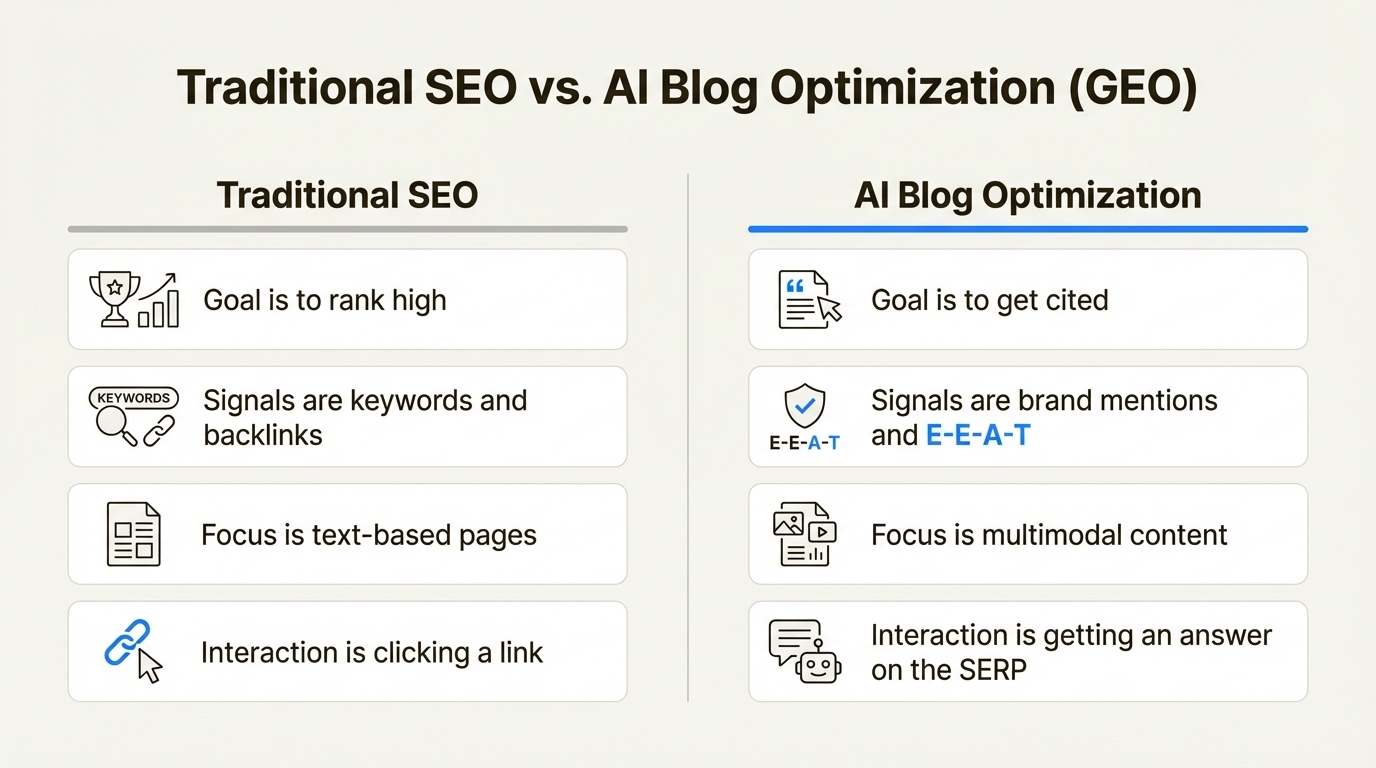
- Schema and Entity Verification: Move beyond traditional SEO. Implement rigorous schema markup to define entities, relationships, and attributes. This transforms your content into a structured database that AI can reliably parse.
- Human-in-the-Loop Metadata: Incorporate SME credentials and clear authorship metadata into every asset. When the AI cites a source, it needs to understand the authority behind the information.
- Version Control: To prevent internal hallucinations, implement strict versioning protocols. Ensure your RAG systems are accessing the current, approved iteration of a document, not an outdated draft.
Strategic Governance: Eliminating Hallucinations and Silos
Effective AI performance relies on the quality of the data it consumes. Without governance, your internal knowledge silos become the primary cause of AI errors.
- Establishing a Single Source of Truth: Centralize your proprietary data. Ensure that high-value assets—product documentation, policy manuals, and technical specs—are stored in a singular, indexable location that both your internal RAG tools and public-facing bots can trust.
- Proactive Lifecycle Management: Stale content is a liability. Implement a content audit cadence that flags outdated information, preventing the AI from synthesizing inaccurate, legacy answers.
- Mapping Knowledge Silos: Break down walls between departments. A holistic approach ensures that technical, marketing, and operational data are integrated, providing the comprehensive context required for RAG to succeed.

The Feedback Loop: Leveraging AI Interactions to Refine Content
Your strategy should be dynamic. AI interaction logs—both from your public SEO monitoring and your internal enterprise chat tools—are the most valuable source of content intelligence.
- Monitor Interaction Logs: Analyze what questions the AI is struggling to answer or where it is defaulting to vague responses.
- Identify Content Gaps: If users (or employees) repeatedly ask about a specific use case that your current documentation fails to address, you have identified a high-priority creation gap.
- Iterate and Optimize: Treat every AI “failure” as a prompt to update your source content. By feeding these insights back into your knowledge base, you continuously refine the quality of future AI-generated outputs.
Building Your Unified AI Visibility Framework: A Tactical Roadmap
Achieving visibility across these frontiers requires an integrated enterprise stack. Use this roadmap to transition from fragmented content to a cohesive intelligence framework:
- Phase 1: The Integrity Audit: Conduct a comprehensive audit of all existing internal and external assets. Grade them on accuracy, machine-readability, and structural coherence.
- Phase 2: Centralized Content Architecture: Build a unified content repository that serves as the engine for both public-facing generative summaries and private enterprise intelligence.
- Phase 3: Automation and Distribution: Implement automated publishing workflows that push verified, structured content simultaneously to your public channels and your internal RAG infrastructure.
By treating your content as a shared resource for both public visibility and internal knowledge, you transform your brand into an indispensable authority in the AI-driven search era.