Winning Generative Search Visibility: Retrieval Optimization
To win in the era of generative search, you need to change how you think about your website. It’s time to stop chasing traditional search rankings and start focusing on Retrieval Optimization. In this landscape, you aren’t just trying to “get found”—you are working to become the most reliable, easily accessible source of truth for an AI’s attention mechanism.
The Invisible Gatekeepers: Why Crawlability is Your AI Authority Baseline
There is a dangerous myth circulating that if you write high-quality content, the AI will naturally find and reward you. Unfortunately, that’s not how these machines work. Before an AI model can even consider your content as “authoritative,” it must be able to find, parse, and understand it efficiently.
Think of your website as a library. If the doors are locked, the aisles are blocked, and the books are thrown into a pile on the floor, it doesn’t matter how brilliant the information is—the librarian can’t help the patron find it.
- Crawlability is the prerequisite: If AI bots struggle to navigate your site structure, they simply won’t index your latest insights.
- The danger of indexation bloat: Having thousands of low-value, duplicate, or outdated pages creates “noise” that drowns out your high-quality content. This bloat makes it harder for AI models to determine what your domain is truly an expert in, effectively diluting your authority.
Cleaning up your technical house isn’t glamorous, but it is the foundation upon which all other authority is built.
Speaking to the Machine: The Mechanics of Retrieval Optimization
To truly master generative search, you need to understand how these models process information. They use “Attention Mechanisms” to filter through massive amounts of data, essentially performing a “Query Fan-out” where they pull snippets from various sources to synthesize an answer.
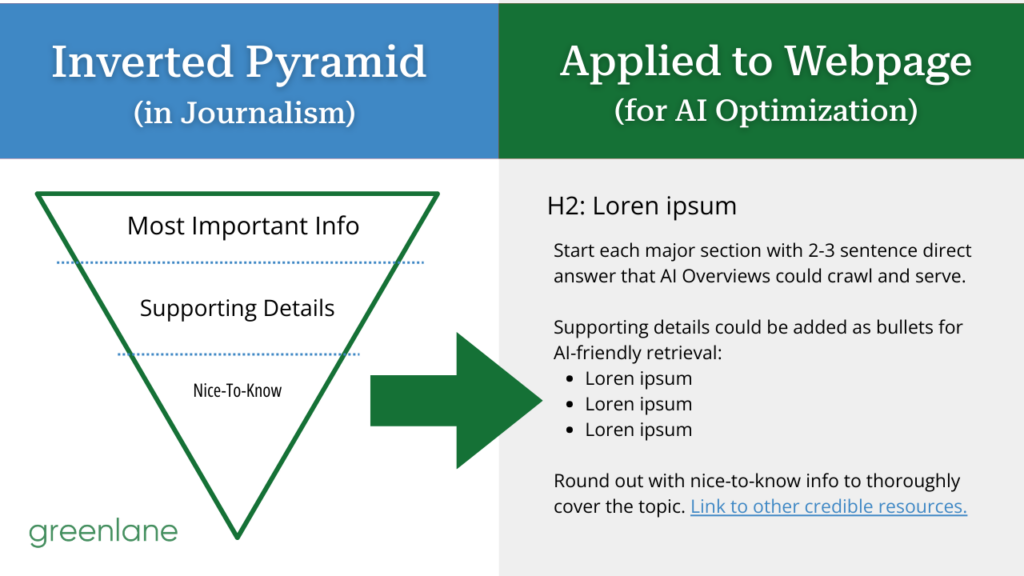
To ensure your brand makes the cut, you have to move from keyword-stuffed content to high-signal information density. Instead of the traditional “pillar page” approach, adopt an Inverted Pyramid structure. Put the most important, fact-dense information at the very top of your content. This allows the AI to capture the “signal” immediately without having to dig through paragraphs of fluff.
Original Data: The Ultimate Shortcut to AI Citations
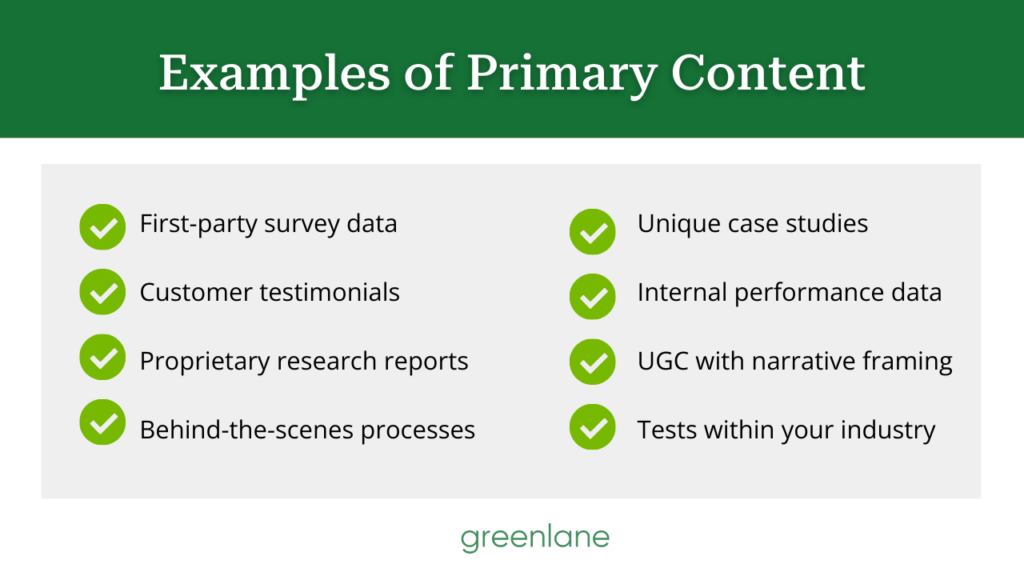
AI models are trained on the entirety of the internet, but they are constantly starving for something they don’t have: primary, original data.
If your content is just a regurgitation of what’s already available on a thousand other blogs, the AI has no incentive to cite you. Why cite a summary when it can summarize the original source itself? By conducting your own surveys, experiments, or proprietary industry analysis, you become a “source” rather than a “summarizer.” This positions your brand as a primary reference point—exactly the type of content AI models are programmed to reward with citations.
Navigating the Illusion of Measurement Stability
One of the biggest traps in modern digital marketing is looking for the same stability we had in traditional search rankings. In a generative environment, rankings are fluid, unstable, and often non-existent in the way we used to define them.
“Share of AI Voice” might sound like a useful metric, but it is often a vanity metric that masks the real, qualitative signals you should be chasing. Instead of obsessing over tracking tools that promise “AI visibility” (which are often unreliable), focus on:
- Brand-entity association: Is the AI connecting your brand name with the topics you want to own?
- User-intent fulfillment: Does your content actually answer the specific questions your target audience is asking?
Stop trying to measure the “unmeasurable” and start focusing on being the most useful, relevant, and credible entity in your niche.
Building a Sustainable Authority Engine
Ultimately, winning in the generative search era isn’t about finding a “hack” to trick the algorithm—it’s about committing to a long-term Retrieval Optimization roadmap.
This requires shifting your team’s culture toward high-signal, data-backed content creation. It’s about building a reputation for reliability. When you consistently provide structured, clear, and original information, you build a sustainable engine that doesn’t just survive algorithm changes but thrives in them. The future of your brand’s visibility depends on your ability to be the most “machine-friendly” source of truth in your industry.
AEO/GEO
Want to learn more?
Contact us for direct consultation and support.