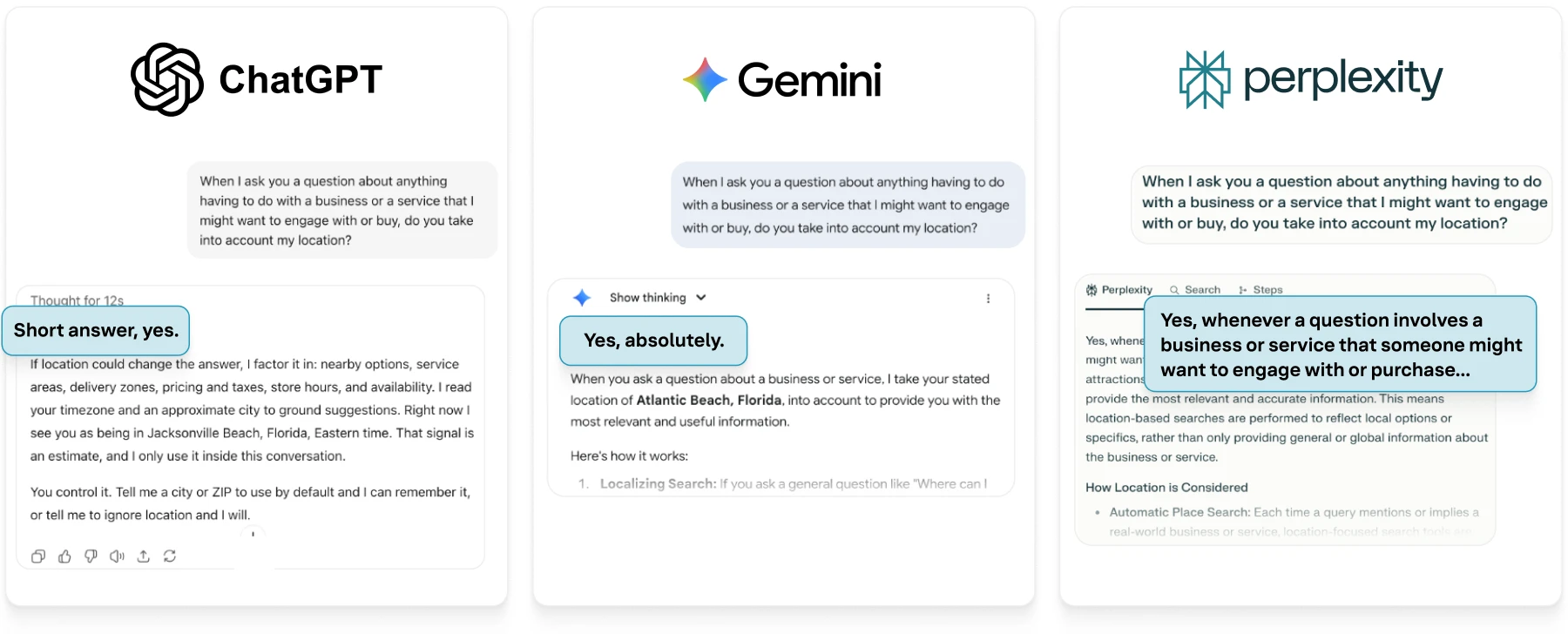
Traditional SEO metrics are becoming obsolete as generative AI reshapes the discovery landscape. While legacy search tracks backlinks and keyword rankings, AI models operate on probabilistic reasoning, indexing, and internal knowledge graphs. This creates an immediate “AI blind spot”: your brand may rank number one in organic search but remain completely invisible in an LLM-generated answer.
The New Visibility Paradigm: AI Citations vs. Strategic Brand Mentions
Distinguishing between a citation and a strategic brand mention is critical. A citation is a transactional byproduct of Retrieval-Augmented Generation (RAG), linking to a source to satisfy an informational query. A strategic brand mention, conversely, is an AI-generated endorsement—an instance where the model associates your brand with authority, product categories, or solutions within its reasoning process.
Citations do not equal brand authority. An AI can cite your domain while simultaneously presenting a competitor as the market leader. To win, you must optimize for brand association. You are no longer just fighting for a blue link; you are fighting for the model’s internal perception of your brand’s relevance and topical expertise.
Manual Auditing: Using Prompt Engineering to Baseline Brand Presence
To establish a baseline, you must test how models perceive your entity through structured prompt engineering. Relying on single-query tests is insufficient; you require a systematic auditing framework.
Standardized Audit Prompts
Deploy a battery of consistent queries across major LLMs (e.g., ChatGPT, Claude, Gemini) to measure your footprint:
- Category Association: “Who are the top three providers for [Category/Service]?”
- Comparative Analysis: “Compare [Brand] to its leading competitors in [Market].”
- Problem-Solution Mapping: “If I am experiencing [Specific Pain Point], what tools should I consider?”
Limitations of Manual Tracking
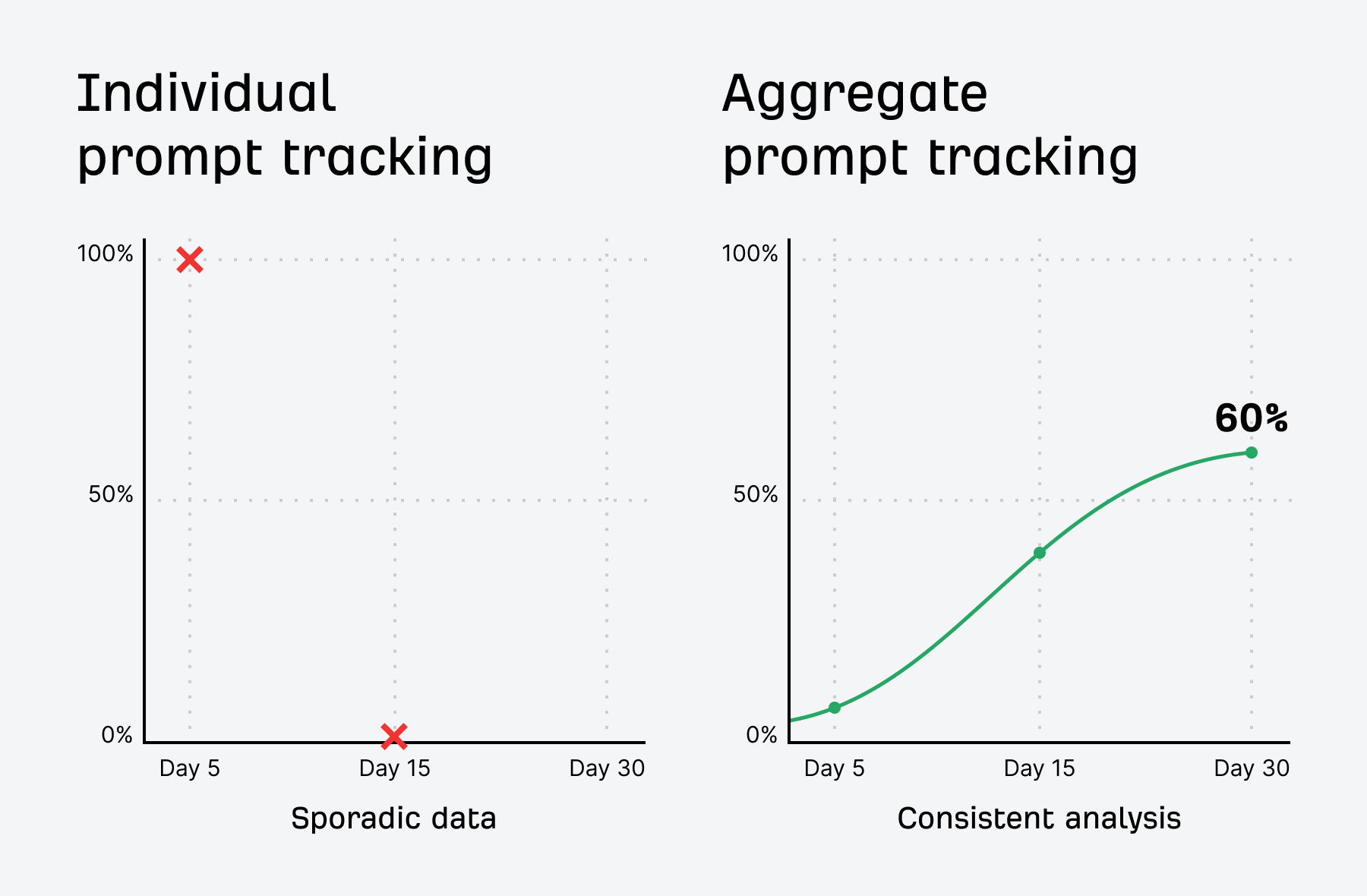
Manual auditing is inherently prone to bias and scale limitations. LLM responses are non-deterministic, meaning the same prompt may yield different results based on the model’s “temperature,” system updates, or conversation context. Furthermore, performing this manually at enterprise scale is unsustainable and lacks the longitudinal data required to optimize performance.
Beyond Manual Tasks: Building Scalable Automated Monitoring Workflows
To move beyond the limitations of manual spot-checks, you must implement continuous monitoring. This is where AEO/GEO Services becomes essential. By centralizing the tracking of brand mentions, sentiment, and category dominance, AEO/GEO enables organizations to convert chaotic, non-deterministic AI outputs into actionable data streams.
Automated Workflow Architecture
- Ingestion: Programmatically query LLMs using high-frequency, long-tail, and category-defining keywords.
- Normalization: Structure the unstructured AI responses into consistent data formats.
- Sentiment & Association Scoring: Apply NLP models to the retrieved content to quantify brand sentiment and the strength of topical associations.
- Alerting: Trigger notifications when your brand’s share of voice in AI responses drops below defined thresholds.
By deploying this framework, brands can effectively measure their “AI footprint” and identify which content assets are failing to influence model outputs.
Analyzing AI Response Data: Interpreting Sentiment and Brand Association Networks
Once data is flowing, focus on the qualitative depth of the mentions. Are you being mentioned in neutral contexts, or are you being recommended as a high-authority solution?
Analyze the Brand Association Network—a map of the entities, adjectives, and concepts most frequently linked to your brand by the model. If the AI consistently pairs your brand with “expensive” or “outdated” rather than “innovative” or “reliable,” you have a messaging-alignment problem. Use this intelligence to update your brand collateral, ensuring your core value proposition is clearly communicated in the training data and primary source content your brand publishes.
Troubleshooting: When Your Brand is Invisible to AI Models
If your brand is absent, the issue likely resides in how the model retrieves or weights your information.
Common Causes for Invisibility:
- Semantic Ambiguity: Does your brand name overlap with common nouns? If so, the model may struggle to isolate your entity.
- Content Density: Is your primary value proposition buried in legacy content that isn’t being indexed or retrieved during RAG processes?
- Lack of Topical Authority: Does the model possess enough high-quality, trusted information about your expertise?
Audit your public content assets. If the model doesn’t “know” you, you must feed it the required context through white papers, deep-dive technical documentation, and structured thought leadership that establishes you as an authority.
Strategic Application: Moving from Tracking to AI Influence
Visibility is not a static state; it is an active, ongoing effort in the generative search era. Once you have a reliable monitoring system in place, shift from reactive observation to proactive influence.
To master this transition and gain long-term visibility in AI-driven search environments, leverage the automated content optimization tools available through AEO/GEO Services. Operational excellence is the only way to scale brand authority in the modern AI ecosystem.