You spend weeks perfecting your keyword density and internal linking, only to see an AI overview ret
You spend weeks perfecting your keyword density and internal linking, only to see an AI overview return an answer about your brand that is outdated or wrong. It feels like the digital rug has been pulled out from under you. This isn’t just a minor glitch; it is the reality of the hallucination risk that traditional SEO audits fail to capture. Standard tools track how search bots crawl your site, but they are blind to how Large Language Models interpret, summarize, and occasionally invent facts about your business.
If you are wondering how to optimize for AI search engines, you must move beyond the constraints of traditional metrics. Relying solely on ranking trackers leaves you vulnerable to the volatile, generative nature of modern search. To maintain control over your digital reputation, you need a proactive, manual testing framework that forces you to see your content through the eyes of an AI. This guide provides the tactical roadmap to secure your brand’s presence, ensuring that when an AI speaks about your company, it speaks accurately and with authority.
The AI Perception Gap: Why Your Audit Falls Short
If you’re still relying on traditional rank trackers to gauge your brand’s health, you’re missing half the story. While old-school search bots acted like librarians—indexing pages based on keyword density and link authority—Large Language Models act more like highly efficient, yet occasionally distractible, research assistants. They don’t just read your content; they interpret it through a probabilistic lens, aiming to capture the meaning rather than the specific keyword count.
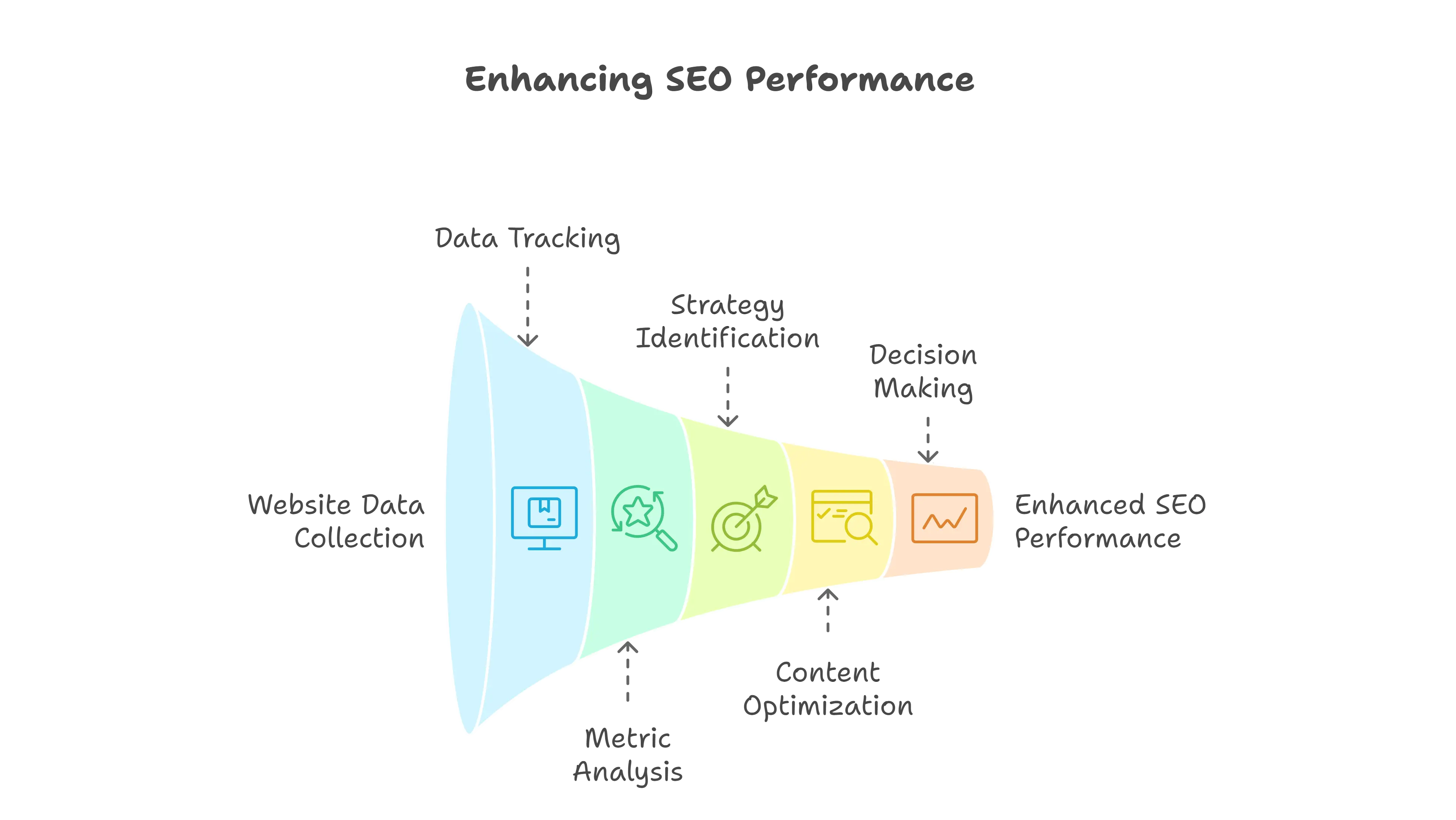
Because LLMs prioritize intent and context, your current audit likely overlooks how your information is synthesized. This creates an AI perception gap. Even if your page ranks high for a specific keyword, an LLM might pull inaccurate information or ignore your brand entirely because the underlying concepts aren’t clearly structured for machine comprehension.
The Dangers of Hallucination and Ambiguity
This shift toward semantic understanding introduces two critical risks: AI hallucination prevention is now a content strategy mandate. When your source material is vague, contradictory, or lacks clear context, an LLM may fill the gaps with hallucinations. If your website doesn’t explicitly define your services or value propositions, the AI might invent features or partnerships that don’t exist, damaging your credibility before a potential customer even reaches your site.
Furthermore, semantic entity SEO is compromised by entity ambiguity. This happens when your content doesn’t distinguish your brand clearly from competitors. If you mention innovative cloud solutions without grounding that term in specific, unique brand attributes, the AI may bundle you together with industry giants or unrelated startups.
| Feature | Traditional Search Bots | Large Language Models |
|---|---|---|
| Primary Goal | Indexing keyword frequency | Contextual synthesis |
| Data Processing | Keyword matching | Pattern recognition |
| Reliability | Highly predictable | Probabilistic (error-prone) |
| Output Focus | Providing lists or links | Providing direct answers |
When your content is poorly defined, the AI struggles to map your brand. You need to move beyond simple keyword insertion and treat your content as a knowledge graph, ensuring that every paragraph explicitly links your brand identity to the concepts you want to own. Failing to do so means losing the narrative of your business to an AI’s misinterpretation. For LLM interpretability testing strategies that actually work, we must move toward a model of constant, manual stress-testing of our digital presence.
A Manual Stress-Testing Framework for AI Interpretability
If you want to know how to optimize for AI search engines, stop treating search like a static library and start treating it like a conversation. Traditional SEO focused on keywords, but AI models thrive on semantic meaning and context. To master your presence in generative search, you need synthetic prompt testing. This technique involves crafting objective prompts to force an LLM to interpret and summarize your content, effectively exposing how the model views your brand’s authority and relevance.
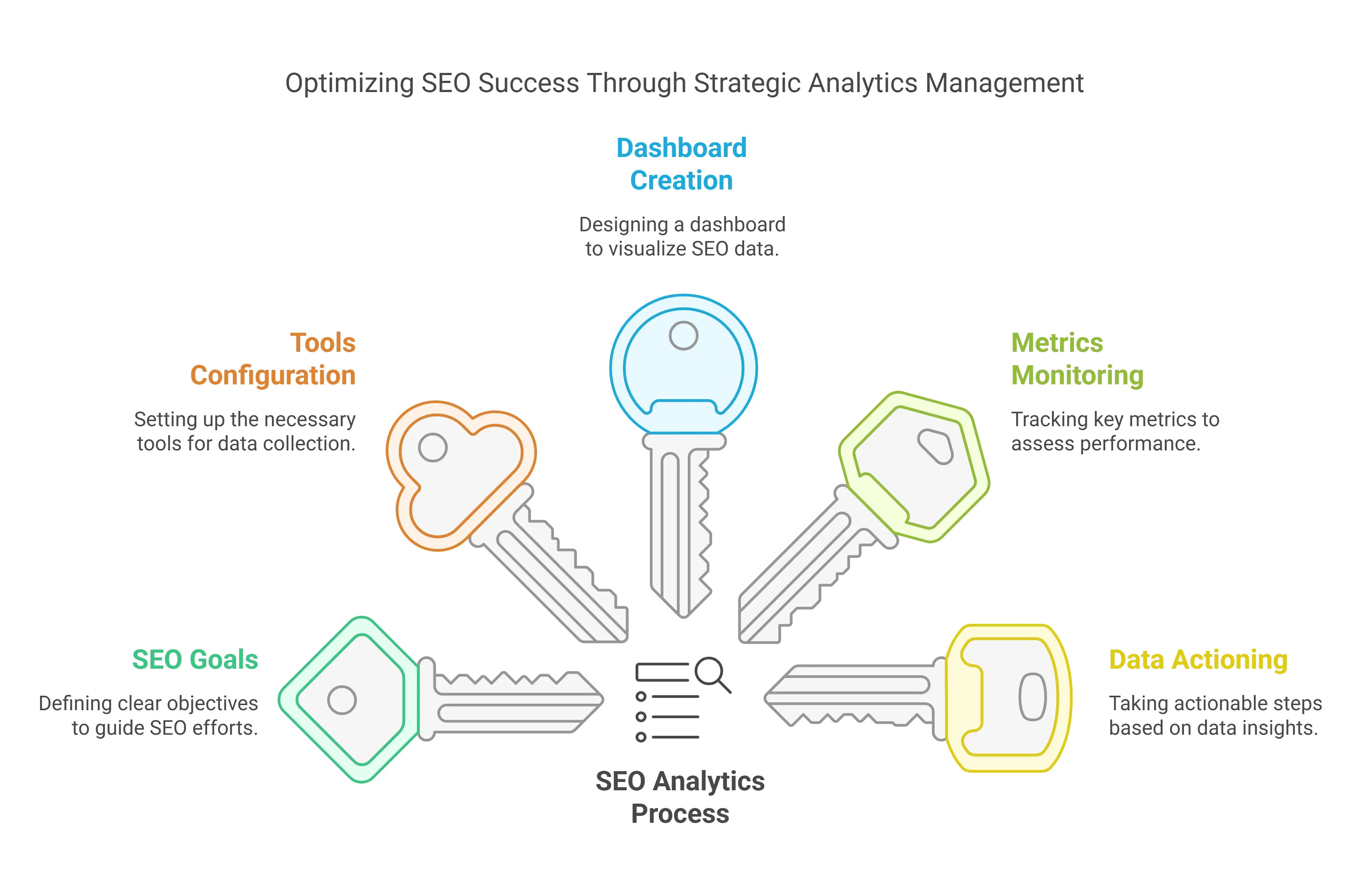
Synthetic prompt testing is your front-line defense against inaccurate AI summaries. By inputting your URL or pasting your core content into tools like ChatGPT, Claude, or Perplexity and asking them to act as an objective assistant, you can see if the AI accurately identifies your primary value proposition. If the model struggles to summarize your main service or highlights irrelevant features, you know exactly where your content architecture is failing. This proactive approach is a cornerstone of an effective generative search strategy.
Comparing Traditional Audits with Manual Stress-Testing
To succeed, you need to understand the fundamental shift in how you evaluate content. Traditional crawling tools assess structural metadata, but they ignore the nuance of interpretation.
| Criteria | Traditional Crawling | Manual Stress-Testing |
|---|---|---|
| Primary Goal | Indexability | Semantic Clarity |
| Tooling | Screaming Frog, GSC | ChatGPT, Claude, Perplexity |
| Output | Error Logs, Broken Links | Sentiment Analysis, Summaries |
| Frequency | Monthly or Quarterly | Pre-Publishing & Post-Update |
While traditional crawlers verify if your site is technically readable, stress-testing validates if the content is comprehendible. By manually testing your pages, you prevent AI hallucination prevention failures before they manifest in a live AI overview.
Executing a Query-Response Simulation
Mastering LLM interpretability testing requires a repeatable process. You can standardize your evaluation with a query-response simulation to measure how your brand is recalled. Follow these steps to audit your own content:
- Define the Persona: Instruct the LLM to act as a potential customer researching a solution in your niche. Use a prompt like: “Act as a potential customer looking for [your service]. Based on the information provided, what does this company do, and why should I trust them?”
- Input the Context: Paste your primary landing page content or provide a direct link.
- Analyze the Output: Compare the model’s summary against your intended brand messaging. Look for missing core values, misidentified services, or confusion with competitors.
- Isolate Ambiguity: If the LLM generates a response that is vague or slightly inaccurate, revisit the specific section of your page. You likely need to define your entities more clearly or use more descriptive headers.
- Iterate and Retest: Adjust the copy on your page to be more specific, then repeat the process. This cycle hardens your content for AI search engines.
By treating your content as data to be interpreted rather than text to be indexed, you take full control over your brand’s representation.
Identifying and Fixing Entity Ambiguity
When you want to know how to optimize for AI search engines, the biggest hurdle isn’t ranking—it’s clarity. AI models operate on probability and semantic relationships. If your content is vague, the AI might conflate your brand with a competitor or a generic industry term. To master semantic entity SEO, you must treat your brand as a unique, verifiable object in a digital knowledge graph.

Ambiguity arises when the context surrounding your brand name is sparse or confusing. If you say, “We offer excellent cloud solutions,” an AI might associate you with a thousand other companies. Instead, define your entities with precision. Use specific nomenclature, unique identifiers, and clear relationships. For example, instead of “cloud solutions,” specify “multi-tenant, HIPAA-compliant cloud storage for mid-market healthcare providers.” This specificity leaves no room for the model to guess.
Mapping Brand Values to Verifiable Attributes
To bridge the gap between abstract values and AI interpretation, ground your messaging. AI models cannot feel your commitment to customer service; they can only process evidence of it. Map your core values to concrete, verifiable attributes for an AI search overview optimization process.
If your core value is “Integrity,” don’t just say it. Provide verifiable proof points that the model can cross-reference:
| Core Value | Verifiable Attribute | Evidence Example |
|---|---|---|
| Reliability | Uptime Guarantee | 99.99% documented annual uptime |
| Transparency | Pricing Model | Publicly listed flat-fee pricing |
| Security | Compliance Standards | SOC2 Type II Certified |
By structuring your content this way, you create a trail of logic for the AI. When a user asks about your company, the model retrieves specific, factual data points from your site.
Structured Data: The Anchor for AI Trust
While clear text is vital, structured data acts as the ultimate anchor for AI models. Schema markup provides a machine-readable map of your content. By explicitly defining your organization, products, and services via JSON-LD, you eliminate the guesswork. Think of structured data as the source of truth documentation for the AI. When you define your brand using Organization schema, you tell search engines exactly who you are, what you do, and who your leadership is. This prevents the AI from looking at external, potentially outdated sources.
Building an AI-Ready Content Voice
When you learn how to optimize for AI search engines, move past simple keyword stuffing. AI models build internal maps of concepts. If your brand voice fluctuates wildly between academic, casual, and aggressive, the model struggles to tag your content reliably. Consistency acts as a reliable signal, helping the AI categorize your brand identity within its training data.
Mastering the Definitional Paragraph
To succeed in generative search, provide clear, high-signal information that models can easily digest. Definitional paragraphs serve as the building blocks for AI knowledge graphs. These are concise, factual descriptions of your core offerings, values, or industry definitions.
Instead of burying your identity in clever marketing prose, use the “[Term] is [clear definition]” pattern. For example, if you sell project management software, start a section with: “Project management software is a digital tool designed to help teams organize, track, and collaborate on tasks efficiently.” By using this direct, unambiguous structure, you provide the gold-standard text that LLMs prefer when synthesizing answers.
The Role of Your Source of Truth
Maintaining a living source of truth document is non-negotiable for AI hallucination prevention. As your brand evolves, so should your public-facing descriptions. If your website has legacy pages claiming you offer features you discontinued years ago, the AI might hallucinate that those features still exist. Your source of truth document should be a central repository that aligns all your content creators on verified brand attributes, tone guidelines, and core entity definitions.
By keeping this document updated, you provide a consistent signal. This reliability helps AI models map your identity accurately, significantly improving your generative search strategy. According to AEO/GEO, consistent messaging is a critical technical requirement for the age of AI.
Moving away from rigid, keyword-obsessed tactics is a necessary evolution. By prioritizing LLM interpretability testing over traditional checklists, you shift focus from chasing algorithm updates to building content that machines can understand, trust, and accurately represent. Manual stress-testing represents a sustainable, future-proof skill set.
Nothing replaces the human intuition involved in probing your brand’s digital presence to uncover hidden entity ambiguity or AI hallucination prevention gaps. This proactive stance grants you the power to shape how AI perceives your business. Start your first manual query-response simulation today, audit your core entity definitions, and step into the future of generative search strategy with confidence. The future of your brand’s AI visibility begins with your next prompt.
AEO/GEO
Want to learn more?
Contact us for direct consultation and support.