Your website content is a primary data source for AI search engines, but it might be actively workin
Your website content is a primary data source for AI search engines, but it might be actively working against you. When you publish contradictory, vague, or messy information, AI models attempt to interpret it. This often leads to the Hallucination Trap, where an AI confidently shares incorrect information derived from your site, resulting in a direct hit to your brand trust and authority.
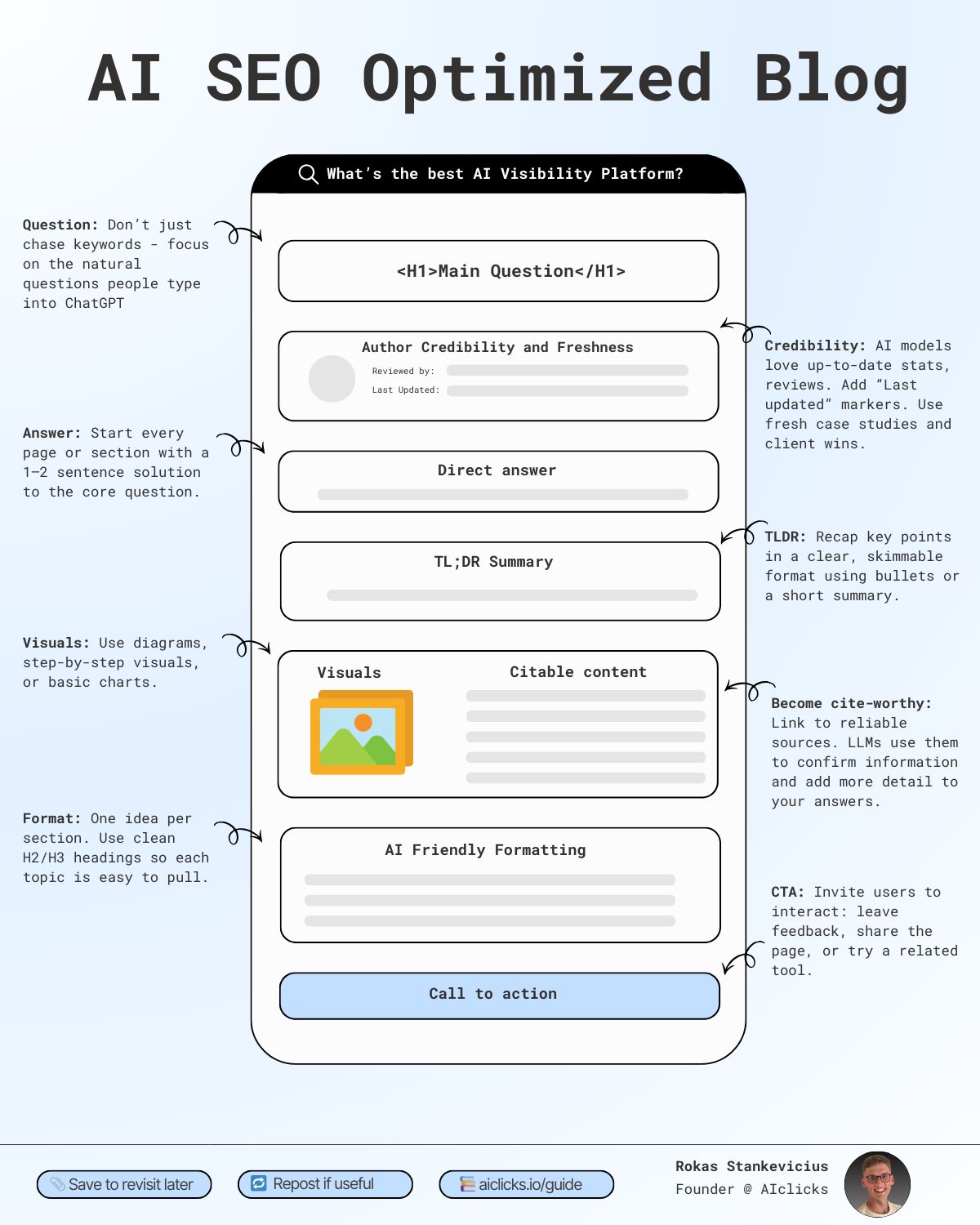
You are training an AI to understand your business. If your content is ambiguous, the AI is forced to guess, which leads to inaccuracies that users attribute to your brand. The solution is to prioritize clarity, verifiability, and structural precision. Refining your content to be easily parsed prevents the machine from hallucinating and positions your brand as a reliable source for AI models.
The Hidden Cause of AI Hallucinations: Why Accuracy Matters
When an AI model misinterprets your content, the culprit is often the source material. Large Language Models (LLMs) operate on patterns and probability. If your website presents conflicting data points or uses vague language, the AI struggles to assign a high confidence score to any single interpretation. This uncertainty forces the model to guess rather than providing a verifiable citation. To master how to optimize for AI search engines, you must move away from keyword stuffing and toward absolute, verifiable clarity.
The Danger of Internal Contradiction
AI models crawl your entire domain to build a knowledge map of your brand. If your blog claims that a service takes three to five days to complete, but your technical documentation states turnaround is within 72 hours, you have created an internal contradiction. For a human, this is a minor inconsistency. For an AI, it is a conflict that lowers the truth weight of your content.
Consistency is the bedrock of preventing AI hallucinations. Every time you publish a fact, ensure it aligns across your landing pages, FAQ sections, and blog posts. If a policy changes, audit the entire site to reflect the update. Providing a single, unwavering truth for every entity you manage allows the model to index your content with high confidence, increasing the likelihood that it will be selected as the source.
Eliminating Fuzzy Definitions
Ambiguity is the enemy of machine comprehension. When content relies on subjective adjectives or unlinked jargon, it provides no concrete data for the LLM to extract. For example, describing a software platform as the best solution is noise to an AI. Instead, provide definitions that are objective and standalone.
| Common Content Ambiguities | AI-Friendly Corrections |
|---|---|
| Our service is fast. | Our service guarantees delivery in under 24 hours. |
| A flexible tool for everyone. | A project management tool for remote software teams. |
| We are industry leaders. | We maintain a 98% client retention rate over 10 years. |
| Easy to use interface. | The dashboard allows users to export data in 3 clicks. |
Building Your Trust Profile: Beyond Standard SEO Signals
When you learn how to optimize for AI search engines, you must realize that traditional backlinks are no longer the sole gatekeepers of authority. Modern LLMs operate by assessing the credibility of the information they consume, which means your AI trust signals now depend on how clearly you can prove expertise.
The Power of Explicit Attribution
AI models minimize risk by favoring content that acts as a primary source. Whenever you make a factual claim or reference a methodology, explicitly link to the original, high-authority source. Instead of burying data in a paragraph, provide direct context: “According to the Q3 2023 industry report by [Organization Name]…” This specificity helps the AI distinguish between your opinion and verified fact, reinforcing your site as a reliable database.
Internal Authority as a Trust Anchor
Your About pages and author bios are critical data points for LLMs. AI models perform entity verification by cross-referencing authors and organizations with broader knowledge graphs. To solidify this, standardize your author bios with clear, consistent titles and professional credentials. Company transparency is equally important; clearly define your expertise and operations using schema markup where possible.
Checklist for Citable Content
| Checklist Item | Purpose |
|---|---|
| Direct Citations | Links data points to credible external sources. |
| Declarative Tone | Uses objective, factual statements over subjective fluff. |
| Clear Entity Naming | Uses formal names for products, people, and processes. |
| Summary Blocks | Provides key takeaways in distinct, simple sentences. |
Structuring Content to Prevent AI Misinterpretation
When you publish content, you are feeding data into LLMs that map your information to the real world. A poor heading hierarchy acts like a tangled roadmap, forcing AI to guess the relationship between your concepts. When headings are used for design purposes rather than logical organization, you break the semantic tree. This confusion often leads the AI to misattribute your subpoints, resulting in fragmented or incorrect summaries.
The Problem with Promotional Fluff
LLMs weigh objective facts more heavily than marketing jargon. Phrases like “game-changing solutions” are often classified as noise and skipped during extraction. To improve your AI search visibility strategy, swap subjective adjectives for declarative, objective statements. Instead of claiming the best support, specify that your team responds to tickets within an average of 42 minutes.
Mastering the Structured Q&A Format
Adopting a structured Q&A approach is an effective way to ensure correct interpretation. By framing sections as direct questions and providing concise, definitive answers, you create atomic facts that are easy for AI to extract. This format satisfies LLM content requirements by removing the need for the model to synthesize your prose.
Why Ambiguity is Costly: Streamlining Your Message
When you use industry-specific jargon without providing clear definitions, you speak a foreign language to an AI. If a term has multiple meanings, the AI may incorrectly map your content to an unrelated domain. This misalignment is why brands fail to appear in relevant AI-generated answers.
Defining Brand Entities Clearly
To stay visible, explicitly link your brand to specific industries and services. Use a primary entity statement that pairs your brand name with a specific category, such as “Brand X is a SaaS platform providing cloud-based inventory management.” Maintain consistent terminology throughout your site to build strong semantic weight.
Consistency is key to generative engine optimization. By stripping away ambiguity, you make it easy for AI models to confidently cite your brand as an expert. This shift requires discipline, but it ensures you remain visible in the future of search. Treating your digital footprint as a source of truth for the algorithms that interpret it is the most effective AI search visibility strategy. By serving as an anchor of verifiable information, you make your content the inevitable choice for AI systems.,
“contentInsight”: [
{
“insightGroup”: “INTENT”,
“type”: “OBJECTIVE”,
“content”: “Educate business owners and marketers on how to adapt content for generative search.”
},
{
“insightGroup”: “INTENT”,
“type”: “USER_INTENT”,
“content”: “How can I stop AI models from hallucinating when they use my content?”
},
{
“insightGroup”: “TOPIC_COVERAGE”,
“type”: “QUESTION_COVERAGE”,
“content”: “What are the primary causes of AI hallucinations related to source content?”
},
{
“insightGroup”: “TOPIC_COVERAGE”,
“type”: “SUBTOPIC”,
“content”: “The role of factual accuracy and entity-linking in generative engine optimization.”
},
{
“insightGroup”: “TOPIC_COVERAGE”,
“type”: “SUBTOPIC”,
“content”: “Using structured Q&A formats to improve LLM extraction.”
}
],
“targetKeywords”: [
“How to Optimize for AI Search Engines”,
“generative engine optimization”,
“AI trust signals”,
“preventing AI hallucinations”,
“LLM content requirements”,
“AI search visibility strategy”
],
“title”: “Fix the ‘Hallucination’ Trap: Optimize Your Content for AI”
}
AEO/GEO
Want to learn more?
Contact us for direct consultation and support.