Optimize for AI Search Engines & Maintain Authority
It’s unsettling to wake up and find your traffic numbers have dipped after an AI model update. You aren’t alone if the ground feels like it’s shifting beneath your content strategy. Many fear that generative search has made rankings a fragile, transient achievement.
The good news is that this anxiety often stems from a misunderstanding of how modern search works. You don’t have to be a victim of algorithmic volatility. By learning how to optimize for AI search engines, you can stop chasing fleeting keywords and start building a permanent, reliable presence. This approach—centered on generative search optimization—turns your content into a verifiable knowledge resource that LLMs naturally prefer to cite. Rather than being at the mercy of every model tweak, you’ll focus on building semantic signals for LLMs, ensuring your brand remains a trusted authority. This guide is your roadmap to future-proofing SEO content and reclaiming control over your visibility.
The Shift: Why Traditional SEO Isn’t Enough Anymore
For years, search engine optimization was a game of gathering backlinks. In the era of generative AI, that playground has changed. You are no longer just trying to climb a list of links; you are trying to become the trusted knowledge source within a machine’s internal brain. Understanding how to optimize for AI search engines means recognizing that these models care less about who is “linking” to you and more about how clearly you define the world around your business.
From Link Popularity to Entity Recognition
Traditional SEO relied heavily on proxy metrics like Domain Authority. AI models, however, are built on massive knowledge graphs. They identify entities—people, places, concepts, and things—and map the connections between them. If your content stuffs keywords without defining core industry entities, the AI does not see you as an expert. This shift is critical for your AI model volatility strategy. You need to provide the clear definitions and context that LLMs crave to build their internal map of reality.
Defining Entity-Relationship Consistency
The new bedrock for visibility is entity-relationship consistency. This means every piece of content you produce must clearly define your core entities and how they relate to related concepts. If you are a coffee roaster, don’t just talk about “best coffee.” Clearly define the relationship between “single-origin,” “roast profile,” and “brewing temperature.” When your content consistently maps these connections across your site, you become a predictable, high-value source for the model to cite.
Keyword Chasing vs. Topic Ownership
Many businesses are stuck in the keyword-chasing trap. This is a losing strategy for generative search optimization. Instead, you must pivot to a topic-ownership mindset.
| Strategy | Focus | Outcome for AI |
|---|---|---|
| Keyword-Chasing | High search volume keywords | Superficial, fragmented visibility |
| Topic-Ownership | Holistic semantic clusters | Recognized authority & trust |
By focusing on topical authority for AI, you create a comprehensive knowledge hub that answers the user’s intent effectively. This approach is essential for future-proofing SEO content against algorithm updates because it builds a foundational map of your expertise. Moving away from chasing individual keywords allows you to build a long-term, sustainable presence in the AI-search landscape.
Audit Your Semantic Signals: A Future-Proofing Checklist
To effectively optimize for AI search engines, you must stop thinking about content as a series of pages and start viewing it as a connected knowledge graph. When LLMs process your site, they look for clarity, accuracy, and meaningful relationships between concepts. If your site structure is fragmented, AI models struggle to map your expertise.
To achieve topical authority for AI, perform a site-wide semantic audit.
A Step-by-Step Audit for Semantic Consistency
- Map Your Core Entities: Identify the five to ten primary topics your brand owns. Create hub pages for each core entity that act as central nodes.
- Standardize Naming Conventions: AI models perform better when you use consistent terminology. Pick your key terms and stick to them globally.
- Audit Internal Relationships: Review how your pages link to one another. Every piece of content should connect back to a core hub page.
- Cleanse Orphaned Content: Remove or consolidate pages that don’t support your primary entities.
- Implement Schema Markup: Use Organization, Person, and FAQ schema to explicitly define who you are and what you cover.
From Keywords to Entities: The Modern Transition
Generative search optimization requires a fundamental shift in mindset. You are no longer writing for a crawler that matches keyword frequency; you are writing for a reasoning engine that maps relationships between real-world objects.
| Old-school SEO Indicator | AI-ready Semantic Signal |
|---|---|
| Keyword Density | Entity Disambiguation |
| Backlink Volume | Entity-Relationship Context |
| Static Landing Pages | Interconnected Topic Hubs |
| Surface-level Content | Deep Topical Coverage |
| Search Volume Chasing | Answer Relevance & Accuracy |
Aligning Architecture with AI Knowledge Graphs
Large Language Models build knowledge maps by observing how information is organized on the web. Organize your site in a hierarchical, cluster-based structure. By grouping subtopics under broader pillar pages, you provide the contextual markers that AI models use to determine which brand is the definitive source on a subject. When you link from a granular blog post back to a pillar page, you strengthen the semantic connection, telling the AI that your specific content is a constituent part of your broader expertise.
Building Authority through Entity-Relationship Mapping
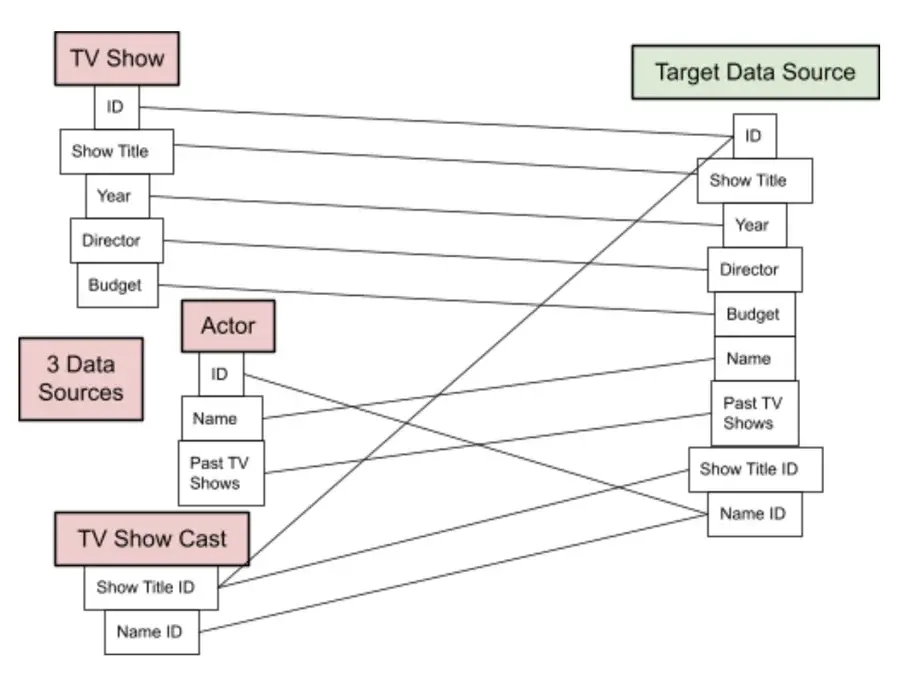
To truly master how to optimize for AI search engines, you must move beyond flat, keyword-indexed pages and start thinking like a knowledge graph architect. Entity-relationship mapping is the process of explicitly defining how your brand, products, and industry topics connect.
Mapping Your Knowledge Domain
Think of your website as an interconnected neural network. If you only publish disconnected blog posts, you are providing fragments of information without a cohesive story. To build topical authority for AI, structure your content into clusters where a pillar page acts as the central hub, surrounded by deeply specific satellite pages. Each satellite page must link back to the pillar, while the pillar links forward to the satellites.
Internal Linking as a Knowledge Path
Your internal linking strategy is the roadmap for crawling LLMs. When an AI indexer hits your site, it follows these links to map your expertise. Use descriptive, entity-rich anchor text that describes the relationship between the two pages. This confirms to the model that specific topics are subsets of your core expertise. This is the core of building semantic signals for LLMs.
Protecting Your Site from Model Updates
One of the most effective AI model volatility strategy tactics is moving away from thin, keyword-stuffed content toward broad, high-value topical coverage. By covering a topic in its entirety—including nuances and technical details—you create a moat around your content. AI models prefer to pull answers from a source that provides a complete, well-reasoned explanation.
Maintaining Trust: The Role of Citation and Attribution
Trust is the currency of the modern search era. While traditional SEO relied heavily on backlink quantity, generative search optimization hinges on verifiable accuracy. AI models are programmed to minimize hallucinations, which means they prioritize information backed by established, authoritative sources.

Structuring Content for Answer-Model Relevance
To become a trusted entity in an LLM’s knowledge graph, communicate with clarity and precision. Building semantic signals for LLMs involves using highly structured, factual content. AI systems interpret structured data—such as Schema.org markup—as a roadmap to understanding your content’s context and relationships.
- Implement Specific Schema: Use Author, Organization, and CreativeWork schemas to define who is behind the content.
- Cite Primary Sources: Whenever you share data or claims, link directly to original research or reputable primary sources.
- Use Granular Headings: Structure your articles using clear, descriptive H2 and H3 tags.
Earning Cross-Platform Citations
In the context of future-proofing SEO content, you want your brand to be cited across a wide array of trusted digital ecosystems. If your business is consistently mentioned as an expert source on other industry-relevant platforms, that footprint bolsters your trustworthiness.
- Contribute to Expert Roundups: Offer unique insights to high-authority industry platforms.
- Publish Original Research: Conduct surveys or analyze industry data. When other reputable sites link to your findings, you solidify your role as an authoritative node.
- Maintain Consistency: Ensure your brand name and services are identical across all platforms.
Moving away from chasing fleeting keyword trends is the most effective AI model volatility strategy you can adopt. By pivoting toward building deep topical authority for AI, you stop reacting to every update and start positioning your brand as an essential, trusted reference point. True visibility today is built on semantic consistency rather than hollow ranking hacks. Mastering generative search optimization requires patience, but the long-term payoff is a brand that stays relevant regardless of how the search ecosystem evolves. Keep building those building semantic signals for LLMs with clarity—your consistency is your greatest competitive advantage.
AEO/GEO
Want to learn more?
Contact us for direct consultation and support.