Business jargon has long dominated corporate conversations, complicating straightforward discussions. We often use these terms to sound more professional or innovative, but they frequently obscure our actual meaning. This article demystifies a few of the most overused phrases. We’ll replace them with simpler alternatives to determine if you’re an experienced “thought leader” or new to the business world. Embrace this transformation for a definite “win-win” outcome.

The Problem with Corporate Jargon
Corporate language has evolved into a complex code that often hinders effective communication. When we rely on buzzwords, we risk alienating our audience and obscuring our message. The goal of professional communication is clarity, not complexity. By simplifying our language, we make our ideas more accessible and actionable.
Consider the impact of a meeting filled with terms like “synergy,” “leverage,” and “paradigm shift.” These words can create a barrier between speakers and listeners. The listener may struggle to understand the core message, leading to confusion and misalignment. Clear communication fosters understanding and drives results.
We often use jargon to fit in or appear knowledgeable. However, true expertise is demonstrated through the ability to explain complex ideas simply. When you can articulate your thoughts without relying on buzzwords, you establish credibility and trust. This approach resonates with colleagues, clients, and stakeholders who value straightforwardness.
The shift away from corporate babble is not just about vocabulary; it’s about mindset. It requires a commitment to transparency and authenticity in our interactions. By prioritizing clear language, we create a culture of openness and collaboration. This cultural shift can significantly enhance team dynamics and organizational effectiveness.
Common Buzzwords and Their Plain English Alternatives
Many business phrases have become so common that they lose their meaning. Here are some frequent offenders and their simpler counterparts. “Thought leader” can simply be an “expert” or “authority.” Instead of saying someone “opened the kimono,” just say they “shared” or “revealed” information. “Core competency” is often just “expertise” or a “unique skill.”
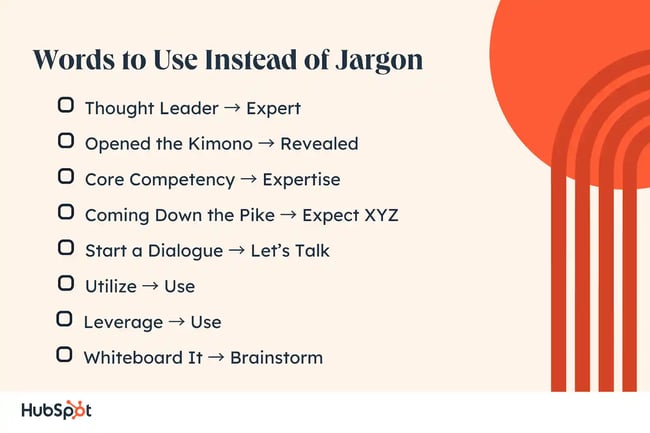
“Coming down the pike” means something is “coming soon” or “expected.” Instead of “starting a dialogue,” just “talk” or “meet.” “Utilize” is almost always better as “use.” “Leverage” can be “make use of” or “rely on.” “Whiteboard it” is often just “brainstorm” or “think through.”
“Ideate” is simply “come up with ideas.” “Take it to the next level” is vague; be specific about what improvement you want. “Learnings” are just “lessons” or “takeaways.” “Best-in-breed” means “the best” or “top.” “Shifting paradigms” is often just a “big change.” “Boil the ocean” means “taking on too much.”
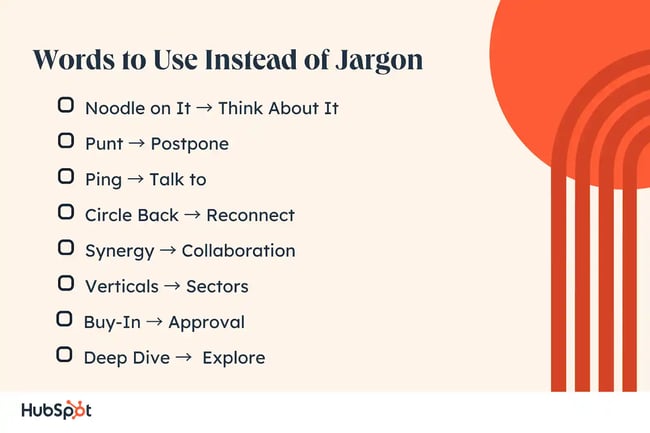
“Move the needle” refers to achieving a measurable improvement. “Out of pocket” means “unreachable.” “Noodle on it” is “think about it.” “Punt” means “postpone.” “Ping” is “contact” or “email.” “Circle back” is “meet again” or “reconnect.”
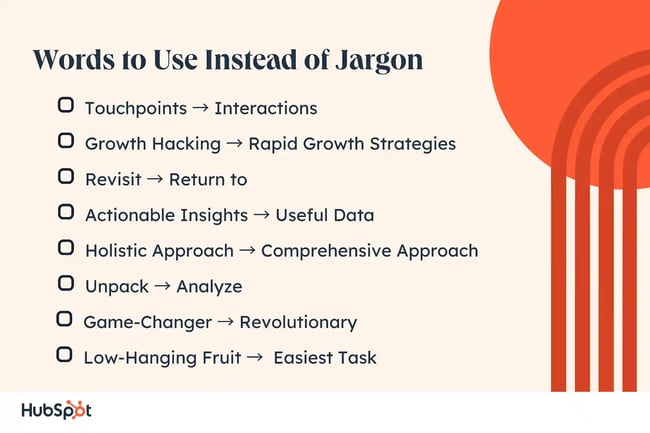
“Synergy” is “collaboration” or “teamwork.” “Verticals” are “industry sectors.” “Buy-in” is “approval” or “consensus.” “Deep dive” is “examine closely.” “Touchpoints” are “interactions.” “Growth hacking” refers to “rapid growth strategies.”
“Revisit” is “re-examine.” “Actionable insights” are “useful data.” “Holistic approach” is “comprehensive.” “Unpack” is “explain.” “Game-changer” is “transformative.” “Low-hanging fruit” are “easiest tasks.” “Secret sauce” is “unique advantage.” “Pain points” are “issues” or “challenges.”
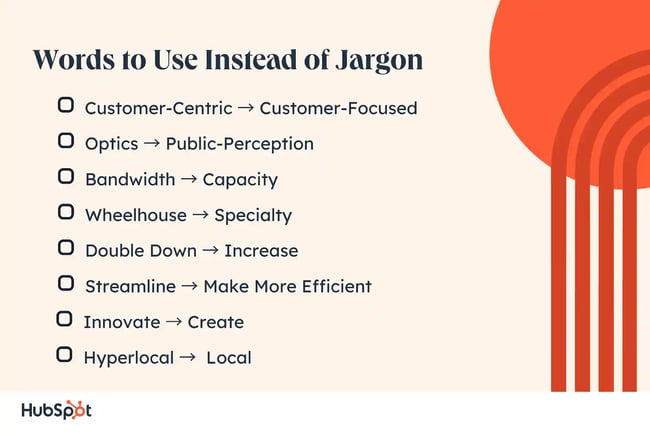
“Cutting-edge” is “advanced.” “Onboarding” is “orientation.” “Win-win” is “mutually beneficial.” “Granular” is “detailed.” “In the weeds” means “overcomplicating.” “Scalable” is “expandable.” “Customer-centric” is “customer-focused.” “Optics” is “public perception.” “Bandwidth” is “availability.”
“Wheelhouse” is “specialty.” “Double down” is “increase efforts.” “Streamline” is “make efficient.” “Deliverable” is “task.” “Innovate” is “create” or “improve.” “Hyperlocal” is “local.” “Disruptive” is “revolutionary.” “Synergize” is “collaborate.” “Value proposition” is “unique benefits.”
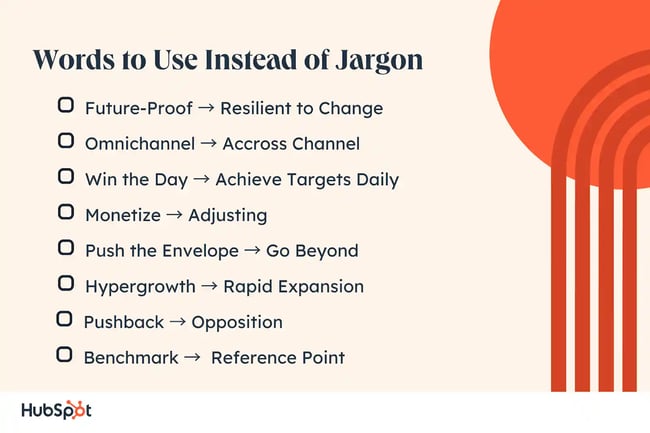
“Monetize” is “make money from.” “Thought shower” is “brainstorming session.” “Value-add” is “added features.” “Disintermediation” is “cutting out the middleman.” “Pivot” is “change course.” “Future-proof” is “resilient.” “Omnichannel” is “multi-channel.” “Win the day” is “achieve daily targets.” “Rightsizing” is “optimizing.” “Push the envelope” is “go beyond.” “Hypergrowth” is “rapid expansion.” “Pushback” is “resistance.” “Benchmark” is “standard.”
The Impact of Jargon on Communication
When we use jargon, we often create a sense of exclusivity. This can alienate team members who are not familiar with the terms. It can also make it difficult for clients or customers to understand our value proposition. Clear communication is essential for building trust and fostering strong relationships.
Jargon can also lead to misunderstandings. Different people may interpret the same buzzword differently. For example, “synergy” might mean collaboration to one person and cost-cutting to another. This ambiguity can cause confusion and inefficiency in projects and decision-making processes.
Furthermore, relying on jargon can mask a lack of substance. It can be easier to use a buzzword than to explain a complex idea clearly. This can erode trust and credibility over time. People appreciate honesty and straightforwardness in communication. They want to understand the real impact and value of initiatives.
By avoiding jargon, we encourage more meaningful and productive conversations. We invite questions and feedback, which can lead to better outcomes. Clear communication fosters a culture of learning and growth. It empowers individuals to contribute their ideas and perspectives without fear of being misunderstood.
Strategies for Clearer Communication
To improve your communication, start by being aware of your language. Pay attention to the words you use in emails, meetings, and presentations. If you find yourself reaching for a buzzword, pause and consider if there is a simpler alternative. Practice using plain English in your daily interactions.
Another strategy is to focus on the audience. Consider who you are communicating with and what they need to understand. Tailor your language to their level of knowledge and familiarity with the topic. This ensures that your message is received and understood as intended.
Be specific and concrete. Instead of using vague terms like “optimize” or “enhance,” describe exactly what you mean. For example, instead of saying “we need to optimize our website,” say “we need to improve the loading speed of our homepage.” Specificity adds clarity and actionability to your communication.
Finally, encourage feedback. Ask colleagues and team members if your message was clear. If they are confused, be open to adjusting your language. This feedback loop helps you refine your communication skills over time. It also demonstrates that you value their understanding and input.
Real-World Examples of Jargon vs. Plain English
Let’s look at how jargon-filled sentences can be transformed into clear, plain English. Instead of saying, “I just got back from coffee with a thought leader who was generous enough to open the kimono about his new groundbreaking book,” you could say, “I just had coffee with Sarah, and she gave me an early look at her upcoming book on changes in the world of unicorns.”
Another example: “As you’re aware, his core competency revolves around unicorn innovation, and he’s hinted that there’s some disruptive potential coming down the pike” can be simplified to, “He knows a lot about unicorns, and he’s hinted that there are some big changes coming in the industry.”
Consider the phrase, “I genuinely believe that our teams should initiate a synergistic dialogue to leverage our collective strengths and optimize for these forthcoming shifts.” This can be rewritten as, “I think both our teams should prepare for these new developments. We can tackle it with the skills and resources we have.”
“It might be constructive to have a face-to-face ideation session where we can whiteboard potential strategies” becomes, “We should meet to come up with some ideas and talk through our presentation’s agenda.”
“To really get the needle moving, perhaps we can co-create a dynamic presentation for the CEO to ensure we maintain our best-in-breed status in this ever-evolving ecosystem” can be simplified to, “We should talk to Andrea about how to make the homepage a better destination for customers. She’s keen to stay ahead in the unicorn market.”
“In any case, I don’t want to boil the ocean here; I just aim to catalyze action that moves the needle. I’ll be out of pocket for the next fortnight, but please feel free to noodle on this while I’m away” can be rewritten as, “I don’t want to take on too much here. I’ll be on vacation for the next two weeks, but when I return, I’ll schedule a meeting so we can catch up. Feel free to jot down any ideas or questions for our agenda while I’m gone.”
“We can punt this discussion to a later date, at which point I’ll ping you for a circle-back” becomes, “Let’s talk about this after I get back from vacation. I’ll email you then.”
The Benefits of Plain Language
Using plain language has numerous benefits. It improves understanding and reduces the risk of miscommunication. It also makes your content more accessible to a wider audience, including those who may not be familiar with industry-specific jargon. This is particularly important in a global business environment where language barriers can exist.
Plain language also enhances your credibility. When you communicate clearly, you demonstrate confidence and expertise. You show that you understand the subject matter well enough to explain it simply. This builds trust with your audience and strengthens your professional relationships.
Furthermore, plain language can improve efficiency. When messages are clear and concise, people can act on them more quickly. This reduces the time spent clarifying misunderstandings and reworking projects. It also frees up time for more valuable activities, such as strategic planning and innovation.
Finally, plain language fosters a more inclusive and collaborative culture. When everyone can understand and participate in discussions, it creates a sense of belonging and engagement. This can lead to higher morale and productivity across the organization. It also encourages diverse perspectives and ideas, which can drive innovation and growth.
Implementing Clear Communication in Your Organization
To implement clear communication in your organization, start by setting expectations. Make it clear that plain language is valued and encouraged. Provide training and resources to help employees improve their communication skills. This could include workshops, guides, or online courses.
Encourage leaders to model clear communication. When leaders use plain language, it sets the tone for the rest of the organization. It shows that clarity is a priority and that everyone is expected to communicate effectively. This can have a ripple effect throughout the company.
Create a feedback culture. Encourage employees to provide feedback on communication. This could be through surveys, suggestion boxes, or regular check-ins. Use this feedback to identify areas for improvement and make necessary adjustments. This continuous improvement process helps to embed clear communication into the organizational culture.
Finally, measure the impact of clear communication. Track metrics such as employee engagement, customer satisfaction, and project efficiency. Look for correlations between clear communication and positive outcomes. Use this data to demonstrate the value of plain language and to refine your communication strategies. This evidence-based approach helps to sustain the commitment to clear communication over time.
Conclusion
Corporate jargon can obscure meaning and hinder effective communication. By replacing buzzwords with plain English, we can make our messages clearer, more accessible, and more impactful. This shift not only improves understanding but also builds trust and credibility. It fosters a culture of transparency and collaboration, which is essential for success in today’s business environment.
As you go into your next work conversations, take note of when and how babble may come up. Is there a better, clearer way to say what you want to say? If you want to strengthen how you communicate, follow these examples, and you’ll be sure that your message is received with clarity. Remember, the goal is not to sound smart, but to be understood. By prioritizing clear communication, you empower yourself and your team to achieve better results and build stronger relationships.





