AI Content Strategy for the AI Era: A Practical Guide
You spend hours perfecting meta descriptions and tweaking keyword density, hoping to capture the perfect user click. Yet, when those same users arrive on your site, they hit a wall. They type a question into your chatbot, and the system delivers a generic error message or points them toward an irrelevant FAQ page. This disconnect is where your growth stalls. Most content strategists operate in silos, unaware that their search traffic is actually the most reliable blueprint for building a smarter, more helpful AI agent.
The real problem isn’t just a lack of technology; it’s a lack of integration. By failing to bridge the gap between search queries and conversational intelligence, you miss the chance to serve users exactly what they need the moment they arrive. It is time to treat your organic search traffic as a living laboratory for customer needs. By adopting a Priority Intent Backlog, you can align your website content with your automated systems, transforming your search strategy into a unified, high-performing AI content strategy for the AI era.
The Search-to-Conversation Feedback Loop
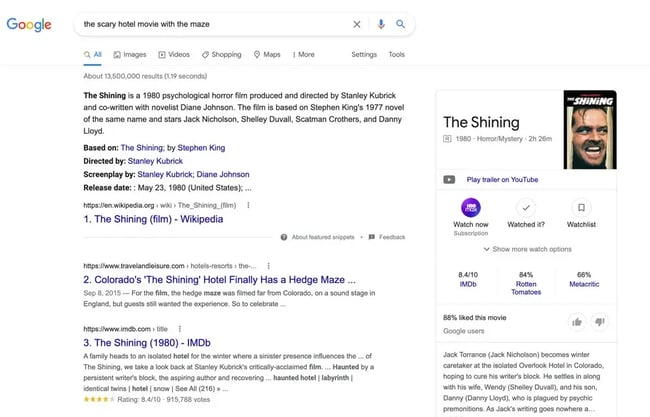
Many marketers treat their SEO keyword lists and their chatbot configurations as two separate universes. Your SEO data is the ultimate blueprint for your chatbot’s NLU (Natural Language Understanding) model. By leveraging the specific queries users type into Google, you gain a real-time map of exactly what your customers need help with at any given moment. Instead of guessing which features to build for your bot, you can use high-volume informational search queries to determine which conversational intents deserve your engineering resources first.

Mapping Queries to Conversational Intents
Translating search traffic into a conversational AI strategy requires a shift in perspective. Every search query represents a human need, and every chatbot response should serve as the solution. When you identify a high-volume query in Google Search Console, you are seeing a demand signal for a specific interaction. If users search for “how to return a damaged item,” your chatbot should be programmed with a dedicated “Return Process” intent to handle that request instantly.
To bridge this gap, map your search data into a structured format where each query cluster corresponds to a defined bot action. This process of search intent optimization transforms static keywords into dynamic, actionable dialogue flows. By grouping synonymous search terms together, you reduce the complexity of your bot’s training data while increasing its accuracy in understanding diverse user phrasing.
The Priority Intent Backlog
Once you have mapped your queries, you need a way to decide what to prioritize. This is where the Priority Intent Backlog comes into play. You rank your bot development based on the frequency and business value identified in your search traffic. If the query “how much does your service cost” appears in your top 100 search queries, that intent is a candidate for your highest-priority development slot. This method ensures your chatbot is always focusing on the most relevant problems your customers are trying to solve.
| Search Intent | Chatbot Intent | Primary Benefit |
|---|---|---|
| Best running shoes | Product Recommendation | Increases conversion |
| How to return item | Order Management | Reduces support tickets |
| Service pricing plans | Sales Inquiry | Shortens sales cycle |
| Where is my order | Tracking Status | Improves user satisfaction |
Building Your Priority Intent Backlog
To move from passive content to an active, helpful chatbot, you must organize your data systematically. Building a Priority Intent Backlog transforms raw search queries into a structured roadmap for your conversational AI strategy. By categorizing your search data, you ensure that your bot addresses the most critical user needs first, bridging the gap between search intent optimization and automated service.
The Categorization Process
Start by exporting your top organic search queries from Google Search Console. Sort each query into one of three primary buckets to identify its underlying purpose:
- Informational: Users seek knowledge or answers (e.g., “how to reset my password”). These are perfect for FAQ-style chatbot responses.
- Transactional: Users are ready to act or purchase (e.g., “buy premium subscription”). These intents should trigger guided workflows that lead to a conversion.
- Navigational: Users are looking for a specific page or location (e.g., “contact support email”). These should be handled with direct links to the requested resource.
The Intent Priority Matrix
Use this matrix to decide what to build first. Focus your resources on the high-volume, high-impact quadrant to see the fastest improvement in your chatbot intent detection capabilities.
| Intent Category | Search Volume | Conversion Impact | Priority Level |
|---|---|---|---|
| Account Recovery | High | Medium | Immediate |
| Product Checkout | High | High | Immediate |
| General History | Medium | Low | Low |
| Feature Comparison | Low | High | Medium |
Filtering Out the Noise
Not every search term deserves a place in your bot. Exclude keywords that are overly broad, subjective, or require human nuance. By filtering out this noise, you keep your bot’s conversational flows lean, efficient, and focused exclusively on high-value paths that align with your broader AI content strategy for the AI era.
Optimizing Content for AI Answer Engines
Optimizing your digital presence for the modern landscape requires moving beyond traditional ranking signals. When building an effective AI content strategy for the AI era, you must treat your website as a primary data source for Large Language Models (LLMs). These models synthesize information to provide direct, conversational answers. By crafting content that acts as a reliable knowledge base, you ensure that when an AI agent fetches information about your brand, it finds accurate, structured, and helpful responses.

Intent-Focused Landing Pages
Intent-focused landing pages are designed to solve a specific problem or answer a distinct user question immediately. Unlike long-form blog posts that might cover a wide range of topics, these pages concentrate on a single user goal. For LLMs, this clarity is essential. When a chatbot or generative search engine encounters a page dedicated to a specific query, it can confidently extract that content to serve a user’s request.
Harnessing Structured Data and Q&A Formats
Structured data remains one of the most powerful tools in your arsenal for generative search optimization. By implementing Schema markup, you provide a clear roadmap for AI agents to navigate your content. Alongside this, adopting a Q&A-style format—where headers are framed as questions and paragraphs provide direct, succinct answers—allows AI systems to parse and cite your information with high accuracy.
Aligning Website Content with Chatbot Knowledge
Consistency is the cornerstone of trust. If your website says one thing but your chatbot provides conflicting information, you risk damaging your brand reputation. To prevent this, your website content and chatbot knowledge base must be synchronized. Think of your website as the primary source of truth that your conversational AI strategy draws from.
Measuring Success Beyond Click-Through Rates
Moving your strategy forward requires moving past vanity metrics. To truly understand your performance, you must embrace metrics that reveal the depth of human-machine interaction.

Key Metrics for the Conversational Era
- Intent Recognition Rate: The percentage of user queries that the bot successfully classifies. A low rate suggests your training data lacks breadth.
- Deflection Accuracy: The ratio of successful automated resolutions versus requests handed over to human agents.
- Conversation-to-Conversion Ratio: Measures how often a bot-led dialogue ends in a booking, purchase, or sign-up.
Mining Conversation Logs for SEO Gold
Your chatbot is a real-time, 24/7 focus group. Users often phrase queries to a bot in ways they would never type into a Google search box. By analyzing these chat logs, you can identify search intent optimization gaps. If fifty people ask the same question, it is a clear signal that your website lacks a dedicated, high-quality landing page for that specific pain point.
Monthly Content-to-Conversation Audit Checklist
| Audit Task | Purpose | Frequency |
|---|---|---|
| Intent Review | Identify common failed queries | Monthly |
| Seasonal Update | Refresh bot knowledge for holidays | Before season |
| Keyword Mapping | Sync new SEO terms with bot triggers | Monthly |
| Conversion Check | Audit the path from chat to sale | Quarterly |
The shift from passive, keyword-heavy search content to active conversational engagement is the new standard for digital presence. By evolving your workflow, you move away from chasing static rankings and start building dynamic, two-way relationships with your audience. Start building your Priority Intent Backlog today to secure your place as a leader in the AI-driven search era.
AEO/GEO
Want to learn more?
Contact us for direct consultation and support.