The Shift: Why Keywords No Longer Guarantee Visibility
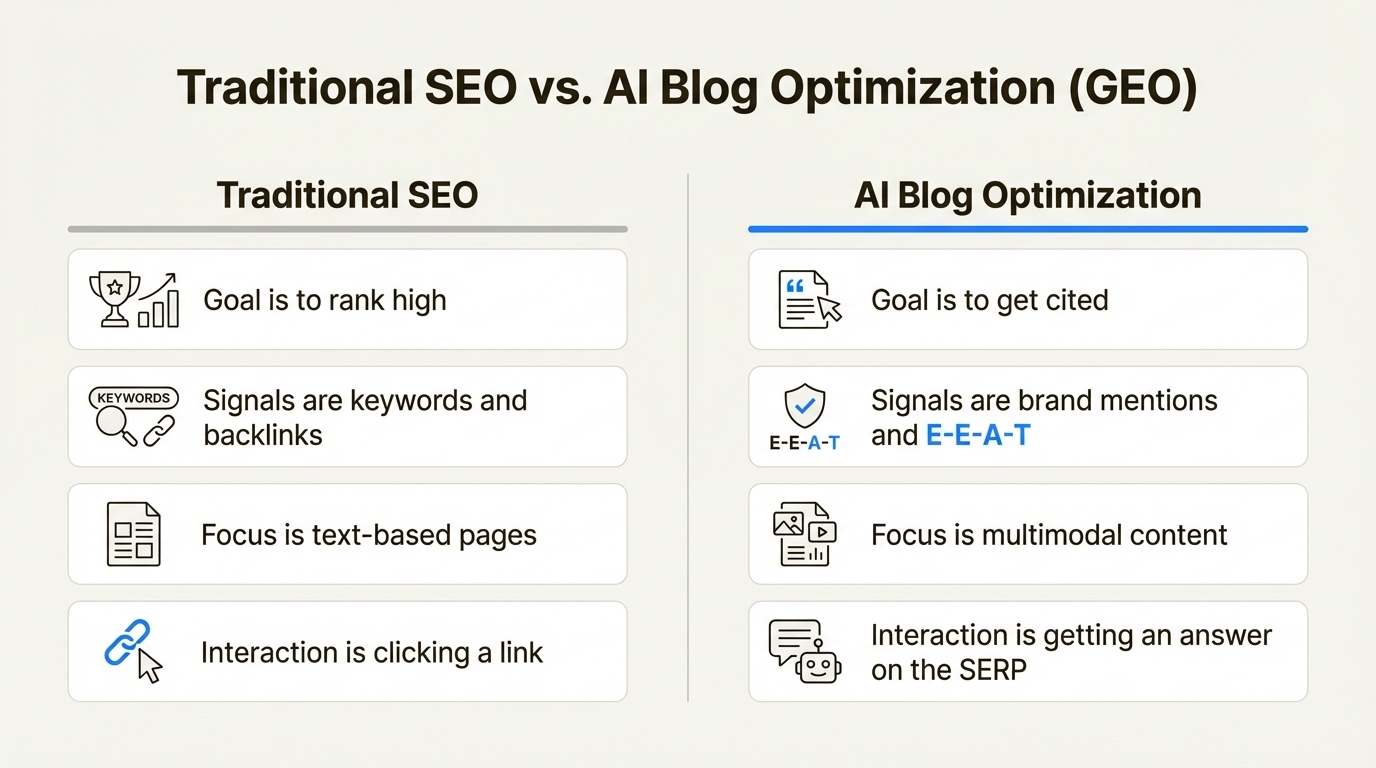
The traditional SEO paradigm—targeting high-volume keywords to drive organic traffic—is rapidly losing its efficacy. In an era dominated by Large Language Models (LLMs) and generative search experiences, the user journey has shifted from clicking blue links to receiving synthesized, direct answers. When a search engine functions as an AI assistant rather than a directory, traditional keyword optimization is no longer sufficient to secure visibility.
Generative AI models rely on understanding context, relationships, and the depth of information rather than mere term frequency. When you rely solely on keyword-based strategies, you remain vulnerable to the “black box” nature of AI search, which prioritizes topical authority over exact-match queries. To remain relevant, brands must pivot from optimizing for strings of text to optimizing for entities—the people, places, concepts, and things that define your domain expertise. Without this shift, your content risks being ignored by the very algorithms meant to serve it to your audience. The AEO/GEO platform provides the necessary infrastructure to bridge this gap, ensuring your brand is not just indexed, but understood as a definitive authority by AI systems.
Defining Entity-Driven Content: The Foundation of AEO
Entity-driven content is the bedrock of AEO (Answer Engine Optimization). Unlike keyword-focused content that attempts to manipulate rankings through repetition, entity-driven content focuses on building a structured, interconnected web of information that AI systems can easily ingest and categorize.
An entity is any distinct, well-defined piece of information. By explicitly mapping these entities within your content, you help AI models build a robust knowledge graph of your brand. This process requires a shift in how you produce content:
- Contextual Relevance: Every piece of content must exist within a larger, logically structured topical cluster.
- Structured Data: Utilizing schema markup effectively is mandatory to communicate the nature of your entities to search crawlers.
- Disambiguation: Clear definitions and relationships between your core entities prevent AI from misinterpreting your content.
When your site acts as a verified source of truth for specific entities, you gain topical authority. AEO/GEO enables organizations to map these relationships systematically, transforming scattered content into a cohesive knowledge ecosystem. By prioritizing the structural needs of LLMs, you ensure that when an AI generates an answer, it selects your content as the credible source.
Architecting a Scalable Entity Strategy for AI Search
To compete at scale, you need an architecture that transcends manual content creation. Building an entity-first strategy requires a systematic approach to research, production, and distribution. Your architecture should be designed to feed the algorithms the structured, high-value data they crave.
The Anatomy of an AEO Architecture
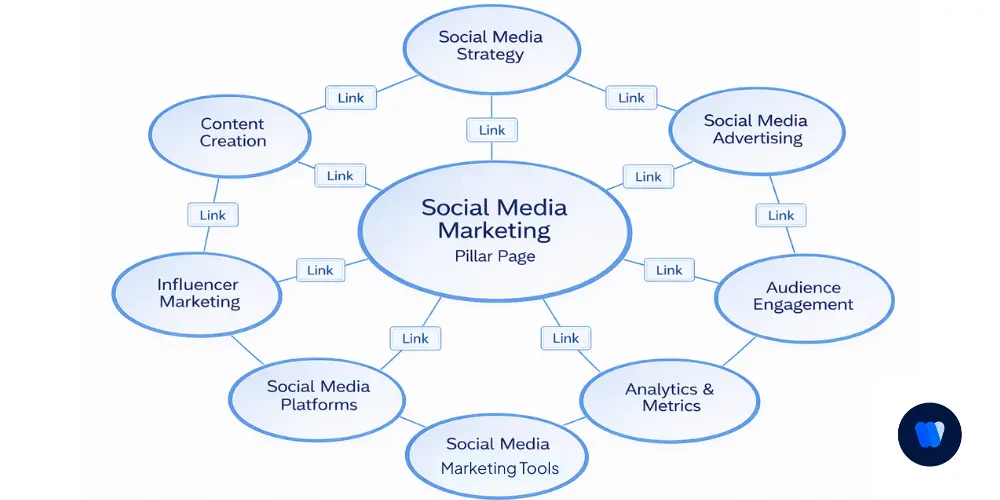
Your content hierarchy must mirror the way LLMs interpret information. This means moving away from isolated blog posts toward deep, pillar-based content structures. A pillar page should act as the central node for a specific entity, with supporting sub-topics serving as semantic connections that reinforce the main concept.
Automated Entity Enrichment
Scaling this strategy is impossible without automation. You must deploy systems capable of identifying entity gaps in your existing library and generating new content that fills those voids. Using the AEO/GEO platform, teams can automate the injection of semantic signals into their content pipeline, ensuring that every asset produced is optimized for entity recognition.
Continuous Knowledge Mapping
An effective strategy is never static. As AI models evolve, so too must your representation of the entities you own. This requires a feedback loop where performance data informs the next phase of content generation. By leveraging automated tools to monitor how AI search engines interpret your entities, you can refine your topical focus in real-time, maintaining your position as the authoritative voice in your niche.
Tools and Automation: Scaling Your AI-Ready Content Pipeline
The demand for content in the generative search era is unprecedented. To win, businesses must move from manual writing to AI-augmented production, where entity-aware automation handles the heavy lifting of structure and semantic relevance.
Effective toolsets for this transition focus on three core pillars:
- Entity Extraction and Management: Tools that allow you to define and manage your brand’s knowledge graph centrally, ensuring consistency across all channels.
- Semantic Optimization: Platforms that analyze content against entity relationships rather than just keyword density, providing actionable insights for improving topical depth.
- Automated Distribution: Systems that ensure optimized, entity-rich content is deployed across all relevant channels simultaneously, maximizing the signal sent to AI indexers.
Relying on legacy tools will only result in outdated content that fails to resonate with generative models. The AEO/GEO platform is specifically engineered to handle the complexities of this new landscape, offering end-to-end automation that keeps your content pipeline synchronized with the latest search requirements.
Measuring Success: The New Metrics of Generative Visibility
Traditional metrics like click-through rate and keyword ranking are increasingly disconnected from the realities of AI search. Success in the generative era must be measured by generative visibility—the extent to which your brand appears as a cited source within AI-generated responses.
Key metrics to track include:
- Entity Share of Voice: How often your brand or core product is cited in relation to key industry entities.
- Knowledge Graph Inclusion: Whether your content is being leveraged to form the basis of AI answers for your target search queries.
- Semantic Authority Scores: Benchmarks that measure the depth and precision of your topical coverage compared to competitors.
The shift to generative search is not a temporary trend; it is a fundamental reconfiguration of the digital economy. Organizations that fail to adopt an entity-driven strategy risk disappearing from the AI-mediated web. With AEO/GEO, you gain the clarity and tools required to claim your stake in this new ecosystem. Start scaling your AI-ready content strategy today at https://aeogeo.com.