Entity Optimization for AI Search: Building Brand Authority
For years, winning the search game meant scattering keywords across a page until a search engine took notice. It was a numbers game where frequency often trumped substance. Today, that approach is failing because modern AI models don’t just count words—they construct meaning. When a user asks an AI-powered engine a question, it doesn’t perform a database lookup for the most-used terms. Instead, it synthesizes knowledge based on how well it understands your brand as a distinct entity in the world.
Learning how to optimize for AI search engines requires a fundamental shift in strategy. You must stop trying to rank for a collection of phrases and start focusing on establishing a verifiable, trustworthy identity. This is the era of entity-centric discovery, where your authority is measured by the clarity of the connections you build between your brand, your services, and the broader concepts in your industry. By treating your content as a set of building blocks for your brand’s digital profile, you move from being a set of keywords to an essential source of truth in the eyes of an AI.
Moving Beyond Keywords: Why AI Needs Entities
Success in search used to be a numbers game: repeat a keyword enough times and watch your rankings climb. Modern search has shifted toward semantic search, where AI cares less about term frequency and more about underlying meaning. When you learn how to optimize for AI search engines, you stop chasing simple word matches and start focusing on Entity Optimization. Think of entities as the nouns that define your business—your brand, your products, your industry influencers, and your locations. AI models like Gemini or Perplexity don’t just read text; they map the connections between these entities to understand who you are and what you offer.
Defining the Entity-Based Web
An entity is a unique, well-defined concept or object that exists within the Knowledge Graph—a massive, interconnected database used by search engines to store facts about the world. Unlike a keyword, which can be interpreted differently depending on the surrounding words, an entity represents a fixed, unambiguous concept. For example, if you write about “Apple,” the AI checks its Knowledge Graph to determine whether you mean the fruit, the technology company, or the record label based on the other entities present in your content.
AI models are trained on massive datasets where they learn these entity relationships. By establishing a clear entity identity, you help these models categorize your content accurately. If your website repeatedly links your brand entity to specific services, geographic locations, and industry-standard terminology, the AI gains confidence in your authority. This is why brands that invest in entity-centric content perform better in AI-generated answers: they provide the AI with a factual, interconnected map that is easy to process and verify.
How AI Disambiguates and Connects
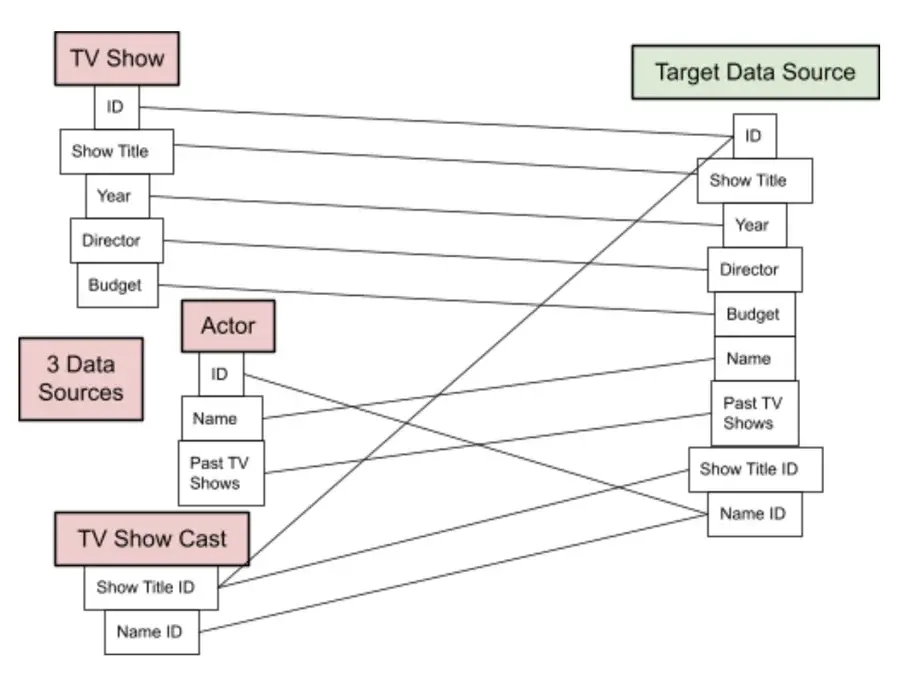
AI models disambiguate entities through context and structured associations. This process occurs by analyzing the co-occurrence of terms and the semantic proximity of concepts across your entire domain. When an AI scans your site, it looks for triples—statements consisting of a subject, a predicate, and an object (e.g., “AEO/GEO offers Generative Search Optimization”). By gathering these data points, the model builds a coherent profile of your business. This structured understanding allows the AI to differentiate your brand from others, ensuring that when a user asks a question about your specific industry, your brand appears as a verifiable expert in the model’s internal knowledge base.
The Power of Schema Markup for Entity Recognition
Technical metadata serves as a vital bridge between your website and AI crawlers. Schema Markup acts as a digital handshake; it provides search engines with a structured, unambiguous language that explains exactly what your content is, who created it, and how it relates to broader industry concepts. Without this, AI models are often left guessing, which limits your brand’s visibility in the Knowledge Graph.
Selecting the Right Schema Types
To excel in Knowledge Graph SEO, you must implement the specific Schema types that align with your business identity. Using the correct vocabulary allows AI engines to parse your information instantly.
| Schema Type | Purpose for Entities | Data Impact |
|---|---|---|
| Organization | Defines your company as a unique entity. | Stabilizes brand presence. |
| Person | Identifies authors/founders to build trust. | Links expertise to a human face. |
| Product | Connects items to specific features and reviews. | Enables rich AI shopping snippets. |
| HowTo | Breaks down complex tasks into steps. | Powers voice search and assistant guides. |
Connecting Entities with SameAs
The sameAs property is your most powerful tool for entity disambiguation. It allows you to point search engines toward external, verified URLs—such as your official LinkedIn profile, Crunchbase page, or industry-specific authority hubs. By mapping these profiles to your website, you confirm to the AI that your site is the singular, authoritative source for that brand name. This reduces confusion when multiple companies share similar names and helps the engine consolidate your digital footprint into one coherent entity.
Implementing JSON-LD for Semantic Linking
Actionable Schema Markup Strategy starts with JSON-LD, a lightweight format that injects machine-readable data into your HTML. To truly optimize for AI search, you shouldn’t just label your pages; you should explicitly link them to concepts or services within your industry. For instance, if your business offers “cloud consulting,” don’t just state the service name. Use JSON-LD to define your service as an object that inherits from the broader “ConsultingService” Schema. By nesting these relationships, you tell the AI exactly how your entity participates in the wider market. This depth of information provides the context AI models need to associate your brand with high-value queries, eventually positioning you as a central node in your specific knowledge niche.
Building Topical Authority through Knowledge Clusters
To truly understand how to optimize for AI search engines, you must stop thinking of your website as a collection of isolated pages. Instead, visualize your content as an interconnected web of data points. This is the essence of building topical authority through knowledge clusters. By mapping out how your core service or brand identity relates to broader concepts, you create an internal roadmap that helps AI models grasp your expertise.
The Hub-and-Spoke Model for Semantic Depth
The hub-and-spoke model is the standard for organizing your content to signal depth to AI. In this setup, a comprehensive hub page acts as the definitive guide on a broad topic. You then create spoke pages—deep dives into the granular sub-topics of that main subject—and link them back to the hub. This structure isn’t just for user navigation; it functions as an entity graph. When an AI crawls this structure, it identifies the hub as the primary entity and the spokes as supporting context, reinforcing your brand as an expert in that specific domain.
Anchoring Entities with Long-Tail Queries
While hub pages establish breadth, long-tail, question-based content provides the granular data that AI models crave. Questions are the primary language of conversational search. When you write content specifically designed to answer queries like “How does entity optimization affect local search ranking?” or “Why is semantic search superior to keyword matching?”, you are feeding the LLM the exact data it needs to cite you in its responses. These questions anchor your entity relationships by providing specific, contextual answers that a broad page might miss. Each time you answer a specific user question, you clarify another facet of your brand’s expertise.
Checklist: Auditing Your Internal Links
Internal links are the signals that tell search engines which content is related. Use this checklist to ensure your internal link structure reinforces your core brand entities:
- Audit Anchor Text: Are you using descriptive, entity-rich phrases? Ensure your anchors describe the destination content accurately.
- Verify Cluster Integrity: Does every spoke page in a cluster contain a clear, relevant link back to the central hub page?
- Remove Orphan Pages: Identify any content that doesn’t have an incoming link; these are invisible to AI discovery.
- Prioritize Semantic Relevance: Link to related concepts that provide additional value to the AI’s understanding of your primary niche.
- Consistency Check: Does your site architecture reflect the hierarchy of your business’s most important services?
Technical Steps to Audit and Improve Your Knowledge Profile
To effectively navigate the world of AI search, you must understand how these engines perceive your business. Think of your digital presence as a puzzle; if the pieces are scattered across different platforms with conflicting information, an AI model will struggle to assemble a coherent picture of your brand. When you learn how to optimize for AI search engines, the goal is to provide a consistent, singular narrative that confirms your entity status.
Auditing Your AI-Perceived Identity
You can test the current state of your Knowledge Graph health by performing a simple entity audit using leading LLMs. Start by opening a chat interface for ChatGPT or Gemini and inputting prompts that force the model to pull from its training data. Avoid questions about your specific products initially; instead, focus on your company’s core identity. Try these prompts to see what the AI actually knows:
- “What is [Brand Name] and what specific services or products do they provide?”
- “Who are the key people associated with [Brand Name], and what industry are they known for?”
- “If I were looking for [Industry/Service], why would [Brand Name] be a relevant entity to consider?”
Cleaning Up Your Digital Footprint
AI models rely on high-authority sources like Wikipedia, Crunchbase, Google Business Profile, and industry-specific registries to verify the existence of a brand. To feed the Knowledge Graph accurately, audit these sources for consistency. Every mention of your brand across the web should ideally use the same address format, phone number, and core service descriptions.
- Unified NAP Consistency: Ensure your Name, Address, and Phone number are identical across every major platform.
- Leverage Industry Hubs: Update your profiles on platforms like LinkedIn or trade association websites to explicitly link to your primary domain.
- Structured Social Proof: Update your social media bios to include a concise, entity-focused description.
- Public Records Check: Verify that your entity information in business registries is up to date, as these act as trusted ground truth sources.
Resolving Entity Ambiguity
One of the biggest hurdles in entity optimization is name duplication. To distinguish yourself, you need to surround your brand name with unique, context-heavy entities. Use the “sameAs” schema property in your website’s JSON-LD to explicitly point the AI to your official social profiles. By creating a dense, structured network of associations—connecting your brand to specific founders, recognized physical locations, and distinct industry categories—you leave no room for the AI to misinterpret your identity.
Shifting toward entity-centric SEO is a fundamental long-term investment in your brand’s digital legacy. By moving away from the habit of treating every piece of content as a standalone, keyword-stuffed article, you begin to see your website as a collection of strategic building blocks. Each page you publish, every piece of structured data you implement, and every internal link you forge contributes to your brand’s unique identity within the Knowledge Graph. As search continues its evolution toward AI-driven answers, your goal is to become an undeniable source of truth. Commit to clarity, maintain your technical standards, and watch as your brand evolves into an authoritative entity that AI models naturally trust.
AEO/GEO
Want to learn more?
Contact us for direct consultation and support.