In the era of generative search, brand reputation is no longer defined solely by manual SERP rankings. It is dictated by how Large Language Models (LLMs) synthesize, store, and recall your brand identity. When an AI produces an inaccurate or harmful description of your services, it isn’t a glitch—it is a failure of entity signal alignment. Mastering brand accuracy requires moving beyond content creation and into technical reputation management.
The AI Error Taxonomy: How Models Get Your Brand Wrong
To correct your brand’s representation in AI ecosystems, you must first categorize the errors. AI failures typically stem from three distinct structural issues:
- Hallucinations: The model generates plausible but entirely fabricated information about your products, pricing, or leadership because it lacks specific context in its training data or retrieval-augmented generation (RAG) window.
- Knowledge Lag: The model relies on outdated snapshots of your digital footprint, presenting deprecated services or obsolete brand values as current facts.
- Training Bias: The model aggregates conflicting or low-quality data from across the web, prioritizing consensus over truth. This often leads to your brand being categorized alongside competitors in ways that erode your unique value proposition.
While outdated facts reflect poor site hygiene, hallucinated brand values represent a systemic lack of machine-readable signals. If your website does not explicitly define your entity, the model is forced to guess, leading to catastrophic brand misinterpretation.
The Diagnostic Workflow: Identifying Your Brand’s AI Reputation Gap
Before applying fixes, you must audit how LLMs perceive you. This requires stress-testing your brand entity through structured, iterative prompting.
- Baseline Prompting: Use various LLMs to ask objective, query-based questions about your services (e.g., “What are the primary features of [Brand Name]?”, “How does [Brand Name] compare to [Competitor]?”).
- Benchmark Consistency: Document whether the model consistently attributes correct features, locations, and value propositions.
- Source-of-Truth Disconnects: Identify if the AI relies on stale third-party review sites or outdated press releases rather than your primary domain.
The goal is to determine if your “source of truth”—your website and structured assets—is effectively communicating your brand identity to the crawler or if the LLM is filling in gaps with training data noise.
Hardening the Entity: A Technical Defense Strategy
To override training bias and ensure accuracy, you must provide machine-readable proof of your brand. This is a process of “hardening” your entity through rigorous data structure.
- Schema Markup Implementation: Deploy comprehensive JSON-LD Schema, specifically using
Organization,Service, andProducttypes. Use@idreferences to link these entities to your official social profiles, knowledge panels, and Wikipedia pages. - Authoritative Entity Linking: Every piece of owned content must act as a signal. Use sameAs attributes in your schema to link your domain to verified external authorities. This forces the model to associate your content with trusted, high-authority entities rather than disparate, unverified mentions.
- Structured Brand-Value Signals: Embed your core value propositions into your structured data. By explicitly marking up your unique selling points within the
descriptionordisambiguatingDescriptionfields, you provide the model with a definitive definition that overrides conflicting or generic web-wide data.
Ongoing Surveillance: Managing Brand Mentions at Scale
Entity management is not a one-time setup; it is an ongoing process of monitoring and adaptation.
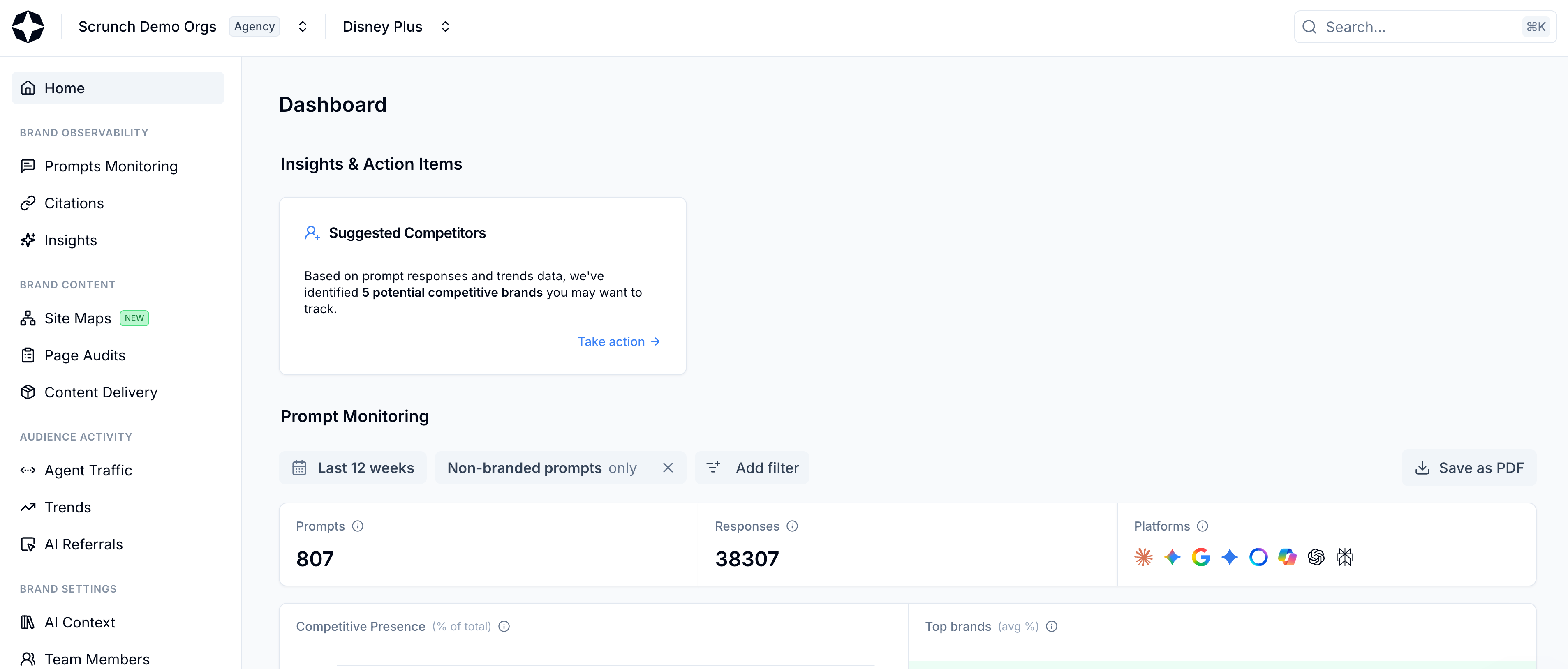
- Automated Monitoring: Implement a system to track how your brand is synthesized in AI-generated output across major search ecosystems. If the model shifts toward incorrect definitions, you must adjust your primary site signals immediately.
- KPI Tracking: Monitor the factual accuracy score of your brand mentions. Are the features being cited correct? Is the sentiment shifting due to hallucinated negative experiences?
- Proactive Content Updates: When your brand pivots or updates service offerings, treat your website as an API for your brand. Update your schema and foundational content simultaneously to minimize the window where “knowledge lag” can impact user trust.
By treating your brand as a technical entity that requires continuous signal management, you can successfully mitigate AI inaccuracies and ensure your brand remains an authoritative, accurate source in the generative search era.