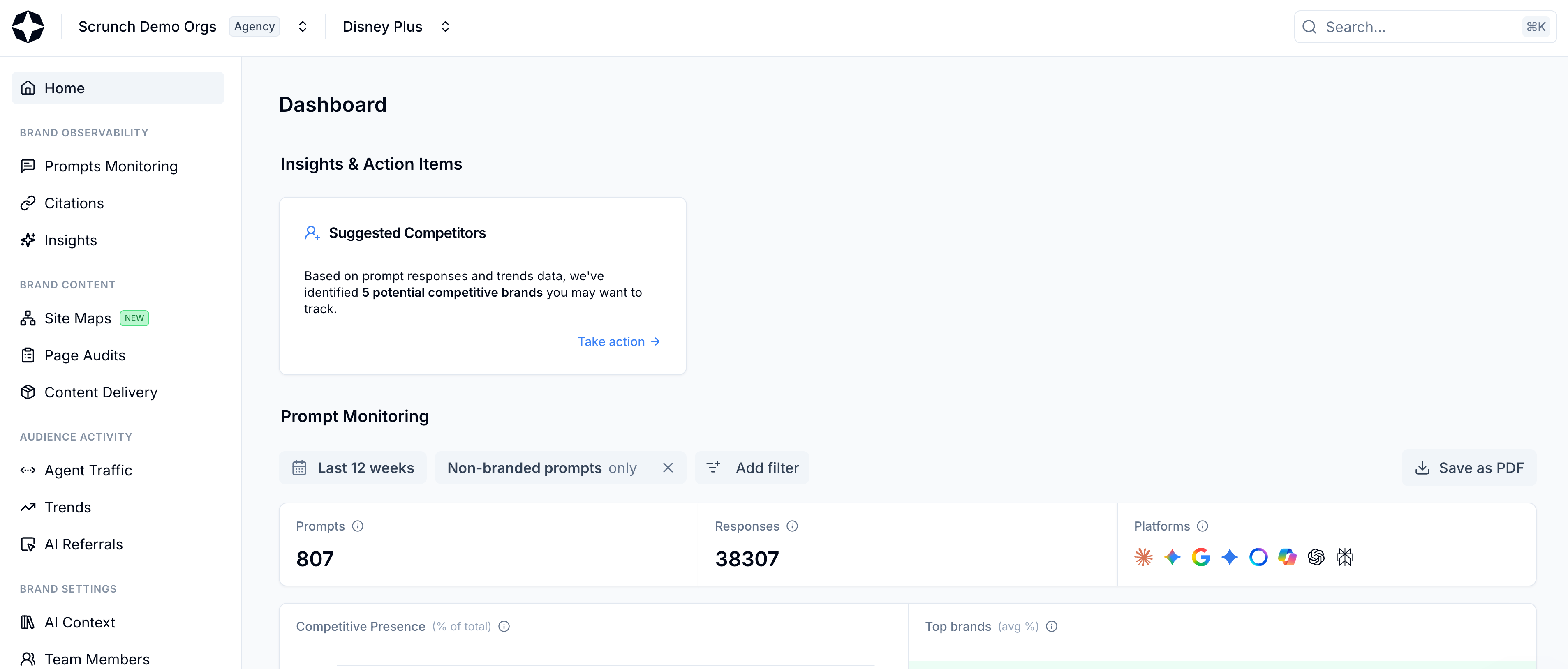
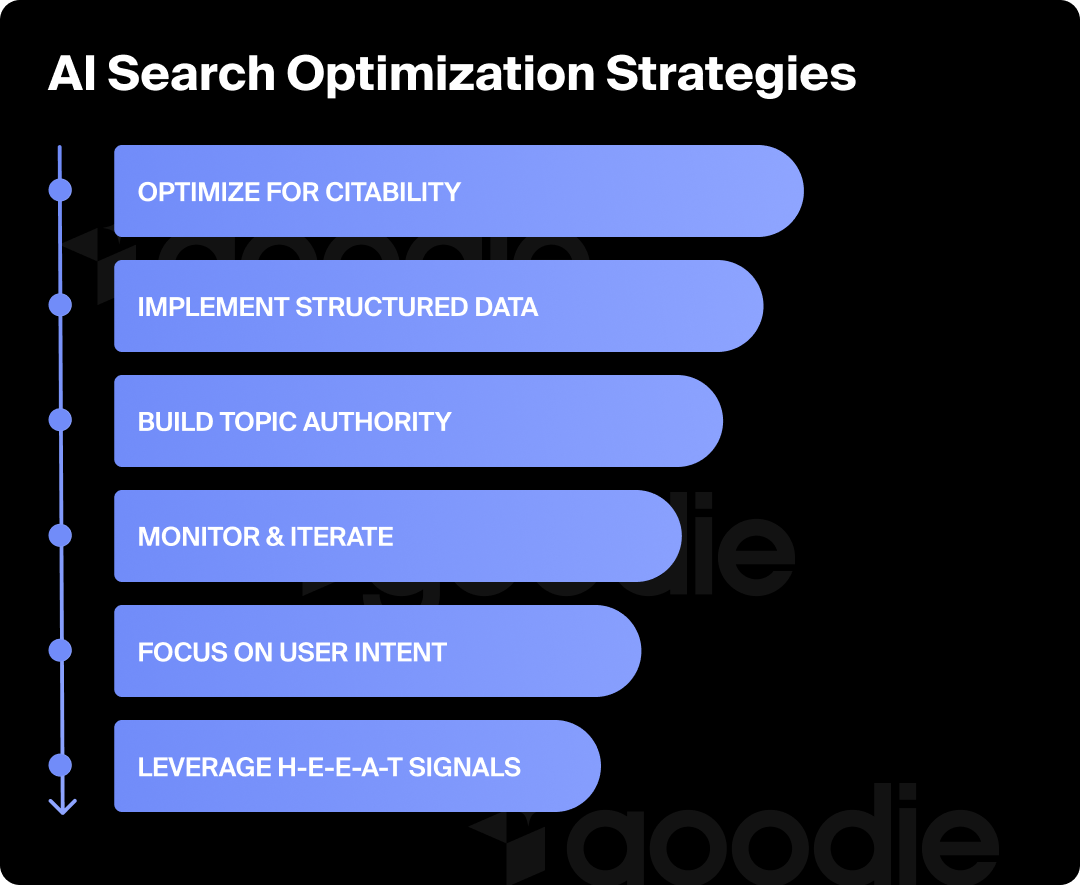
In the evolving landscape of digital discovery, traditional search metrics like keyword rankings and click-through rates are no longer the ultimate arbiters of success. As users increasingly turn to Large Language Models (LLMs) and AI-powered search engines for instant, synthesized answers, brands must shift their focus to generative search intelligence.
Winning in this era requires a fundamental move away from transactional traffic tracking toward a strategic framework for measuring, benchmarking, and improving your brand’s presence within the “black box” of AI outputs.
The AI Visibility Measurement Framework: Moving Beyond Traffic
To manage what you cannot see, you must first define it. Unlike traditional search, which acts as a gateway to your website, generative AI acts as a knowledge authority. Your performance is no longer just about landing a link; it is about becoming a source of truth.
To gain control, marketing leaders should adopt three core metrics:
- AI Share of Voice (ASOV): This measures how frequently your brand appears as a cited, authoritative entity within AI-generated responses for your core topics.
- Sentiment Score: A quantitative measurement of whether your brand is associated with positive, neutral, or negative concepts within LLM outputs.
- Credibility Quotient: A composite metric tracking how often your content is used as a primary source for “expert-level” queries versus general inquiries.
By focusing on these, you transition your strategy from passive link-chasing to active brand authority building in machine-learned ecosystems.
Assessing Your Organization’s AI Measurement Maturity Model
Not every brand begins at the same starting line. Understanding your current maturity level is critical to allocating resources effectively and avoiding premature optimization.
- Reactive: You are currently “invisible” or appear only sporadically. Your strategy is fragmented, and you have no visibility into how LLMs perceive your offerings.
- Proactive: You have established baseline tracking. You are actively identifying gaps in your AI presence and systematically optimizing content to fill them.
- Predictive: You have a mature, data-driven cycle. You anticipate which queries will drive industry conversation and have pre-optimized content that LLMs are effectively “training” on to answer those queries.
Knowing where you stand dictates your resource allocation. If you are in the Reactive stage, your primary investment should be in infrastructure and data integrity, whereas a Predictive brand should focus on content precision and sentiment refinement.
Benchmarking Your AI Footprint Against Competitors
To build a competitive edge, you must look beyond your own dashboard and conduct comparative citation analysis. This process helps you understand why AI models prefer a competitor’s content over yours.
Start by conducting a gap analysis across top-tier LLMs. If a competitor is cited in 80% of responses for a high-value query and you are missing, you must deconstruct their content. Are they providing better structured data? Is their content more “RAG-friendly”—offering concise, fact-dense snippets that are easier for models to parse?
Translate these findings into proactive content briefs. If a competitor wins through superior technical documentation, your goal is to create more granular, structured, and verifiable assets that force the AI to update its preferences.
Interpreting AI Citations: Positive, Negative, and Nuanced Mentions
Visibility is a double-edged sword. A brand mentioned frequently is not necessarily a brand performing well if the sentiment is negative or the information is hallucinated.
- Positive Citations: These occur when your content is cited as an authority or a solution.
- Negative/Hallucinated Mentions: These are critical threats. LLMs can misinterpret or fabricate details about your services, creating “hallucinated negative associations” that erode consumer trust.
Establishing a sentiment-based KPI is essential. You must monitor for shifts in how models describe your brand. When persistent misinformation emerges, it often indicates a flaw in your training data footprint. You must treat these as data integrity issues, responding by auditing the source material on your own properties to ensure accurate, unambiguous, and easily retrievable facts.
From Measurement to Optimization: The Feedback Loop
The final step is connecting performance data back into your production engine. Measurement is useless without a systematic feedback loop that informs your content creators.
Prioritize your optimization efforts based on high-value AI query gaps. Don’t attempt to fix every mention at once; focus on the queries that directly impact your conversion and brand authority. By standardizing this measurement cycle, you transform your AI presence from a random occurrence into a deliberate, measurable, and scalable asset that strengthens your brand’s long-term visibility.