How to Optimize for AI Search Engines: 5 Key Brand Signals
Imagine you are sitting at your desk, finalizing a list of top-tier software tools for your new project. You turn to your favorite AI assistant, typing in a query to see which solution comes out on top. Seconds later, a well-structured answer appears—but your brand is nowhere to be found. Even though you have spent years building a stellar reputation and perfecting your website, the AI completely overlooked you in favor of your competitors.
This experience is becoming the new reality for thousands of businesses as consumer behavior shifts from clicking through blue links to consuming synthesized answers directly from generative models. We are no longer just fighting for a spot on a search results page; we are competing to be the trusted authority that an LLM selects to inform its output.
Learning how to optimize for AI search engines has become the most critical shift in modern marketing, fundamentally changing how visibility is earned. Moving forward, the focus isn’t just on driving traffic to your domain, but on establishing your brand as a foundational entity that models rely on. Understanding this shift is your first step toward maintaining relevance in an era where AI doesn’t just display information—it creates it.
Understanding the Mechanics of AI Discovery
To master how to optimize for AI search engines, you must first unlearn the traditional SEO mindset. Large Language Models (LLMs) do not browse the web like a person. They do not click links, nor do they care about your bounce rate in the traditional sense. Instead, these models operate as sophisticated pattern-matching engines. When a user enters a query, the AI retrieves vast quantities of training data, identifies statistical relationships between concepts, and synthesizes a narrative answer based on that information.
Moving from Clicks to Mentions
Traditional SEO focuses entirely on winning a click. You provide a headline, build a meta description, and aim to rank in the top three blue links. In contrast, Generative Engine Optimization (GEO) is about winning a mention within the synthesized answer itself. When a user asks an LLM recommendation engine for the best CRM for small businesses, your goal is to be woven into the model’s coherent summary. You aren’t competing for a visit to your homepage; you are competing for the AI’s stamp of approval as a relevant, high-authority solution to the user’s specific problem.
The Rise of AI Visibility
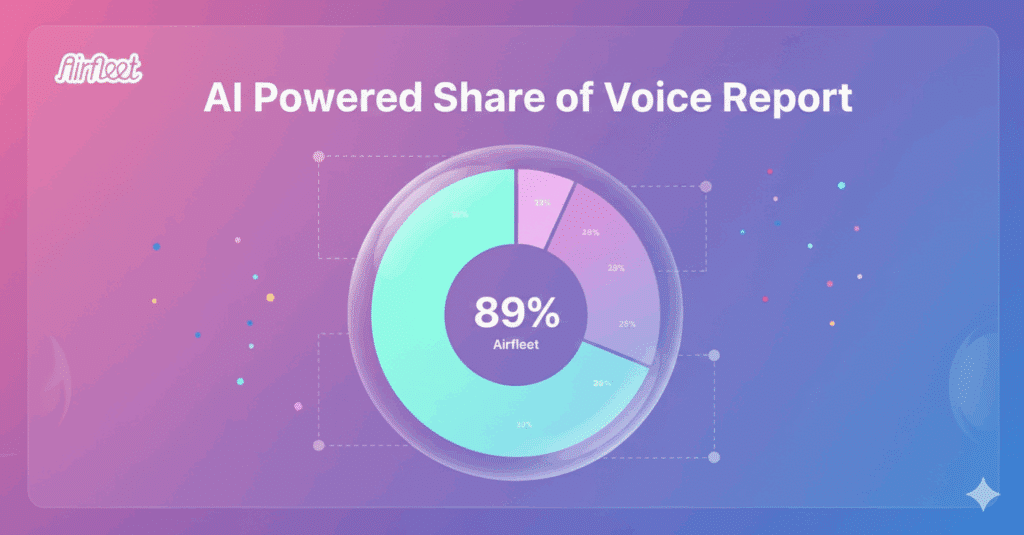
Because old metrics—like organic sessions or backlink counts—don’t fully capture this new dynamic, we must embrace a new core metric: AI visibility. This is a measure of how frequently and favorably your brand is associated with specific industry topics, keywords, or product categories within AI responses. Building visibility means shifting your focus toward AI search ranking factors that prioritize entity relationships and factual consensus over manipulative link-building.
Traditional SEO vs. GEO: A New Playing Field
Understanding the contrast between legacy search and generative discovery is vital for your growth strategy. The following table highlights the shifting priorities for modern content teams.
| Feature | Traditional SEO | Generative Engine Optimization (GEO) |
|---|---|---|
| Primary Goal | Drive clicks to website | Win mentions in AI summaries |
| Success Metric | Organic traffic volume | Brand inclusion/citation rate |
| Content Focus | Keyword density/internal links | Entity prominence/factual clarity |
| Trust Signal | Domain Authority/Backlinks | Source diversity/consensus |
| User Outcome | Page view | Direct, synthesized answer |
By prioritizing how your brand appears within these models, you stop playing the game of chasing algorithms and start building a digital reputation that AI systems naturally favor. As you refine your approach, remember that machines prioritize consistency. If your brand data is scattered or contradictory, the AI may struggle to categorize you correctly, leading to reduced visibility in competitive search environments.
Entity Prominence: Making Your Brand Unforgettable to AI
Entity prominence is the measure of how clearly and consistently your brand is linked to specific industry topics within the massive datasets that power LLMs. Unlike traditional SEO, which focuses on keyword density on your own pages, entity prominence is about how often and how contextually your brand is mentioned alongside relevant concepts across the entire internet. Think of it as your digital reputation score: the more frequently authoritative sources associate your brand with your expertise, the higher your prominence, and the more likely an AI will cite you as a trusted authority.
Building Your Digital Identity
To ensure your brand is identifiable as a unique entity, you must move beyond simple name mentions. AI models look for entity markers—reliable, repetitive bits of information that distinguish your business from competitors. If you want to master Generative Engine Optimization, you need to ensure your business entity is clearly defined across third-party databases, industry platforms, and reputable directories. Being mentioned in high-authority datasets is critical because these sources act as the source of truth for the model’s training data. If your brand data is inconsistent, the AI may struggle to link your website to your products, resulting in missed opportunities for inclusion in LLM recommendation engines.
Core Entity Markers for Brands
Focusing on these key indicators will help you improve your AI visibility metrics and ensure your brand stands out:
- Consistent NAP data: Ensure your Name, Address, and Phone number are identical across every platform, from Google Business Profile to LinkedIn and niche industry aggregators.
- Co-occurrence patterns: Your brand should be mentioned frequently alongside your core keywords. If you sell sustainable furniture, your brand name should appear in context with eco-friendly, recycled materials, and home design.
- Authoritative backlink context: It isn’t just about the link; it’s about the surrounding text. Ensure your brand is discussed as a solution or expert in relevant, high-quality industry articles.
- Founder and team recognition: Associate your brand with specific people who are also recognized as entities in their respective fields, creating a web of trust.
Checklist for Machine Readability
Follow these technical steps to ensure your brand is easily recognized as a unique, authoritative entity by AI crawlers:
- Implement Knowledge Graph Schema: Use Organization Schema markup on your homepage to define your brand, social profiles, and unique identifier for search engines to digest.
- Audit External Mentions: Use brand tracking tools to find where your company is listed. If you find inconsistencies in your business description, contact those platforms to standardize the information.
- Connect Your Content: Link your website content to recognized industry entities using clear, descriptive language that avoids ambiguity.
- Claim Your Profiles: Ensure you have verified, active accounts on major industry hubs and business registers, as these act as foundational data points for many AI training sets.
- Monitor for Hallucinations: Regularly query AI models about your brand and industry. If the AI provides incorrect information about your services, use that feedback to update your website’s primary landing pages to clarify those specific facts.
The Power of Source Diversity and Authority
Large Language Models function by identifying patterns of consensus within massive datasets. When you ask an AI a question about the best CRM or the most reliable accounting software, it isn’t searching for a link; it is aggregating knowledge from millions of sources to synthesize a definitive answer. If your brand only appears on your own website, you are effectively shouting into a void. To gain traction, you need independent, high-authority entities to validate your brand’s existence and expertise.

Why Consensus Trumps Single-Source Authority
AI models are trained to be skeptical of promotional bias. Relying solely on your blog posts for authority signals is a risky strategy because LLMs weigh information by its source diversity. If a piece of data is mentioned on your site, that is a start, but if it is also cited in a reputable industry publication, referenced in an analyst report, and discussed by subject matter experts on professional platforms, the model gains high confidence in that information.
Think of it as social proof for algorithms. By cultivating mentions across a variety of independent channels, you build a consensus layer around your brand. This diversity tells the LLM that your brand is not just a self-proclaimed leader but a recognized entity within the broader professional ecosystem. This approach is fundamental to successful Generative Engine Optimization, as it moves your brand from a digital outlier to a core component of the industry narrative.
Building Authority Beyond Your Website
To ensure your brand appears in AI-driven outputs, you must invest in high-trust signals that carry weight in training datasets. PR efforts, white papers from reputable industry analysts, and appearances on authoritative podcasts or expert interviews serve as critical touchpoints.
| Source Category | Trust Level | Impact on AI Learning |
|---|---|---|
| Personal Blog / Landing Page | Moderate | Low (Perceived Bias) |
| Industry Trade Publications | High | Strong (Independent) |
| Reputable Analyst Reports | Very High | Foundational (Fact-based) |
| Social Media Mentions | Low | Minimal (High Noise) |
| Peer-Reviewed White Papers | Elite | Deep (High Certainty) |
Reducing Bias and Increasing Visibility
When LLMs synthesize an answer, they filter for information that has the lowest risk of being inaccurate or overly promotional. By diversifying your footprint across these high-trust channels, you provide the AI with a consistent, validated narrative. This decreases the likelihood of the model hallucinating your features or ignoring your brand entirely. Ultimately, learning how to optimize for AI search engines requires a shift in mindset: stop viewing content solely as a tool to drive clicks and start viewing it as a building block for your digital reputation.
Schema and Structural Signals for Machine Readability
Schema markup is the digital blueprint you provide to search engines, acting as a translator between your human-readable website and the complex logic of LLMs. While your site might look beautiful to a customer, an AI perceives it as a collection of nodes, connections, and raw data points. By implementing structured data, you provide clear, unambiguous signals that help the model understand exactly what your business does, what your products cost, and who you serve.

Reducing Hallucinations Through Structured Truth
One of the biggest risks in Generative Engine Optimization is the AI hallucination, where a model invents incorrect pricing, outdated features, or non-existent service areas. Structured data fixes this by serving as a source of objective truth. When you explicitly tag your content with Schema, you are essentially telling the machine: “This is a hard fact.” By providing machine-readable versions of your business details, you significantly reduce the chance of an AI fabricating information about your brand during a response synthesis.
The Role of Freshness and Semantic Clarity
AI models are constantly undergoing updates, but they still rely on crawls to keep their knowledge of your brand current. If your pricing or service offerings change, waiting for an LLM to notice the update through natural language processing is risky. Schema markup acts as a high-priority signal. When you update your structured data—specifically utilizing fields like datePublished or priceValidUntil—you provide a direct update to the knowledge graph the AI references.
Essential Schema Types for AI Crawlability
To maximize your visibility, prioritize the implementation of specific Schema types that categorize your business information into segments an AI can easily ingest and categorize.
| Schema Type | Purpose for AI | Key Data Points to Include |
|---|---|---|
| Organization | Defines your business entity | Name, Logo, URL, Social Profiles |
| Product | Details specific offerings | Price, Availability, SKU, Rating |
| Service | Clarifies your specific offerings | Service Area, Provided Services |
| FAQPage | Directly maps answers to queries | Question, Answer, Related Entities |
| LocalBusiness | Anchors you to specific locations | Address, Phone, Opening Hours |
By systematically applying these structures, you build a foundation of machine-readable facts that turn your website into a reliable data source. This proactive approach ensures your brand is not just indexed, but correctly interpreted by the next generation of AI-driven search interfaces.
Measuring and Refining Your AI Presence
Moving toward a strategy that prioritizes AI visibility metrics requires a fundamental change in how you define success. Traditional search marketing has long been obsessed with the click, but in an era of generative synthesis, the goal is inclusion. Instead of tracking traffic volume, your new core benchmark should be your inclusion rate—the frequency with which your brand appears within relevant answers, summaries, or recommendation lists generated by LLMs.
Conducting Regular Narrative Audits
Think of a narrative audit as a health check for your brand’s digital reputation. Because AI models synthesize vast amounts of information, they don’t just state facts; they construct a narrative about who you are, what you offer, and why you matter. To conduct an effective audit, treat the AI like a stakeholder. Ask it specific questions related to your industry and your unique value proposition. Analyze the responses based on accuracy, sentiment, and clarity.
Testing Visibility Against Industry Questions
To master Generative Engine Optimization, you must understand the queries that drive your target audience. You can test your brand’s current visibility by systematically inputting intent-based queries into multiple platforms like ChatGPT, Perplexity, or Claude. Create a tracking sheet to document how often your brand is mentioned, whether it is included in a list of recommendations, and whether the model cites your website as a source.
| Test Metric | Why It Matters | Frequency |
|---|---|---|
| Inclusion Rate | Confirms you are part of the conversation | Monthly |
| Source Citation | Validates your authority to the model | Quarterly |
| Narrative Accuracy | Ensures your brand identity remains intact | Bi-Monthly |
If you notice the AI is failing to mention your brand, it likely means your current content lacks sufficient entity prominence or is not being picked up by high-authority external sources. If the AI is mentioning your brand but misrepresenting your features, your schema markup or on-page documentation may need updating to provide clearer, more direct facts. According to AEO/GEO, treating these insights as actionable signals is the key to maintaining your digital reputation.
The shift from chasing traditional link-based rankings to cultivating a robust digital reputation is no longer optional. As search behavior pivots toward conversational AI, your success depends on how clearly and consistently you define your brand identity across the web. You are no longer just optimizing for a link; you are feeding the intelligence that powers modern discovery.
By focusing on entity prominence, structural clarity, and source authority, you build a foundation that withstands algorithm updates and changing interface designs. This is not about gaming a system; it is about ensuring your brand is recognized, understood, and recommended by the machines that increasingly curate human knowledge. Embracing these signals today positions you as a leader in your industry, ensuring your business stays relevant as LLM recommendation engines become the new front page of the internet.
AEO/GEO
Want to learn more?
Contact us for direct consultation and support.