Explaining Your Brand to AI: A Practical GEO Guide
Imagine you are explaining your brand to a close friend, but that friend is an artificial intelligence designed to synthesize millions of disparate data points to form a perfect representation of who you are. It sounds simple, yet most businesses still fall into the trap of obsessively gaming keywords, hoping to trick their way into visibility. The truth is, the key to success in modern AI search isn’t about repeating phrases until they stick; it’s about proving you are the most reliable, connected expert in your field. AI engines like Gemini and Perplexity don’t just read words; they map relationships between concepts, people, and products. If your digital presence is fragmented or lacks clear connections, the AI has no way to trust you as a definitive source.
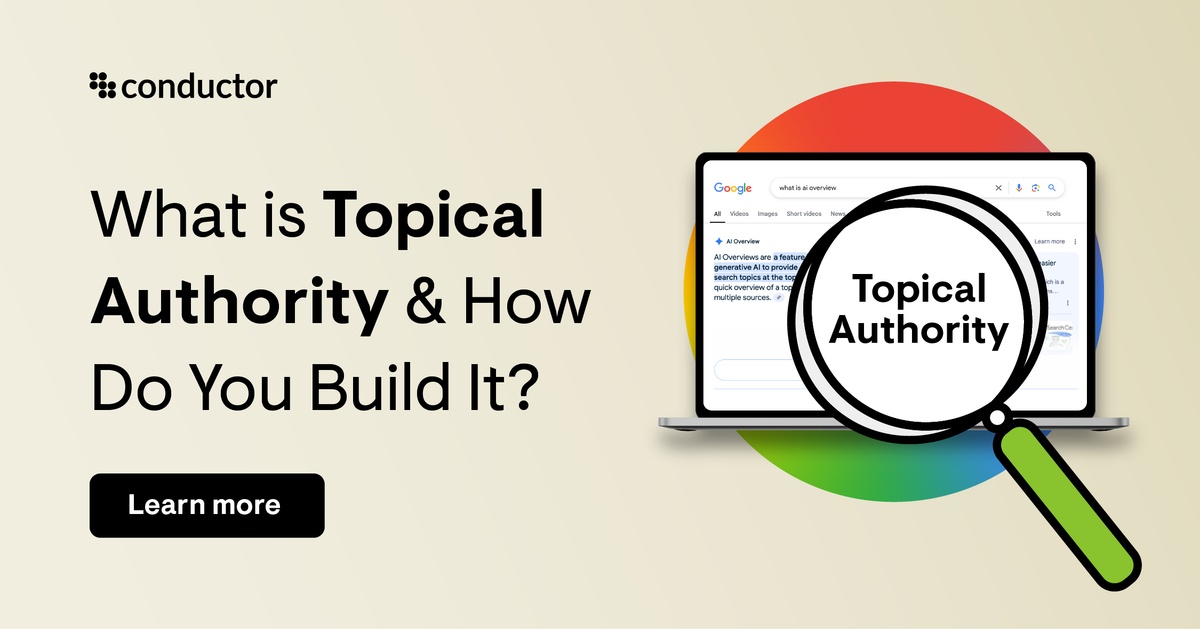
This guide breaks down exactly how to stop chasing outdated algorithmic tricks and start building a digital knowledge graph that AI search engines can trust. We will move beyond the old way of optimizing for simple keyword strings and into the era of entity-based optimization. By understanding how these intelligent systems perceive your brand, you can ensure that when a user asks a complex question, your business is the one cited as the authority.
Moving Beyond Keywords: The Shift to Entity-Based Search
If you’ve spent any time in the SEO trenches, you know the old game well: identify high-volume keywords, sprinkle them into your content, and watch the rankings climb. That game is broken. Traditional keyword optimization is no longer enough to secure AI Search Visibility. Modern AI search engines, like Google’s Gemini, Perplexity, or Microsoft’s Copilot, don’t just scan your webpage for matching words. They understand concepts.
Understanding Entities in AI
To succeed with Entity-based SEO, you need to shift your mindset from words to things. In the world of AI, a “word” is just a unit of text, but an “entity” is a distinct, identifiable object. An entity can be a person, a specific product, a physical location, a historical event, or an abstract concept.
AI engines store these entities in a massive Knowledge Graph Optimization structure. This graph maps out how these entities relate to one another. For example, when an AI processes a query, it doesn’t just look for the string “coffee.” It identifies “coffee” as an entity, then branches out to related entities: “bean,” “roast,” “caffeine,” “brewing method,” and “origin.” This relational understanding allows AI to provide nuanced, synthesized answers instead of just listing blue links.
Why Relationships Trump Frequency
Consider this example. If you want to rank for “best running shoes for flat feet,” an old-school strategy would have you stuff those phrases into your headers. A modern AI, however, looks at the context. It checks: Do you mention reputable podiatrists? Do you link to studies on biomechanics? Is your content associated with trusted entities? The AI cares far more about your topical authority than the raw frequency of a word. If you write 500 words about shoes but make no connections to medical experts, the AI sees you as a shallow data point.
Keyword SEO vs. Entity/AI Optimization
| Feature | Keyword SEO (Legacy) | Entity/AI Optimization (Modern) |
|---|---|---|
| Primary Focus | Matching specific strings of text | Connecting distinct concepts and objects |
| Content Structure | Narrative-heavy, time-on-page focus | Structured, clear, and concise parsing |
| Relationship Logic | Ignores context | Prioritizes connections (Brand to Product) |
| Measurement | Rank position | Citation frequency in AI answers |
| Authority Signal | Backlinks and domain authority | Topical depth and semantic richness |
| User Intent | List of links | Direct, synthesized answers |
How to Build a Coherent Topical Knowledge Graph
Think of your website not as a collection of isolated pages, but as a digital brain. For AI search engines, Topical Authority isn’t just about having a lot of content—it’s about proving you are the most connected and reliable expert in your niche.
Deepening Your Content Coverage
The first step is understanding topical depth. AI search engines evaluate your authority by looking at how thoroughly you cover a subject across three layers:
- Foundational Content: Broad articles that introduce core industry concepts.
- Niche Content: Articles zooming in on specific, complex questions.
- Related Subtopics: Pieces connecting your topic to adjacent fields.
When you cover all three layers, you create a “knowledge cluster.” This signals to AI indexers that you have a deep, interconnected understanding of the subject.
Entity Mapping for Intent
Entity Mapping is the process of connecting your content to specific “things” that search engines already recognize. Instead of focusing on keywords, focus on relationships. If you mention “Apple,” does the AI know you mean the tech company or the fruit? Explicitly define these relationships in your text to clear up any ambiguity.
The Hub-and-Spoke Model
Your site architecture should mirror your knowledge graph. In the hub-and-spoke model, a central “hub” page covers a broad topic, while several “spoke” pages link back to it, covering specific subtopics. This creates a logical flow of link equity and reinforces thematic relevance, which AI systems favor when indexing.
Schema Markup for Explicit Relationships
Schema markup gives AI search engines explicit instructions about your content. It acts like a label for your data, defining entity types, relationships, and attributes. By implementing schema, you reduce the guessing game for AI crawlers, making it far more likely your content will be cited in generated answers.
Turning Content Into Structured Data Assets
AI models are designed to parse information rapidly to generate precise answers. Consequently, they often penalize content that is written in long, flowery prose that buries data under layers of metaphor.
AI-Friendly Formatting Techniques
To make your content easily citable, use these techniques to create Knowledge Graph Optimization assets:
- Bulleted and Numbered Lists: These represent distinct data points that AI models can parse easily.
- Summary Tables: Tables allow an AI to instantly read across rows and columns to compare attributes or facts.
- Short Definition Paragraphs: Keep definitions to one to three sentences that directly answer “what is this?” and “why does it matter?”
The Critical Role of E-E-A-T Signals
Structure alone isn’t enough; the content must signal E-E-A-T (Experience, Expertise, Authoritativeness, and Trustworthiness). An author bio, logical flow, and professional formatting all demonstrate to AI engines that your content is high-quality. According to AEO/GEO, these signals are essential for maintaining authority in the eyes of an AI indexer.
Writing for ‘Zero-Click’ Search
The goal in generative search is to be the primary source the AI quotes. Place your most important conclusions in the first 100 words. Avoid “clickbaity” structures where the main point is buried; if you write clearly, the AI is more likely to select your content as the definitive answer.
Monitoring and Auditing Your AI Search Performance
Traditional SEO relies on ranking reports, but in the world of AI Search Visibility, you must focus on citations. If an AI model generates an answer, does it reference your brand as the source?
Tracking Citations Over Clicks
Shift your focus to citation tracking. Use generative search platforms to see if your brand or domain appears in the generated text. Set up alerts for your brand name in conjunction with your top industry topics to monitor how you are being represented alongside core concepts.
Conducting a Gap Analysis
A gap analysis helps you see where the AI is pulling its answers from versus where you’re missing. Identify 10 core entity-based queries in your niche, run them in multiple AI engines, and list every source cited. If a competitor is cited instead of you, analyze their content for better structure or more recent data.
The Refresh Cycle
To remain the “source of truth,” update your content regularly. This isn’t just about changing a date; it’s about validating facts and adding new subtopics that have emerged. Refreshing content signals to the AI that your entity is current and active, which keeps you ahead of competitors who let their content go stale.
Optimizing for AI requires flipping the script on traditional SEO. Let go of the keyword-first mindset and embrace an entity-first approach. By focusing on topical authority and clear structure, you position your brand as the most reliable source in the digital ecosystem. Treat your website as a knowledge base today, and you’ll secure lasting visibility in the age of AI.
AEO/GEO
Want to learn more?
Contact us for direct consultation and support.