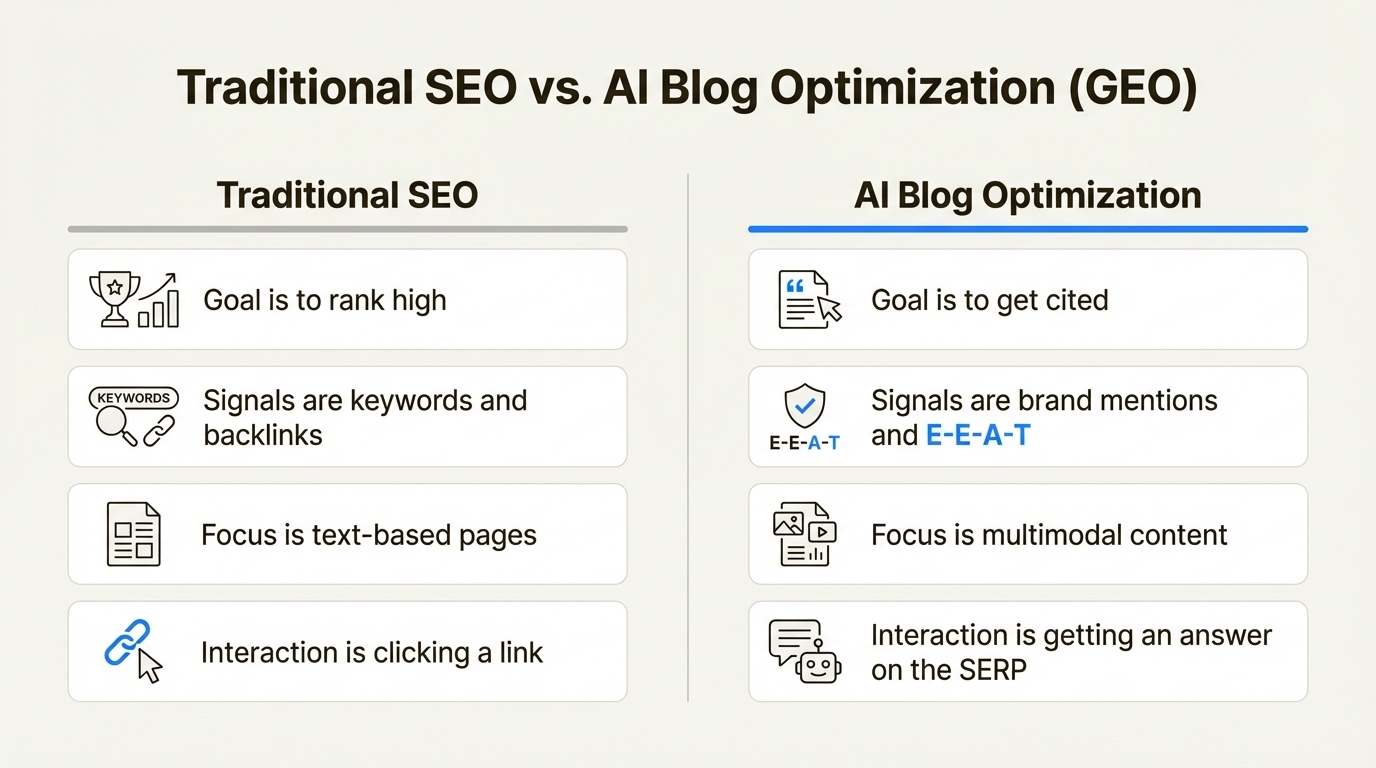
The search landscape is undergoing a fundamental transformation. For years, digital strategy has been dominated by traditional search engine optimization (SEO), which prioritized keyword density and backlink profiles to earn a spot in a ranked list of links. Today, we are entering the era of Generative Engine Optimization (GEO), where visibility is no longer about blue links, but about being the primary source of information in AI-generated answers.
The Paradigm Shift: Understanding How LLMs Source Information
To succeed in this new environment, marketers must look beyond the mechanics of search indexing and understand Retrieval-Augmented Generation (RAG). Unlike traditional engines that crawl and index web pages to present a ranked list, AI systems use RAG to retrieve real-time, contextually relevant information from a vast, curated knowledge base.
This process functions like an intelligent research assistant. When a user asks a query, the Large Language Model (LLM) scans available data, evaluates the credibility of various content “nodes,” and synthesizes a direct answer. Your content acts as these nodes. If your information is clear, logically structured, and authoritative, the model is more likely to synthesize it into its final answer, often citing your brand as the primary source. Unlike traditional SEO, which relies on click-throughs, the primary goal here is to achieve high citation rates within the AI’s synthesis.
The Pillars of AI Search Visibility: Beyond Keywords
Transitioning to GEO requires a shift in how we structure and prioritize content. Semantic relevance has replaced keyword stuffing as the primary signal for AI engines.
- Semantic Depth: Prioritize comprehensive topical coverage over repetitive keyword placement. AI models evaluate how well your content answers the user’s intent rather than how many times a term is mentioned.
- Logical Hierarchy: Use clean, semantic HTML structure. AI models rely on headers (H2, H3), lists, and schema markup to parse the importance and relationships between different pieces of data.
- Machine Readability: AI engines excel at processing structured data. Incorporating tables, clearly defined bullet points, and numbered steps makes your content easier for models to ingest, summarize, and present in the AI response block.
Operationalizing E-E-A-T for the Algorithmic Age
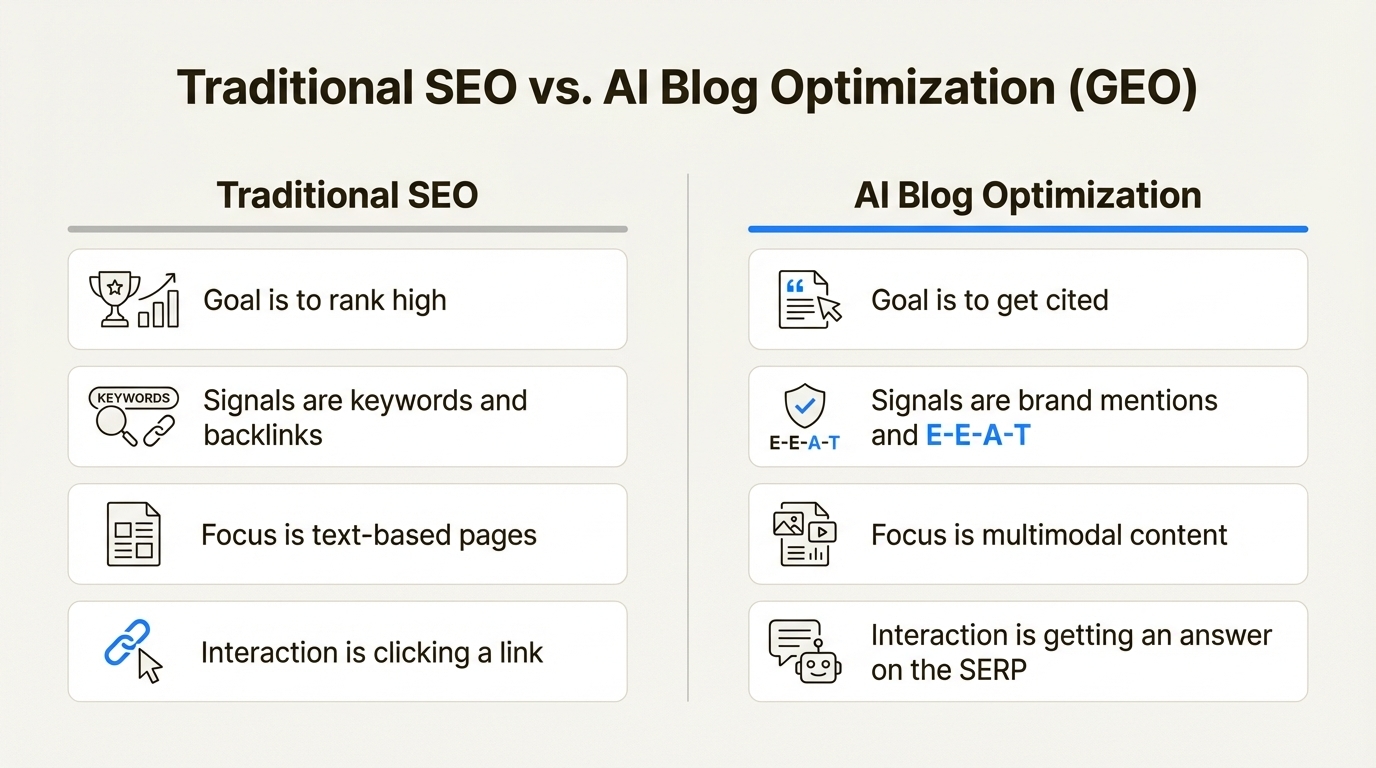
While traditional E-E-A-T (Experience, Expertise, Authoritativeness, and Trustworthiness) was a guideline for human quality raters, it has become a technical requirement for AI model training. LLMs are trained to favor content that exhibits verifiable markers of authority.
- Proprietary Data: AI models are constantly searching for unique insights. Publishing original research, industry surveys, or internal datasets provides the LLM with information it cannot source elsewhere, drastically increasing the likelihood of citation.
- Author Transparency: Clearly define the expertise of your content creators. Using schema to identify the author and their credentials helps the model validate the reliability of the information.
- Verifiable Markers: Use professional citations, links to primary sources, and consistent branding to build a footprint of authority that the AI can easily cross-reference.
Technical Prerequisites for Generative Presence
Winning in zero-click environments requires moving away from the assumption that every piece of content must drive a visitor to your site. Instead, focus on becoming the “definitive source” that the AI serves to the user.
- Optimize for Synthesis: Structure your content to be “snippet-ready.” Keep core answers concise and place them near the top of your pages, supported by detailed data.
- Ensure Content Freshness: AI models are frequently updated to maintain accuracy. Providing up-to-date, relevant content ensures your brand stays within the model’s active knowledge window.
- Embrace Zero-Click: Understand that in the generative era, your brand visibility often happens within the search interface. Prioritize building brand recognition and thought leadership that persists even when the user doesn’t click through.
Future-Proofing Your Brand in a Generative Ecosystem
The long-term success of an AI content strategy depends on shifting from a volume-based mindset to one focused on authority. As generative search matures, the metrics of success will evolve. Instead of relying solely on traffic and click-through rates, brands must learn to measure citation rate and share of voice within AI responses.
Establish a sustainable workflow that treats content as a living knowledge base. By prioritizing accuracy, original data, and technical structure, you build an infrastructure that doesn’t just compete in today’s search results—it defines the answer for the future of AI-driven discovery.