Multimodal AI Search Optimization: A Guide for Success
Remember when success in search meant stuffing keywords into long-form blog posts and hoping for the best? You likely spent hours refining your meta tags while ignoring the vast library of images, product videos, and podcast clips sitting on your server. Those days are fading fast. We are entering an era where AI search engines don’t just read; they perceive. They are actively seeing your infographics, hearing your audio tutorials, and watching your product demonstrations to build more complete answers for users.
This transition to multimodal AI search optimization means your entire digital footprint determines your authority. If your non-text assets aren’t structured for machine understanding, you are leaving massive opportunities for visibility on the table. Every video without a transcript or image without clear context is a missed chance to show up in the answers that matter most to your audience. Let’s turn your untapped assets into your biggest competitive advantage.
Beyond Text: Understanding Multimodal AI Search and Its Impact
Multimodal AI search is a transformative approach where search engines process and synthesize information across multiple formats—text, images, video, and audio—to provide unified, highly relevant answers. Unlike traditional keyword-based systems that primarily index written content, multimodal AI models ingest diverse media types simultaneously. They analyze the visual composition of an image, the spoken narrative of a video, and the nuanced audio of a podcast, weaving them together to understand the intent behind a user’s query. This capability allows the AI to offer a more holistic and comprehensive response.

The Fundamental Shift in Search Paradigms
For years, search engine optimization meant obsessively tuning written copy for specific phrases. This text-centric era relied on crawlers that viewed pages as linear documents. Today, the shift toward a more holistic, AI-driven discovery model has rendered that narrow focus obsolete. We are moving toward a world where your brand’s value is judged by the richness and relevance of your entire digital footprint. If you only provide text, you are essentially invisible to a machine that prefers visual demonstrations and audio explanations for complex queries.
This evolution is critical because AI search engines now synthesize diverse data to craft answers that save the user time. Instead of forcing a user to click through a dozen links, the AI provides a single, high-quality, synthesized response. By optimizing all content modalities, you ensure that your assets serve as the source material for those definitive answers.
Why Multimodal Optimization is Your New Competitive Edge
For small businesses, this transition represents a unique opportunity to leapfrog established competitors still locked into legacy text-only strategies. Early adopters of multimodal AI search optimization gain a massive advantage: they become the primary authorities cited in AI responses. When you treat your images, videos, and podcasts with the same rigor you once applied to blog posts, you create a deeper, more trusted bond with search algorithms.
Ignoring this shift leads to significant missed opportunities. Every day, users ask questions best answered by a video tutorial or an instructional infographic. If your brand lacks these assets—or if they aren’t optimized for machine discovery—your competitors will fill that space. Your brand visibility shouldn’t rely solely on written blog posts; it must be embedded in the visual and auditory media that modern users prefer.
Empowering Your Business with AEO and GEO
AEO (Answer Engine Optimization) and GEO (Generative Engine Optimization) serve as the vital framework for this new reality. These practices go beyond traditional SEO by focusing on how generative AI models aggregate, interpret, and present information. As an AI-first platform, AEO/GEO empowers you to structure your content so that it’s inherently readable by the machines fueling platforms like ChatGPT or Gemini.
By leveraging these advanced methodologies, you align your content strategy with how AI search ranking factors operate. The goal is to make your non-textual assets easily discoverable and highly relevant. When you commit to a strategy that embraces all modalities, you don’t just hope for visibility; you engineer it. Mastering AI discovery ranking requires this transition from a text-heavy mindset to an all-encompassing digital presence.
Decoding AI Perception: How Multimodal AI ‘Understands’ Your Content

When you upload an image or video, you might think you are just adding visual flair to your website. To a modern AI model, however, that file is a data-rich environment waiting to be decoded. Multimodal AI does not simply look for a matching filename; it uses complex machine learning models to see, hear, and watch your content. By mastering how these systems perceive your assets, you can significantly improve your AI discovery ranking.
How AI ‘Sees’ Images
Modern vision models process images by breaking them down into patterns, textures, and objects. Rather than relying solely on your alt-text—which can be incomplete—the AI performs visual recognition to identify the actual content of the image.
- Object Detection: The AI identifies individual items within a scene, such as a laptop or office chair.
- Scene Understanding: It recognizes the environment, distinguishing between an indoor office and an outdoor landscape.
- Context Extraction: Beyond objects, the AI analyzes the relationships between them to determine the activity occurring.
This capability means that AI models can verify if your visual content aligns with the text surrounding it. If your blog post describes a professional software demo but the image shows a cat, the AI perceives this mismatch, which can negatively impact your AI search ranking factors.
How AI ‘Hears’ and ‘Watches’ Video
Video is the ultimate multimodal challenge, and AI handles it by synthesizing audio, visual, and temporal data. It does not just watch the video; it interprets the narrative flow.
- Speech-to-Text: AI automatically transcribes spoken audio into text, allowing it to index the topics discussed.
- Facial and Action Recognition: Models identify key individuals and specific actions, such as typing or presenting, to understand the video’s intent.
- Sentiment Analysis: By evaluating vocal tone, pitch, and facial expressions, the AI determines the emotional context.
- Narrative Flow: AI tracks how these elements change over time, enabling it to summarize the video or pull specific clips.
The Role of Metadata and Structured Data
While AI is becoming smart, it still relies on clear, structured cues to categorize your content with high accuracy. Think of metadata as the translator that confirms what the AI is seeing.
| Asset Type | Primary Metadata Need | Key Semantic Benefit |
|---|---|---|
| Image | Alt-text & Dimensions | Improves accessibility and visual relevance |
| Video | Transcripts & Chapters | Enables precise search within video timelines |
| Audio | Show Notes & Tags | Enhances topic discovery for podcasts |
Semantic Tagging for Contextual Richness
Semantic tagging involves using descriptive, meaningful labels for your files. Instead of uploading an image named IMG_5092.jpg, you should use a descriptive name like team-collaboration-software-demo.jpg. Furthermore, you can embed contextual information within the file properties. By combining these semantic tags with surrounding textual context, you build a bridge of information that AI can easily follow.
Consistent Identity Across All Modalities
Consistency is critical. If your brand uses a specific color palette, logo placement, or audio style, the AI begins to associate these cues with your brand. When your visual style remains uniform across your website and social media, you help the AI learn your brand identity. This reinforcement creates a reliable pattern that signals authority to the AI, ensuring your content is recognized consistently, regardless of the format.
Your Multimodal Playbook: Practical Strategies for AI Visibility
To succeed in today’s generative search environment, you must move beyond traditional text-only approaches. AI search ranking factors now heavily weigh how well you present your non-textual assets. By organizing these elements effectively, you help AI models better interpret your content.
Optimizing Images for AI Interpretation
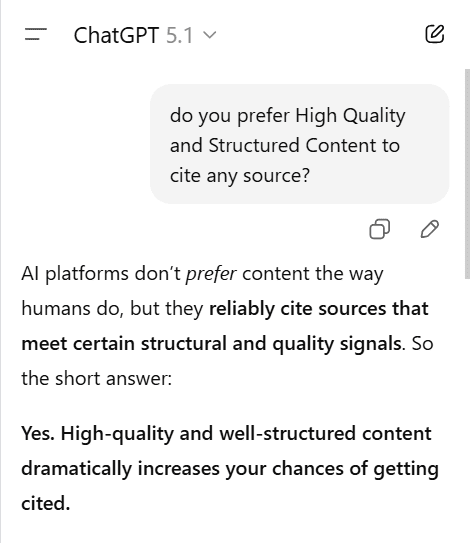
AI models don’t just see pixels; they analyze metadata to derive meaning. Start by using descriptive filenames like blue-ceramic-coffee-mug.jpg instead of generic numbers. Follow this by writing detailed, human-readable alt-text that describes the image context, not just the subject. Furthermore, always include contextual captions beneath your images to provide immediate information to both human users and crawlers. Finally, implement ImageObject schema markup. This structured data explicitly tells search engines what the image represents, providing a boost to your AI discovery ranking.
Enhancing Video and Audio for Discoverability
Video and audio content offer high engagement rates, but they are dark to AI unless you provide text-based anchors. For every video, supply a full transcript. AI uses this text to index your video’s content accurately. Additionally, provide accurate closed captions, detailed descriptions, and chapter markers to help AI understand the narrative flow. For audio-only assets like podcasts, the strategy remains similar: detailed show notes, full transcripts, and relevant semantic tags are mandatory.
Building Contextual Richness
AI models thrive on context. Do not treat your media assets as isolated files; embed them within highly relevant, high-quality text. If you post an image of a product, surround it with paragraphs detailing its benefits, use cases, and technical specifications. This allows the AI to map the visual asset to the semantic intent of the text, reinforcing your authority on the subject.
Designing for AI-Friendly UX
An AI-friendly user experience is also a human-friendly one. Structure your content with clear, descriptive headings (H2 and H3 tags) that act as an outline for the AI. Use short paragraphs and bullet points to break down complex ideas. Adopt an answer-first formatting style, where you address the primary user query immediately, followed by the supporting details.
| Asset Type | Primary Optimization Techniques |
|---|---|
| Images | Descriptive filenames, alt-text, captions, ImageObject schema |
| Video | Full transcripts, closed captions, chapter markers, VideoObject schema |
| Audio | Full transcripts, clear show notes, semantic tagging |
| Overall | Answer-first formatting, logical headings, consistency |
By following this playbook, you effectively translate your brand’s value into a language that AI can understand. Focus on providing clear, structured, and context-rich information, and your brand will be well-positioned to lead in the era of generative AI. Audit your assets today, implement the semantic tagging techniques we covered, and watch as your brand becomes more visible, recognized, and trusted by the AI systems shaping the future of search. Your journey to mastery begins right now.
AEO/GEO
Want to learn more?
Contact us for direct consultation and support.