Scaling Content for AI Search: A Guide to GEO Strategy
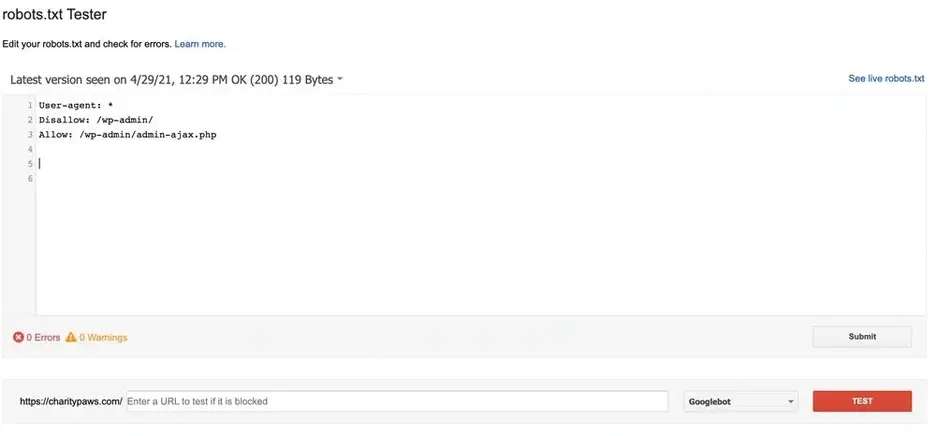
Scaling content for AI search isn’t just about output volume; it’s about maintaining the trust signals that AI engines demand. When you aim to dominate generative search, simply flooding the web with text is a fast track to irrelevance. Modern answer engines like ChatGPT, Gemini, and Google AI Overviews prioritize accuracy, structure, and E-E-A-T signals over raw page count. If your content lacks the precision these models crave, you risk being filtered out entirely.
Moving beyond simple automation requires a metric-driven content quality framework. This approach shifts your focus from chasing link rankings to becoming the definitive, citable source for AI-generated summaries. By integrating Generative Engine Optimization (GEO) into your workflow, you transform your articles into clean, machine-readable assets. This guide outlines how to build that framework, ensuring your brand remains a trusted authority that models love to cite and users trust to deliver answers.
Why Quality Control Is the New Content Frontier
In the era of AI-driven search, the old playbook of publishing high-volume, low-effort content is becoming a liability. Generative Engine Optimization (GEO) has shifted the goalposts: instead of simply trying to rank a blue link in a list, you are now competing to become a trusted source that LLMs cite, quote, and recommend. When you focus on scaling content for AI search, you must pivot from chasing volume to prioritizing factual density and semantic clarity.
The Shift from Links to Citations
Traditional SEO focuses on backlinks, but AI answer engines like Perplexity, ChatGPT, and Google AI Overviews operate differently. They use retrieval-augmented generation to pull information from high-quality sources that explicitly answer user intent. If your content is filled with fluff or repetitive, automated jargon, it triggers filters that reduce your citation probability. LLMs are trained to identify hallucination-prone text; therefore, content that lacks clear, verifiable data or original insights is often ignored by these models.
The Rise of the Quality Gatekeeper
To compete, you need a content quality framework that acts as a mandatory Quality Gatekeeper in your production pipeline. This is not just a human editor; it is an automated validation step that ensures every piece of content meets your brand’s E-E-A-T signals before it is indexed.
A rigorous Quality Gatekeeper should evaluate your work against several non-negotiable criteria:
- Answer Accuracy: Does the text provide a direct, concise answer to the query within the first 40–60 words?
- Structured Clarity: Does the page use valid JSON-LD schema (FAQ, HowTo, or Article) that accurately mirrors the visible content?
- Source Integrity: Does the content cite primary data or original research rather than rehashing common internet knowledge?
Quantifiable Metrics for GEO Performance
When scaling content for AI search, traditional SEO metrics like keyword density or backlink counts often fall short. Success in GEO requires a pivot toward quality KPIs that reflect how LLMs process, retrieve, and synthesize your information. By focusing on structural clarity and factual groundedness, you provide the signals these models need to confidently cite your brand.
Core Quality KPIs for GEO
To track your progress effectively, your content quality framework should prioritize three essential pillars: Citation Accuracy, Semantic Relevance, and Structural Adherence.
| Metric Type | Traditional SEO Metric | Modern GEO Performance Metric | Impact on AI Citation |
|---|---|---|---|
| Content Structure | Keyword frequency | Headings & schema markup | High |
| Authority | Domain Authority | E-E-A-T consistency | High |
| User Engagement | Click-Through Rate | AI answer extraction | High |
| Accuracy | Information density | Hallucination risk | Very High |
Auditing for Hallucination Risks
A major challenge when scaling content for AI search is the risk of hallucinations, where a model misinterprets or invents facts. To mitigate this, you must audit your content by cross-referencing your generated outputs against an internal brand knowledge base. Use a Retrieval-Augmented Generation (RAG) approach where your AI agent retrieves verified data from your own documentation before drafting content.
Implementing an Automated Quality Gatekeeper
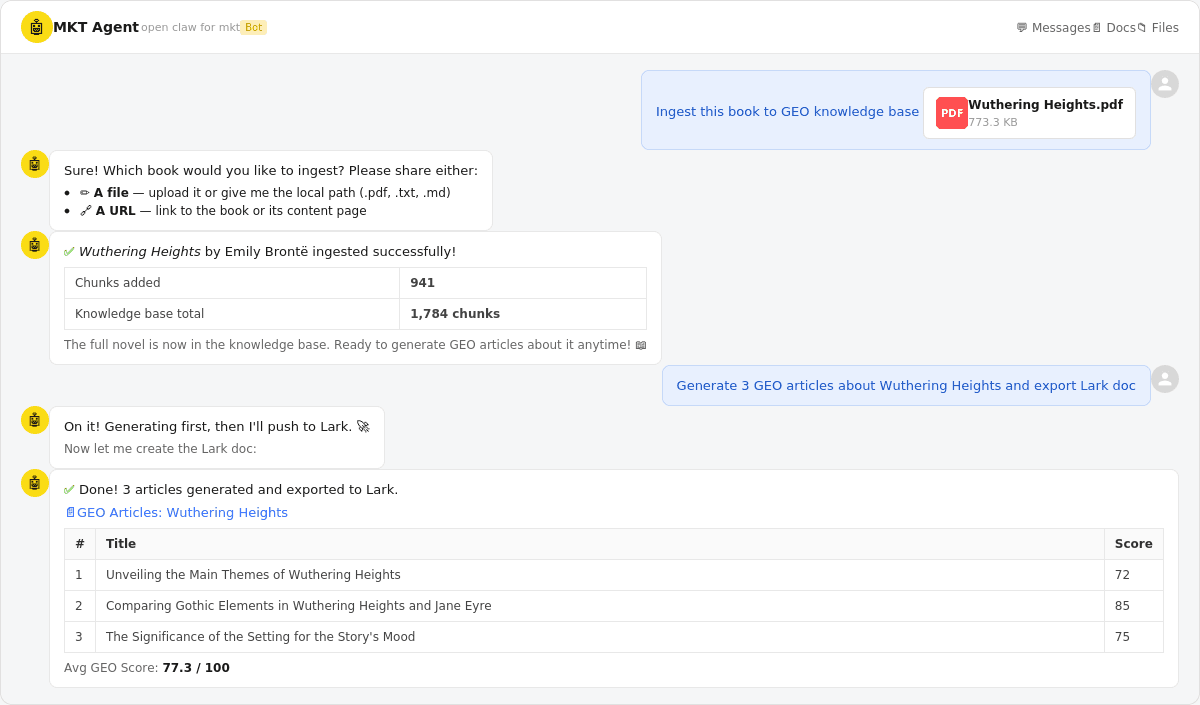
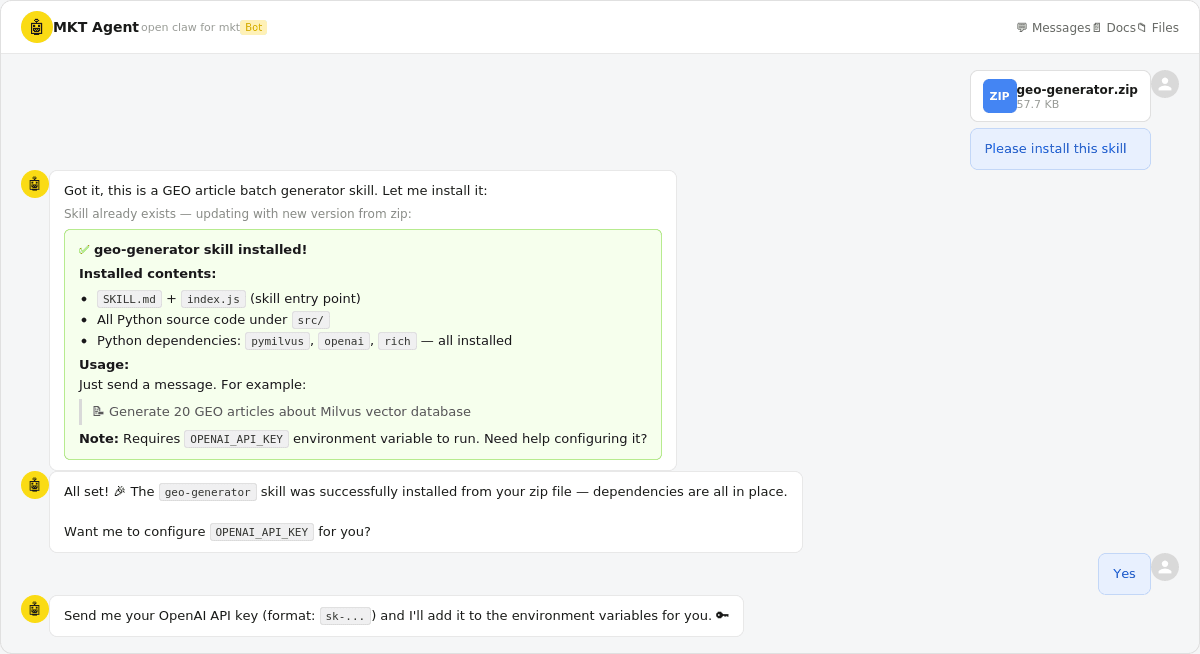
Building an automated quality gatekeeper is essential for scaling content for AI search without sacrificing the E-E-A-T signals that engines prioritize. By integrating a programmatic scoring layer into your CMS, you ensure every piece of content meets strict technical and editorial standards.
The Answer-First Verification Protocol
The most effective way to improve your visibility in AI-driven results is by adopting the Answer-First verification step. In this phase, your automated system scans the text following every H2 heading to ensure it contains a clear, 40–60 word definitive answer. If a heading introduces a concept, the immediate paragraph below it must define the subject plainly, allowing AI models to easily extract the information as a snippet.
Automated Gatekeeping Checklist
To maintain high standards while scaling content for AI search, your CMS should enforce these automated checks before publication:
- Schema Validation: Confirm that all necessary JSON-LD is present and free of syntax errors.
- Readability Analysis: Ensure paragraphs remain between 2 and 4 sentences to maximize clarity.
- Factual Entity Extraction: Cross-reference key terms against a trusted brand knowledge base.
- Content Freshness: Flag articles that haven’t been updated within a specified timeframe for topics prone to rapid change.
Maintaining Brand Standards at Scale
Scaling content for AI search requires a balance between machine efficiency and human expertise. As you ramp up production, ensure your E-E-A-T signals remain consistent across every asset, preventing the dilution of your brand voice in an automated environment.
The Human-in-the-Loop Advantage
For high-impact, flagship pillar pages, a human-in-the-loop (HITL) approach is essential. Human editors verify that the nuance, tone, and strategic insights align with your brand’s perspective. Reserve your limited human capacity for the high-visibility topics that define your market authority, while allowing automation to handle informational, query-driven segments.
Scaling Brand Voice Through System Prompts
Treat your system prompts as a living document of your brand identity. Explicitly instruct the model to avoid generic filler and require specific, grounded examples. By embedding these instructions into your workflow, you ensure that every piece of AI content automation carries the same signature feel.
Ultimately, when you provide the web’s most trustworthy source material, you don’t just survive in an AI-driven ecosystem—you become the authority that machines rely on to inform the world.
AEO/GEO
Want to learn more?
Contact us for direct consultation and support.