Every AI Query Puts Your Brand Visibility on the Line
Every time a user asks a question to an AI, your brand’s visibility hangs in the balance. While your marketing team works to produce high-quality articles, traditional efforts no longer guarantee the same reach they once did. The rise of answer engines like ChatGPT, Gemini, and Perplexity has shifted the goalposts. It is no longer just about ranking for a link, but about providing the precise, machine-readable information these models need to cite you as an authority. Scaling content for AI search is about refining your strategy to bridge the gap between human readers and the algorithms that serve them.

The pressure to maintain consistent output while optimizing for generative engines can feel overwhelming. Many organizations struggle with disconnected data silos, where new AI-driven workflows fail to integrate with existing processes. By rethinking how you structure your information and harmonize your tools, you can transform your content into an asset that thrives in the era of AI. This ensures your brand remains a trusted, cited source in an automated landscape, allowing your team to focus on high-level strategy.
The Marketer-to-Machine Scale: Assessing Your Foundation
Before you can effectively scale content for AI search, you need to understand where your organization sits on the “Marketer-to-Machine” (M2M) scale. This maturity model helps you evaluate whether your internal systems are ready for high-volume, automated AI ingestion. Level 0 represents a fully manual operation, while Level 4 describes an autonomous system where content generation and distribution happen in harmony with your data.
At the heart of a successful AI-ready strategy is clean, structured data. AI models like those powering Google AI Overviews or Perplexity require clear, unambiguous information to function. If your CMS holds fragmented data or your CRM relies on siloed profiles, your AI content automation efforts will struggle to gain traction. Engines cannot cite what they cannot reliably parse or understand.
Is Your Infrastructure AI-Ready?
To move up the M2M scale, you must ensure your data is machine-readable. If your content is locked in visual-only page builders or hidden behind complex JavaScript that crawlers cannot interpret, you are hiding your expertise from AI models.
Use this checklist to audit your foundation:
- Semantic HTML usage: Do you use proper H1-H6 tags, lists, and tables instead of unformatted divs?
- Schema implementation: Have you deployed structured data for AI, such as FAQPage or HowTo schema, to define content entities?
- API readiness: Can your CMS serve content to external services, or is it strictly tied to a frontend rendering engine?
- Data hygiene: Is your terminology consistent across all articles, or do you use conflicting jargon that confuses an LLM?
Traditional vs. AI-Optimized Management
Moving toward generative search optimization requires a shift in how you maintain your digital properties. The following table highlights the core differences between legacy approaches and those built for the future of AI.
| Feature | Traditional CMS Management | AI-Optimized Management |
|---|---|---|
| Schema Support | Manual/Plugin-based | Native JSON-LD integration |
| Data Hygiene | Low (Unstructured/Siloed) | High (Clean/Standardized) |
| Content Format | Visual-first design | Semantic/Machine-readable |
| API Readiness | Minimal/Fragmented | Robust/Content-as-a-Service |
| Citation Focus | Ranking-focused (Links) | Accuracy & Entity-focused |
By auditing your foundation against these criteria, you stop treating your CMS as a website builder and start viewing it as a critical data source. When you provide structured and accessible data, you make it effortless for answer engines to index and cite your brand.
Workflow Harmony: Connecting AI Generators with Your CMS
Workflow harmony is the state where your AI generation platforms and CMS operate as a single, fluid unit. Bridging the gap between these systems eliminates manual copy-pasting, which is a common bottleneck that slows down the output needed for scaling content for AI search. By automating the handshake between generation and publication, your team can focus on strategy rather than repetitive administrative tasks.
Leveraging API Integrations for Publishing
Direct API integrations serve as the digital bridge connecting your AI content automation tools to your website backend. Instead of manual imports, an API pipeline pushes generated text and metadata directly into your CMS fields. This integration ensures that content is published faster and formatted correctly. By bypassing the manual export process, you reduce the risk of formatting errors, ensuring your site remains a high-performance hub for AI crawlers.
Maintaining Quality through Validation
Automating the transfer process does not mean relinquishing control. A human-in-the-loop validation layer is essential for maintaining your unique brand voice. Before final publication, designated experts should review AI-generated drafts within the CMS to verify tone, check against internal standards, and confirm that the content meets the rigor of generative search optimization. This stage acts as a quality gate, allowing you to add the nuanced insights that models might overlook.
Mapping Fields for AI-Ready Structured Data
To ensure your content is optimized for AI answer engine citation, you must map your CMS fields to match the requirements of machine-readable schema. By aligning your internal content structures with standard JSON-LD properties, you provide search engines with clear, unambiguous data.
| CMS Field | Schema Property | Purpose for AI |
|---|---|---|
| Headline | Headline / Title | Defines the core subject for LLM ingestion |
| Author Bio | Person / Organization | Establishes E-E-A-T credentials for trust |
| Date Published | DatePublished | Indicates the freshness of the information |
| Summary | Description | Provides the 40–60 word answer for citation |
| Content Body | ArticleBody | Supplies the depth required for ranking |
Governance and Data Quality in the Age of AI
When you are scaling content for AI search, your content’s quality at the point of ingestion is your most critical safeguard. Unlike traditional search, which focuses on link popularity, generative search engines rely on the intrinsic truth and clarity of your data to provide accurate, citable answers. If you feed an AI model conflicting or thin information, you are actively polluting your brand’s AI trust profile.
Auditing Your Existing Content Database
To ensure your content is ready for generative search optimization, you need a proactive audit process to clear out digital clutter. Start by identifying pages with high bounce rates or those that have not been updated in over 18 months. Use this workflow to protect your AI trust profile:
- Identify High-Value Queries: Map your most important business topics and locate the pages that should answer them.
- Fact Check for Conflicts: Cross-reference statistics and core brand messaging across your pillar pages.
- Prune or Update: If a page is no longer relevant, delete it or redirect it. If it lacks depth, expand it to provide the answer-first clarity that LLMs prefer.
Leveraging Structured Data for Citations
One of the most effective ways to make your content machine-readable is to automate the application of structured data. By embedding schema markup directly into your page head, you remove the guesswork for AI crawlers, explicitly defining what your content is about.
| Schema Type | Best Use Case | Impact on AI Search |
|---|---|---|
| FAQPage | Question-and-answer pairs | Increases odds of being quoted in direct answers |
| HowTo | Step-by-step instructions | Helps AI extract sequences for process-heavy queries |
| Article | Author and date metadata | Signals E-E-A-T and content freshness |
| Organization | Brand identity and entities | Establishes your site as the official, trusted entity |
Automation for the Future: Measuring Success
As you scale your content strategy, traditional metrics of organic clicks are no longer sufficient. To truly thrive, you must connect your Martech ecosystem to performance indicators that track how AI models perceive your brand. Measuring success requires a hybrid approach that bridges traditional SEO with metrics centered on AI answer engine citation, brand authority, and visibility within chat-based interfaces.
Tracking Success Beyond the Click
Monitor specific touchpoints that reveal how your information is synthesized. Use GA4 to track referral traffic specifically from platforms like ChatGPT and Perplexity. Seeing these as referrers indicates that your content is being surfaced and trusted enough for the model to link back to you.
| Metric Type | Measurement Tool | Insight Gained |
|---|---|---|
| AI Citations | Manual Checks | Frequency of brand mentions in AI responses |
| Referral Traffic | GA4 | Users arriving from chat-based engines |
| Keyword Positions | Ahrefs / Semrush | Traditional SERP movement alongside AI presence |
| Engagement | GA4 | Whether visitors find the cited content useful |
Avoiding Pitfalls When Scaling
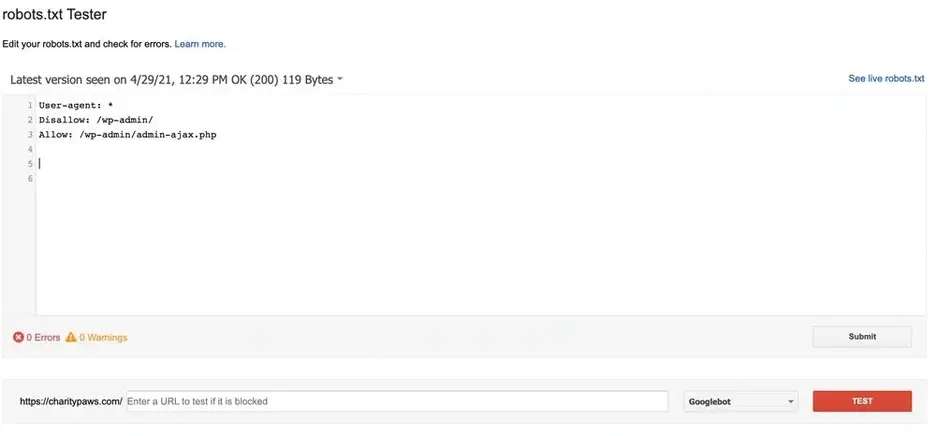
As you accelerate production, watch out for editorial debt. Content must always be verified for accuracy and tone to maintain brand trust. Ensure that your automated scaling does not lead to thin, repetitive content that fails to provide unique value. Finally, ensure that your robots.txt file is not inadvertently blocking crawlers like GPTBot or Google-Extended, as this will immediately disqualify your content from being surfaced in AI answers. By balancing automated volume with rigorous oversight, you turn your stack into an engine for long-term generative search optimization.
AEO/GEO
Want to learn more?
Contact us for direct consultation and support.