From Link-Building to Being Cited by AI Search
Managing modern search visibility requires shifting from traditional link-building to a model where content must be trusted, synthesized, and cited by AI. To succeed, brands should treat their editorial process like a software pipeline, ensuring every asset is structured, machine-readable, and ready for extraction by large language models.
The Content Pipeline: Treating Editorial Like Code
To master scaling content for AI search, transition from manual drafting to an automated production system. By adopting a “Content-as-a-Pipeline” framework, you treat editorial tasks like software engineering projects, ensuring consistency, speed, and machine-readability. This approach shifts the focus from sporadic blog posts to an automated pipeline that treats every asset as a modular data object.
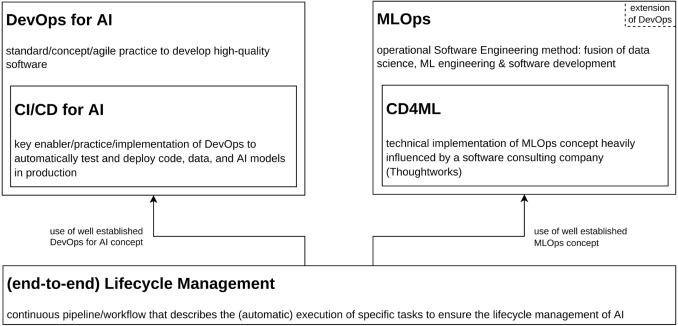
The Lifecycle of Automated Content
Your content must move through clearly defined stages to optimize for Answer Engine Optimization. A robust lifecycle ensures your information is ready for AI extraction:
- Data Ingestion: Collect raw insights, internal data, and primary sources that establish your brand’s unique expertise.
- Structured Drafting: Use standardized templates to ensure LLMs can parse your content structure without friction.
- Quality Validation: Perform automated checks for fact-checking and technical alignment.
- Deployment: Use consistent publishing principles to push content live and notify search engines through valid sitemaps.
Traditional vs. AI-Powered Editorial
Generative search strategy requires higher operational speed. The following table highlights why legacy workflows often fail to meet modern AI search requirements.
| Criteria | Traditional Editorial | AI-Powered Content Factory |
|---|---|---|
| Speed | Days/Weeks per asset | Minutes/Hours per pipeline run |
| Scalability | Limited by human headcount | Elastic (controlled by compute) |
| AI-Readiness | Often unstructured/verbose | High (semantic structure enforced) |
| Quality Control | Manual subjective review | Programmatic validation & testing |
Architecting for AI Visibility
Structured data acts as the bridge between human-written prose and the machine-learning models powering answer engines. By embedding JSON-LD schema—such as FAQ, HowTo, and Article types—you provide a machine-readable API that allows AI models to parse and trust your content without guessing.
Why Structure Outperforms Prose
AI models thrive on patterns. While humans enjoy storytelling, long-form prose often forces an AI to search for facts, which increases the risk of hallucination. Machine-readable formats like tables, lists, and schema-mapped entities provide clear boundaries for data extraction.
Building an AI-Ready Content Checklist
Adopt a discipline that prioritizes machine efficiency alongside human engagement:
- Answer-First Architecture: Start each section with a direct, 40–60 word answer that encapsulates the core intent.
- Entity-Based Definitions: Use declarative sentences such as “[Term] is [clear definition]” to help models map concepts to your brand entity.
- Semantic Hierarchy: Use H-tag hierarchies (H2, H3) to logically group information for crawlers.
- Consistent Schema Mapping: Ensure information in your JSON-LD matches your visible on-page content.
Quality Assurance in Automated Publishing
Ensuring accuracy is critical when scaling. Treat your editorial process like software development by implementing a feedback loop that functions similarly to unit tests. By automating checks for schema integrity, internal consistency, and source attribution, you minimize the risk of inaccurate facts reaching your audience.
Human-in-the-Loop for E-E-A-T
While automated systems handle production, human oversight is essential to maintain E-E-A-T signals. AI models look for clear author credentials, expertise, and verified primary sources. Periodically review AI-generated drafts to confirm that the tone remains authoritative and provides the experience-based insights that generic models cannot replicate.
Key Performance Indicators for AI Visibility
To measure success, track KPIs that go beyond traditional clicks:
| Metric | Why it Matters |
|---|---|
| Citation Frequency | Measures how often AI models name your brand as an authoritative source. |
| AI-Driven Referral Traffic | Tracks visits originating from chat-based search platforms. |
| Keyword Positioning | Monitors if your content appears within the AI-generated answer box. |
| Answer Integrity | Assesses whether the model is accurately relaying your key facts. |
By treating these KPIs with the same rigor as traditional SEO metrics, you can refine your strategy to ensure your brand remains a top contender in the world of AI-driven discovery. Consistency in your content operations leads to greater visibility as search habits shift toward direct, AI-provided answers.
AEO/GEO
Want to learn more?
Contact us for direct consultation and support.