Schema Showdown: Product vs. LocalBusiness for AI Search
Imagine asking an AI for a specific product recommendation, only for it to completely ignore your store—despite you being the perfect fit for the user’s needs. This scenario happens more often than you might think. It isn’t always because your website lacks authority or quality content; often, it’s because the technical handshake between your site and the AI is broken. When your underlying data is misaligned with the specific intent of a query, search engines struggle to categorize you correctly, rendering your business invisible to the algorithms driving modern discovery.
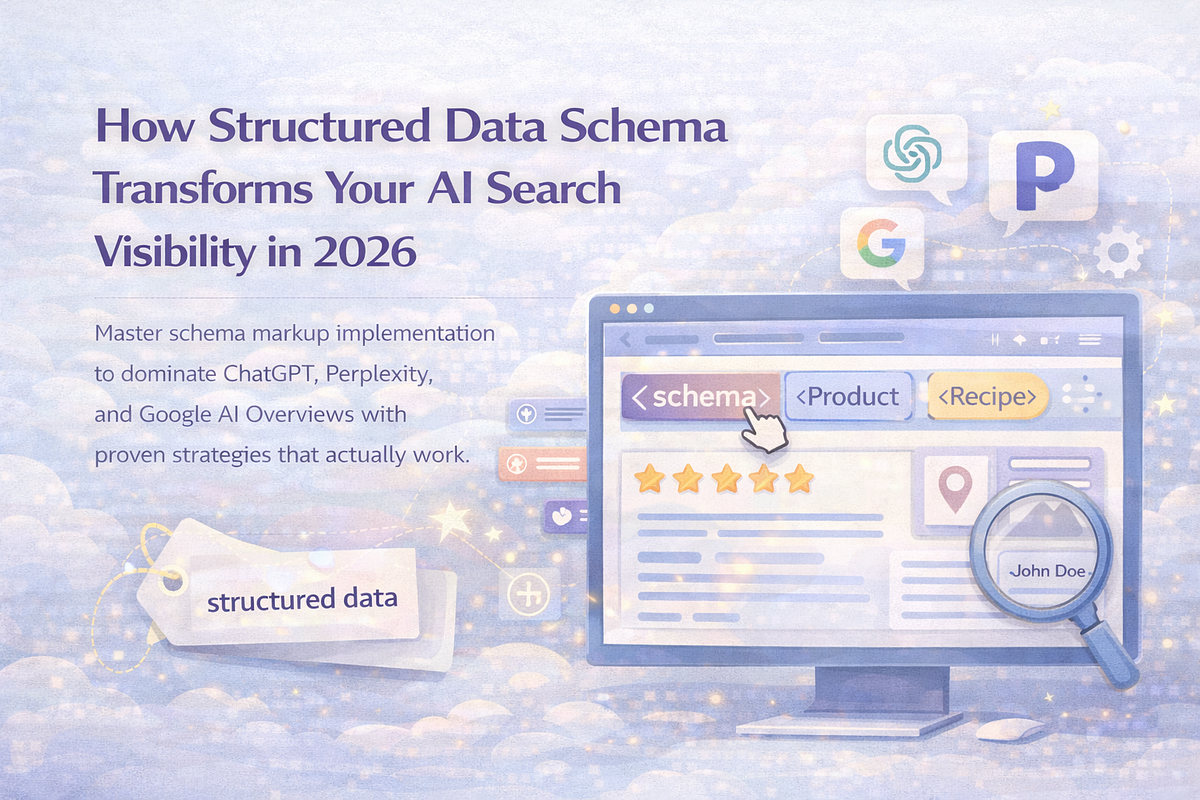
Learning how to optimize for AI search engines begins with mastering the subtle language of structured data. Many business owners treat schema markup as a relic of traditional SEO, but in the era of generative search, it serves as the primary map for machine intelligence. By choosing between Product and LocalBusiness schema—or strategically blending them—you dictate how an AI perceives your identity. This transition from basic site structure to a data-rich strategy is the new front line for digital visibility.
Understanding the AI Citation Engine: Product vs. LocalBusiness
To learn how to optimize for AI search engines, you must think like a translator. AI models do not “see” your website the way a human does; they parse the underlying code to build a knowledge graph of your entity. Your schema markup is the primary language used for this conversation. By using specific tags, you guide the AI toward understanding whether you are a source of inventory or a physical point of presence.
Decoding AI Intent
AI models interpret intent based on the entity type defined in your structured data. When an AI processes a query, it asks, “Is this user looking for an item to buy, or a place to visit?” If you mark up your pages with the wrong schema, the AI may misinterpret your role in the ecosystem.
Product schema acts as a data-heavy catalog entry designed to provide global visibility for specific items. When an AI finds Product markup, it understands that your page contains verifiable facts—like price, SKU, and availability—that can be aggregated into a comparison list or a shopping carousel.
Conversely, LocalBusiness schema provides geographic context. It connects your entity to a physical coordinate and a defined service area. If a user asks, “Where can I find this service nearby?”, the AI scans for LocalBusiness schema to verify your proximity. Without this link, your business essentially becomes a ghost in the local search landscape, even if you are just around the corner.
Key Differences at a Glance
To master your structured data strategy, it helps to see exactly how these two types prioritize information for search bots.
| Attribute | Product Schema | LocalBusiness Schema |
|---|---|---|
| Primary Focus | Inventory and assets | Physical location and services |
| AI Citation Goal | Catalog and shopping inclusion | Local map and proximity relevance |
| Essential Data | Price, currency, SKU, reviews | Address, hours, geocoordinates |
| User Intent | “Can I buy this?” | “Can I go here or hire them?” |
When Product Schema Outperforms in AI Overviews
Product schema is your direct line to becoming a source of truth for AI shopping assistants. When a user asks an AI to compare technical gear or find a specific item in stock, the model relies on structured data to pull accurate facts. Using Schema Markup for AI effectively helps you move beyond a simple search result to becoming the verified answer within an AI overview.
Why Precision Matters for AI Shopping
Modern AI shopping bots prioritize speed and accuracy. They don’t want to scrape through your entire page’s HTML to figure out if you have a blue size 10 hiking boot in stock. By providing granular attributes like SKU, current price, currency, and availability, you feed the AI the exact data points it needs to construct a confident, conversion-ready response.
Without these markers, the AI may guess or fill in gaps, which leads to inaccurate answers or the AI ignoring your site entirely. By providing verifiable, machine-parsed facts, you build trust with the search algorithm, making your site a preferred source for transaction-heavy queries.
The Competitive Edge in Comparison Queries
Imagine you are a retailer selling specialized camping gear. A user asks an AI: “Which lightweight tent has the best ventilation for under $300?” If your site uses robust Product schema, the AI can programmatically compare your tent’s price, weight, and features against competitors. Consider the impact of these fields on your AI Search Visibility:
- Availability: Communicates real-time inventory status.
- PriceSpecification: Defines the cost, critical for price-sensitive prompts.
- AggregateRating: Provides social proof directly inside the AI interface.
- Technical Specs: Allows the AI to extract dimensions or weight for specific searches.
The Power of LocalBusiness Schema for Hyper-Local Relevance
LocalBusiness schema is the digital equivalent of a verified handshake between your company and an AI engine. When a user asks an AI to find a service provider nearby, the machine actively scans for verifiable geographic context. By implementing this structured data, you provide AI models with the precise coordinates, service boundaries, and operational hours they need to trust that you are a legitimate entity.
Building AI Trust Through Geographic Precision
AI engines prioritize entities that provide consistent, structured proof of their existence. When you map your physical location using geo-coordinates and define your service area, you remove the guesswork for generative search tools. Without this schema, an AI might default to national brands with higher generic authority.
Opening hours also play a massive role in AI trust scores. If your schema reflects that you are open during a user’s search, the AI is significantly more likely to prioritize your business. Providing this data is a core part of how to optimize for AI search engines, as it transforms your website into a reliable database entry rather than just a collection of text.
Verifying Legitimacy with Connected Profiles
Linking your LocalBusiness schema to your reviews and social profiles acts as a verification signal. By nesting attributes like sameAs, which connects your website to your official business profile, you create a web of cross-referenced credibility. When the AI sees that the business on your site matches the entity in the social platforms it crawls, its confidence in your service increases. This makes the AI comfortable enough to cite your business directly in a generative summary.
Winning with a Hybrid Strategy: The ‘Best of Both’ Approach
For many retailers and service-based brands, the choice between local relevance and product visibility is a false dilemma. If you operate a physical storefront that also processes e-commerce orders, your digital footprint must satisfy two distinct AI search requirements.
The Art of Logical Nesting
To bridge the gap between geographic authority and transactional appeal, you can nest your Product schema within a LocalBusiness entity. By using the offeredBy or location properties, you inform AI models that a specific item is directly associated with your verifiable physical location. This context tells the AI that when a user asks about product availability nearby, your business is the precise source of truth.
However, avoid “schema bloat,” where redundant data points confuse AI crawlers. Maintain a clean hierarchy by ensuring site-wide LocalBusiness markup is defined clearly, while individual Product markup focuses on unique identifiers.
| Implementation Scenario | Primary Schema Focus | Secondary Schema Focus |
|---|---|---|
| Pure E-commerce | Product | Organization |
| Service-Only Business | LocalBusiness | Service/AggregateRating |
| Hybrid Retailer | LocalBusiness | Product (via offers) |
Making the Decision
Choosing the right implementation depends on your user’s search intent. If your traffic derives from transactional product queries, prioritize Product schema. If your growth relies on foot traffic, your LocalBusiness markup must remain the bedrock of your strategy. By isolating these data streams while linking them through standardized relationship properties, you create a robust knowledge graph that helps AI engines elevate your brand.
Treating schema markup as a mere checkbox for rankings is a relic of the past. To master how to optimize for AI search engines, you must shift your perspective: stop viewing structured data as a bridge to a traditional search results page and start seeing it as the language of machine intelligence. Audit your high-value landing pages today to ensure the right entity markers are in place to capture both product-driven and location-driven AI traffic.
AEO/GEO
Want to learn more?
Contact us for direct consultation and support.