The Dynamic Editorial Calendar: Real-Time AI Content Strategy
You have likely felt the sting of spending hours crafting a content calendar, only to watch it crumble by Tuesday. You spend weeks researching, mapping themes, and refining headlines to keep your team organized. But then, a sudden industry shift or a viral trend breaks, and your meticulously planned spreadsheet becomes an obsolete relic. Sticking to that rigid plan while the world moves on isn’t just frustrating; it is a bottleneck to your growth.
In today’s fast-moving market, the speed of information waits for no one. Static planning cycles are blind to the nuances of real-time audience needs, leaving your brand struggling to remain relevant. To stay competitive, you need a different approach—one that treats your planning as a living, breathing ecosystem rather than a locked-in document. Developing an AI Content Strategy for the AI Era means moving away from the safety of spreadsheets and embracing systems that learn and adjust as the market shifts. By shifting toward an agile, AI-powered framework, you transform your editorial process from a reactive chore into a proactive advantage.
Why Your Static Calendar is Sabotaging Your Reach
When you build a content calendar in January that you follow strictly until December, you are accidentally building a wall between your brand and your audience. In an era of rapid AI-driven search shifts, a set-it-and-forget-it approach is one of the fastest ways to lose relevance. Modern search engines now prioritize fresh, real-time context. If your calendar is locked into a rigid spreadsheet, you miss the opportunity to capture traffic from trending queries before they fully materialize.
The Danger of Ignoring Zero-Click Trends
Static planning often relies on search volume data that is already weeks old. By the time you publish an article based on that data, the market has shifted. This is particularly damaging regarding zero-click searches—moments where a user finds an answer within the search engine result page (SERP) without visiting a website. If you aren’t using a dynamic editorial calendar that can pivot to answer these emerging questions, AI search models will pull answers from agile competitors who are actively addressing the “right now” of user intent.
Moving Beyond Linear Planning
Adopting an AI Content Strategy for the AI Era requires moving away from linear, chronological publishing. Think of your strategy as a living organism. When you use agile content planning, you treat your calendar as a suggestion rather than a command. If an industry breakthrough happens at 9:00 AM, your workflow should allow you to produce and optimize content about that event by 1:00 PM. If your team is stuck checking off boxes on a frozen plan, you have lost the race to be the primary authority.
| Feature | Traditional Linear Planning | Dynamic, AI-Informed Workflow |
|---|---|---|
| Strategy | Rigid, long-term cycles | Fluid, outcome-based pivots |
| Flexibility | Low; changes disrupt the team | High; designed for rapid adaptation |
| Data Integration | Quarterly search volume reports | Real-time sentiment and trend feeds |
| Growth Potential | Linear, predictable growth | Exponential, trend-driven spikes |
By embracing AI-powered content agility, you stop viewing your calendar as a set of deadlines and start viewing it as a roadmap for impact. This shift creates the space to iterate on your content based on how the world—and the search algorithms—are changing at this very moment.
Integrating Live Data Feeds into Your Planning Workflow
To move beyond static planning, connect your AI agents to the pulse of the internet. By feeding live sentiment analysis and social listening data into your infrastructure, you transform your calendar from a task list into an AI-powered content agility hub. This integration allows you to detect shifts in audience interest before they become saturated market trends.

Setting Up Automated Content Triggers
Content triggers act as an early warning system for your brand. You can automate these by connecting platforms like Google Trends or Brandwatch to your project management software. When a keyword associated with your industry experiences a spike—such as a 20% increase in search volume over 24 hours—the AI creates a draft task in your calendar.
- Select your primary monitoring sources (Google Trends, X, or Reddit threads).
- Define your “relevance threshold” (the level of activity required to flag a task).
- Automate the connection to a “Drafts” column in your editorial calendar.
- Use an AI agent to draft an initial brief based on the top-performing search queries.
Filtering Noise to Protect Brand Authority
While real-time content marketing is powerful, chasing every viral story can dilute your authority. Use your AI agent as a gatekeeper. Before a topic enters your production queue, have the system score it against your “Topic Pillars.” If the subject matter doesn’t align with your core expertise, the AI should archive the trigger. This ensures that every pivot you make serves your long-term strategy rather than just chasing fleeting clicks.
Building an Agile Content Architecture
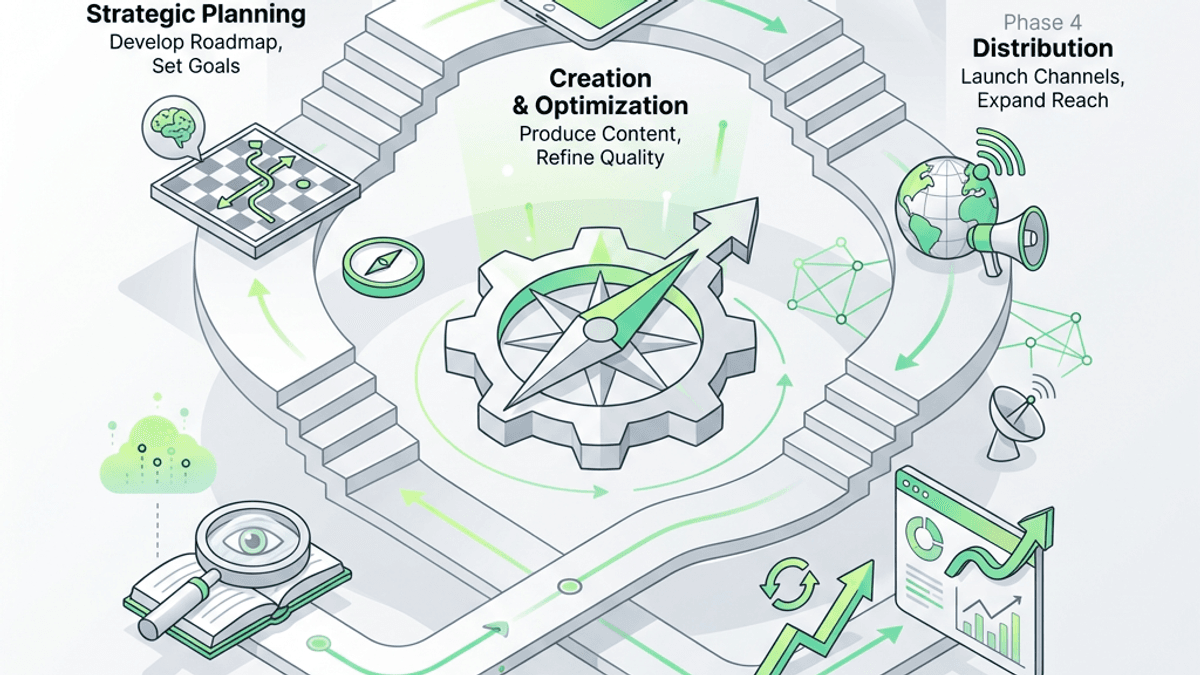
To master an AI Content Strategy for the AI Era, you must move beyond the constraints of rigid planning. The most successful teams operate using a “Core vs. Reactive” model. In this framework, 70% of your calendar is dedicated to evergreen pillar content—the high-value topics that define your brand authority—while 30% is left as intentional whitespace. This open space acts as a reservoir for agility, allowing you to react instantly to breaking industry news or shifting consumer sentiment.
Scaling Agility with AI-Driven Repurposing
When a sudden trend captures your audience’s attention, you don’t always need to start from scratch. AI acts as a force multiplier here. By feeding your existing asset library into a generative model, you can instantly recontextualize high-performing evergreen content to address new, trending angles.
Designing Modular Content Templates
Speed is the new currency in search visibility, and agile content planning depends on how quickly you can move from identification to publication. To achieve this, adopt a modular template system. Instead of drafting unique layouts for every post, create pre-approved, high-converting structures that contain:
- A standardized headline hook that addresses the “why now” of the trend.
- Bulleted lists of actionable insights or expert takeaways.
- Pre-formatted sections for data-driven evidence.
- An automated conclusion that points readers back to your primary services.
Measuring Impact and Iterating at Speed
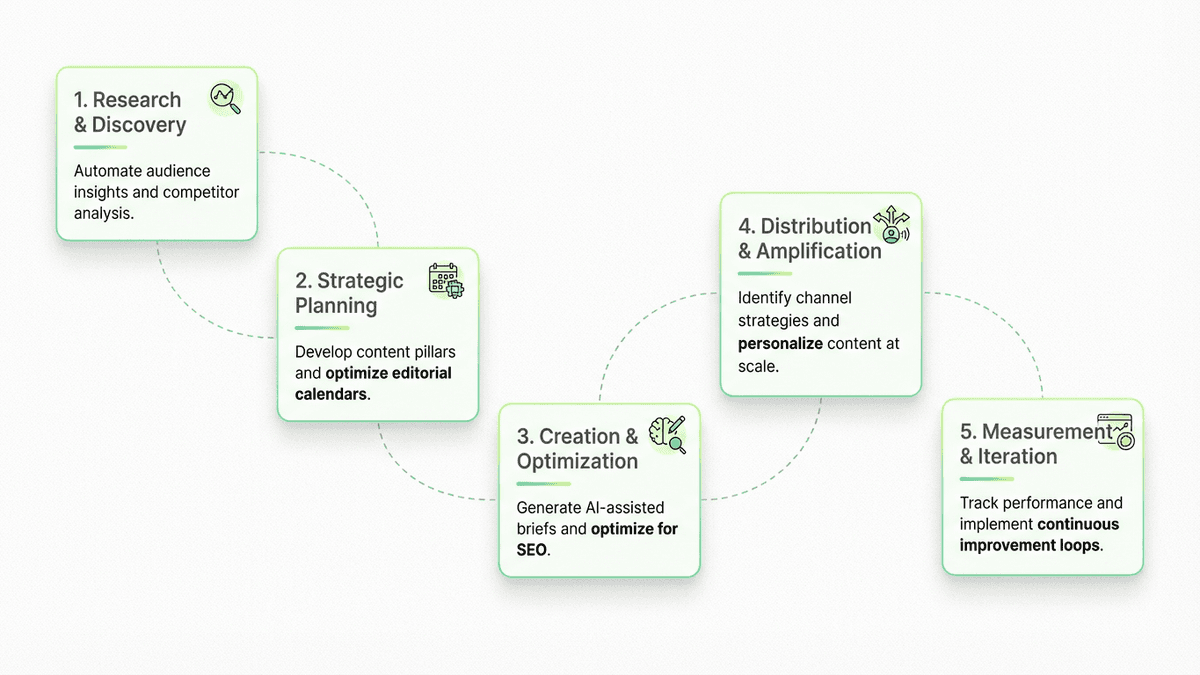
Moving away from the traditional monthly content report is essential for anyone serious about an AI Content Strategy for the AI Era. When you rely on data that is 30 days old, you are driving forward while looking exclusively in the rearview mirror. You need real-time performance dashboards that provide an immediate view of how your content is performing, allowing you to make micro-adjustments daily.
Tracking Content Velocity
To manage this new speed, you must start tracking “Content Velocity.” This metric measures how quickly your team moves from the moment a trend is identified to the point of publication. In an environment defined by generative search optimization, the first brands to provide relevant answers to new queries are the ones that earn the most visibility in AI-generated search results.
| Metric | Description | Why It Matters |
|---|---|---|
| Time-to-Trend | Hours between trend identification and live publication. | Measures how agile your production process is. |
| Engagement on Reactive Topics | Social and search interaction on trend-based posts. | Confirms if your pivots are resonating with the audience. |
| Pivoted Content ROI | Conversion rate of content produced via live data. | Proves that speed is contributing to growth. |
Transitioning from a rigid planner to an adaptive strategist is the most significant shift you can make. By embracing a dynamic editorial calendar, you stop fighting against the speed of information and start using it as your greatest competitive advantage. Start small by building whitespace into your schedule, feed live data into your workflow, and watch your content transformation turn into measurable growth. Your ability to adapt is your most powerful tool; use it to lead the conversation, not just follow it.
AEO/GEO
Want to learn more?
Contact us for direct consultation and support.