The AI Content Efficiency Index: A New Way to Measure ROI
You spend hours crafting the perfect blog post, optimizing every heading for search intent, and monitoring your organic traffic dashboard, only to find that your rankings are stagnant while AI-generated summaries take center stage. You aren’t imagining things; the rise of generative search has fundamentally broken the connection between click-through rates and actual business success. When search engines answer queries directly within the results page, traditional cost-per-conversion models start to look like relics from a different decade.
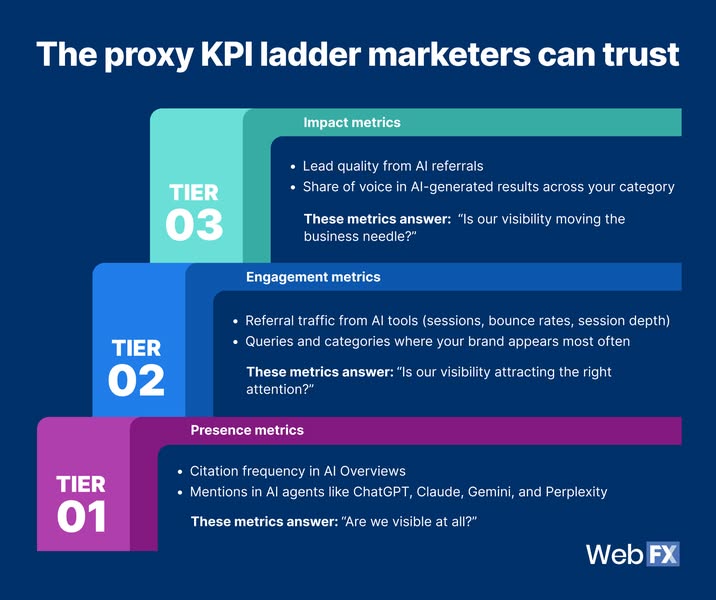
This gap between legacy reporting and modern reality leaves many marketers feeling like they are flying blind. We are currently witnessing a massive transformation in how discovery works, requiring a fresh approach to your AI Content Strategy for the AI Era. Instead of clinging to vanity metrics that no longer capture the full picture of your brand’s authority, you need a way to measure the actual performance of your content in a world where users rarely leave the search engine.
That is exactly why we are defining the AI Content Efficiency Index. This new framework acts as a bridge for modern marketers, helping you move beyond simple traffic counts to evaluate your brand’s presence in generative answers and AI-driven ecosystems. By focusing on efficiency rather than just volume, you can finally align your creative output with the realities of modern search technology.
Why Traditional SEO Metrics Are Falling Behind
For years, we’ve been conditioned to chase the blue link. We celebrated every click, obsessed over bounce rates, and treated backlink profiles like digital gold. However, the rise of AI-driven search environments has fundamentally changed the rules of engagement. When an LLM (Large Language Model) provides a definitive answer directly on the search engine results page, the traditional journey of clicking through to a website becomes optional. Relying solely on old-school traffic counts is akin to measuring a chef’s success only by how many people sit in the dining room, ignoring the fact that half their customers are now ordering takeout.
The Shift from Clicks to Citations
The fundamental disconnect lies in attribution. Traditional last-click models assume that a visitor must land on your page to convert. In the age of Generative Search Optimization, your brand’s value is often realized when an AI cites your content as a source, providing immediate value to the user without a physical visit. If you remain obsessed with raw traffic, you might overlook the massive brand equity being built through these AI citations. When an AI model establishes your brand as an authority, you gain trust and visibility that isn’t captured in your basic web analytics dashboard.
Comparing Metrics Across Eras
To pivot your AI Content Strategy for the AI Era, you must transition from metrics that track user navigation to those that track brand influence within model ecosystems. The following table illustrates the shift required in your analytical mindset:
| Traditional SEO KPI | AI-Era KPI | Focus Shift |
|---|---|---|
| Backlinks | Citation Frequency | From link juice to brand authority |
| Organic Sessions | AI Referral Quality | From volume to trust signals |
| Bounce Rate | Brand Mentions | From engagement time to brand recall |
| Click-Through Rate | Model Inclusion | From conversion to presence |
Avoiding the Traffic Trap
Focusing exclusively on clicks can leave your business blinded to the true impact of your content. While traditional metrics provide a baseline, they fail to account for the “invisible” visibility your brand gains when it becomes a trusted data source for an AI model. By clinging to outdated KPIs, you risk undervaluing a high-performing asset simply because it doesn’t drive a direct session. Moving forward, your goal should be to maximize your relevance to the AI agents that dictate user intent, ensuring your brand isn’t just a destination, but a reliable, cited authority.
Introducing the AI Content Efficiency Index
The AI Content Efficiency Index is a modern framework designed to help you measure success in a landscape dominated by LLMs. Unlike legacy metrics that track surface-level engagement, this index focuses on the velocity and sustainability of your brand’s presence in generative search. By shifting your perspective, you can better align your AI Content Strategy for the AI Era with actual operational growth.
The Three Pillars of Efficiency
To effectively track your progress, the index relies on three specific pillars that move beyond basic clicks:
- Production Velocity (Time-to-Publish): This measures the speed from ideation to live, indexable content. In the AI era, being first to provide a high-quality answer is a competitive advantage.
- Cost-Per-Rank: This is your total investment (tools, human oversight, hosting) divided by the number of high-intent search queries where your brand is cited or surfaced.
- Content Sustainability: This evaluates how well your content maintains relevance over time within AI training sets, measuring its ability to be repeatedly referenced by LLMs.
Calculating Your Index
Think of this metric as a reflection of your operational scalability. It isn’t just about reducing costs; it is about maximizing the output quality of every dollar spent on content production. To calculate your index, use the following approach:
- Sum your total monthly content spend.
- Divide this by the number of unique AI-driven citations or answer placements gained in that period.
- Multiply the result by your average time-to-publish per asset.
This gives you a score that tells you how efficiently your team turns capital into visibility. A lower score indicates that your workflow is well-optimized for the speed of modern search.
Putting Theory into Practice
Consider two teams, Alpha and Beta. Alpha uses manual processes, spending $5,000 to produce 10 articles, which takes them 30 days. Beta, using an AI-integrated workflow, spends $2,000 to produce 50 assets in just 5 days.
| Metric | Team Alpha | Team Beta |
|---|---|---|
| Total Spend | $5,000 | $2,000 |
| Asset Count | 10 | 50 |
| Time-to-Publish | 30 Days | 5 Days |
| Efficiency Score | High | Very Low (Better) |
By tracking these content efficiency metrics, Team Beta realizes they aren’t just cheaper; they are significantly faster and more capable of capturing brand mentions across diverse search queries. This framework allows you to pivot away from vanity traffic and toward building a presence that matters in the world of generative search.
Balancing Speed vs. Quality in the AI Era
Many marketers worry that embracing speed means sacrificing the polish that builds trust. This is a myth. When you adopt a smart AI Content Strategy for the AI Era, you aren’t choosing between high output and high quality; you are simply changing how you arrive at the finish line. Efficiency doesn’t imply automation without a human touch. In fact, the most successful brands use technology to handle the heavy lifting of structure and data, leaving the creative storytelling for their human experts.
The Human-in-the-Loop Framework
To ensure your assets maintain brand authority, you need a disciplined editing workflow. Think of your AI as a gifted intern that can draft a mountain of research in seconds, but still needs a senior editor to verify the tone and logic. Apply this framework:
- Strategic Prompting: Feed the AI your specific brand voice guidelines and target audience insights before generation begins.
- Expert Fact-Checking: Never publish raw output. Have a subject matter expert review claims for accuracy and nuance.
- Brand Alignment: Inject personal anecdotes or unique company data that the AI couldn’t have synthesized on its own.
The Longevity of Structured Content
When you focus on content efficiency metrics, you begin to value how AI models ingest your information. LLMs prioritize content that is clearly structured, logically ordered, and rich in context. Poorly written, scattered posts are often ignored during training phases. By using AI to optimize your articles for clarity and semantic relevance, you create content that survives longer in the digital ecosystem. This is known as Content Longevity—writing not just for today’s reader, but for the training sets of tomorrow’s AI tools.
Efficiency Killers to Avoid
Scaling your output can be dangerous if you don’t keep an eye on your workflow. Avoid these common traps to stay on track:
- The “Set it and Forget it” Trap: Assuming AI output is perfect without human review leads to brand dilution.
- Over-Optimization for Keywords: Stuffing content with terms kills readability and reduces the chance of being cited as a high-quality answer.
- Lack of Content Refresh Cycles: Failing to update your content means you fall behind as new AI models index fresh data.
- Ignoring User Intent: Creating content based purely on search volume rather than the specific questions your audience asks during their research journey.
Operationalizing Your New ROI Strategy
Transitioning to a modern AI content ROI framework requires more than just changing your spreadsheets; it demands a shift in how your entire team views performance. To successfully operationalize the Efficiency Index, you should follow a structured, four-step implementation plan that turns raw data into a growth engine.
A Four-Step Execution Plan
- Audit Your Current Baseline: Begin by measuring your existing production velocity and cost-per-rank. You need a clear understanding of your current manual versus automated overhead before you can improve it.
- Integrate AI-Ready Tools: Deploy platforms that facilitate generative search optimization. Focus on tools that allow you to track not just clicks, but entity mentions and model citations.
- Run Pilot Sprints: Choose one content pillar to test your new workflow. Measure the index results after 30 days, comparing the velocity of AI-assisted posts against traditional manual ones.
- Scale and Optimize: Once the pilot proves successful, roll out the standardized workflow across your entire editorial calendar, refining your prompts and human-in-the-loop checkpoints as you go.
Bridging the Gap with Stakeholders
When reporting to stakeholders accustomed to traditional SEO, frame your results through the lens of business sustainability rather than just traffic. Explain that in an era where AI search answers questions before a user ever reaches your site, brand visibility is the new currency. Show them the correlation between high efficiency index scores and increased brand mentions within LLM outputs. When you demonstrate that you are capturing “mindshare” in the AI ecosystem, the shift from vanity metrics to content efficiency metrics becomes a much easier sell.
Moving Beyond Vanity Metrics
To drive a truly effective AI Content Strategy for the AI Era, you must pivot away from outdated metrics like bounce rates and focus on actionable performance data. Prioritize tracking these key indicators:
- Citation Frequency: How often does a major AI model link back to your content?
- Brand Entity Association: Does your brand appear in responses related to your core service topics?
- Production Cost-Per-Article: The fully burdened cost, including human oversight, compared to your previous manual processes.
- Content Longevity: The time duration that your content remains factually relevant and cited by AI models.
Consistent testing is the bedrock of this strategy. Never treat your index score as a static number. Instead, iterate weekly by analyzing which content formats yield higher citation rates. By staying agile and responding to the performance data in real-time, you ensure your brand stays ahead of the curve as search technology continues to evolve.
Viewing ROI strictly through the lens of traditional financial figures no longer captures the full reality of modern marketing. In the age of generative search, ROI has evolved into an efficiency standard—a measure of how effectively your brand occupies space in AI-driven answers and builds lasting authority. By shifting your focus toward the AI Content Efficiency Index, you move past the vanity metrics of yesterday and toward a model that rewards agility, relevance, and presence.
Start your transition by adopting a small-scale pilot project. Begin by tracking key performance indicators like citation frequency and AI referral quality alongside your standard traffic data. As you normalize these new signals, you will likely find that the insights gained from your AI marketing analytics provide a much sharper picture of your actual brand influence than simple click-through rates ever could. Prioritizing visibility in this new landscape requires a shift in mindset, but it is an essential adjustment for any growth-focused business.
Embracing this holistic perspective does more than just update your reporting; it secures your competitive edge. When you align your resources with efficiency and high-quality visibility, you create a sustainable foundation for long-term growth. You are no longer just chasing rankings; you are building a future-proof brand that thrives whenever, wherever, and however your audience asks their questions.
AEO/GEO
Want to learn more?
Contact us for direct consultation and support.