The AI Citation Crisis: Moving Beyond Traditional Domain Authority
The search landscape is undergoing a fundamental transformation. In the era of Retrieval-Augmented Generation (RAG), traditional SEO metrics like keyword rankings and site-wide Domain Authority (DA) are becoming increasingly decoupled from visibility.
In generative search, your presence is no longer defined by a blue-link ranking on page one. Instead, it is defined by AI-native citations—the explicit, source-linked references included within the LLM-generated response. While traditional SEO focuses on the aggregate ranking of a URL, AI engines prioritize the reliability and relevance of specific information snippets. Consequently, conventional metrics fail to capture visibility because they measure site-wide performance rather than information-level authority. To compete, brands must shift their focus from ‘keyword rankings’ to ‘source-reference’ metrics, treating every high-intent query as an opportunity to be cited as the authoritative answer.
Diagnostic Phase: Building Your Brand’s ‘Sources’ Map
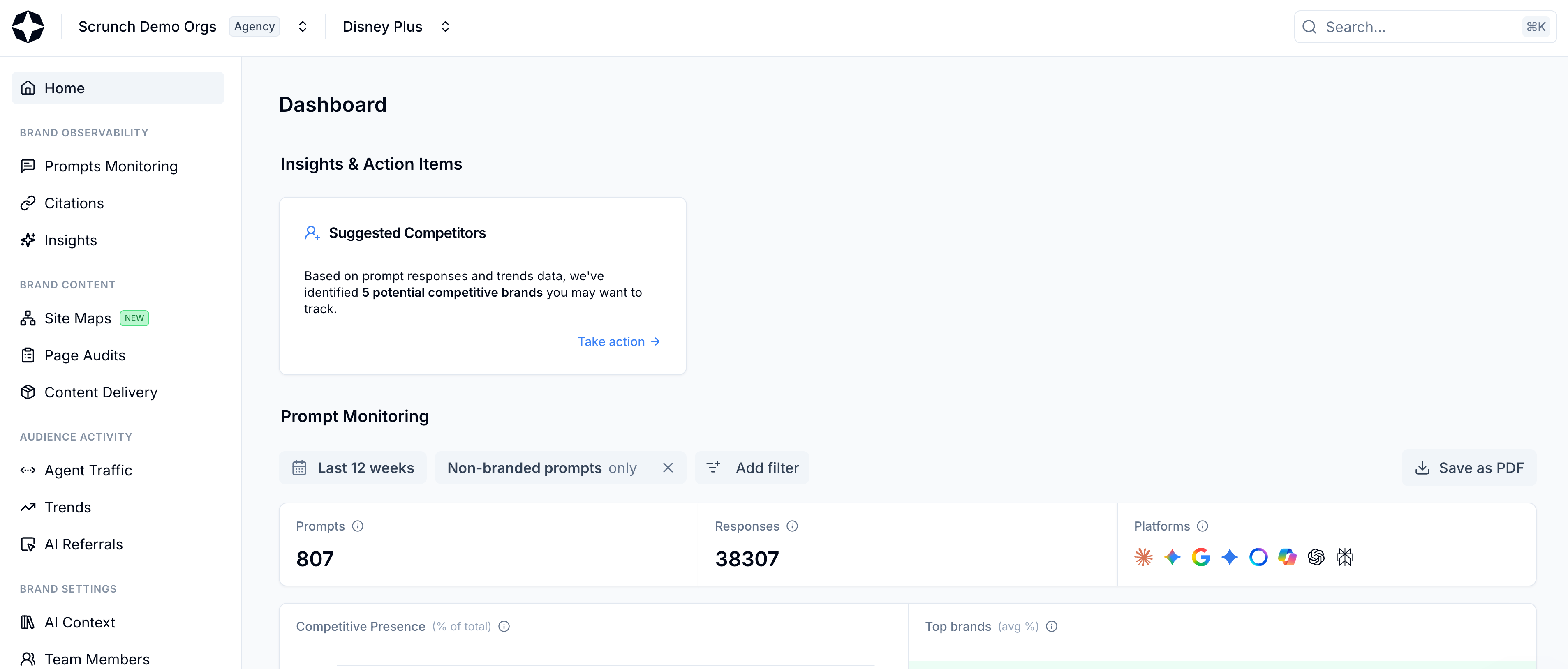
To improve your presence, you must first understand the current landscape of your industry’s AI responses. This requires a systematic ‘Source-Map’ diagnostic to identify where your brand is currently cited and, more importantly, where competitors are capturing authority.
Reverse-Engineering the Landscape
Begin by auditing the top-cited sources for your core keywords across major AI engines (e.g., Perplexity, Google AI Overviews). Map these citations to your own assets and your competitors’ content.
Identifying Citation Gaps
Use your mapped data to categorize opportunities:
- Low-Hanging Fruit: Queries where your competitors are cited, but their content is thin, outdated, or lacks structured data. These are prime targets for immediate displacement.
- Long-Term Authority: Topics where specific high-authority domains dominate. These require sustained effort and content investment to break into the citation loop.
- Competitor-Only Mentions: Filter your data to isolate keywords where competitors appear, but your brand does not. This is your primary actionable backlog.
Pathways to Visibility: 3 Execution Strategies for AI Mentions
Once you have identified your gaps, execute a targeted response using these three tactical pathways.
Path A: Direct Source Displacement
Create assets that are demonstrably superior to those currently cited by the AI. This means developing highly granular, data-backed content (e.g., original research, clear comparison tables, or definitive technical documentation) that makes it easier for an LLM to extract your content as a factual source.
Path B: Authority Borrowing
If your domain lacks the immediate topical authority to displace a giant in AI citations, leverage high-authority, third-party platforms (UGC sites like Reddit, LinkedIn, or industry-specific forums). By seeding expert, highly-voted discussions on these platforms, you create secondary sources that AI engines trust and frequently cite.
Path C: Ecosystem Integration
Build partnership-driven citation loops. Collaborate with industry peers or non-competing complementary brands to cross-reference each other’s authoritative content. This signals to the AI that your collective ecosystem is the consensus-based ‘source of truth’ for a specific niche.
Executing the Outreach and Monitoring Loop
Optimization for AI mentions is not a ‘set-and-forget’ task; it is a recurring technical process.
- Prioritization: Use your ‘Source-Map’ to rank targets based on search volume, citation difficulty, and the potential impact on your brand’s AI visibility.
- Tracking Velocity: Monitor your citation velocity—the rate at which your brand appears in new responses—and source volatility. If your citation frequency drops, investigate whether the AI has shifted its preference toward different types of source content.
- The Audit Cycle: Establish a monthly audit to refresh your Source-Map. Use comparison charts to visualize your share of mentions versus your competitors, ensuring your strategy evolves as AI search models update their retrieval logic.